What is Tuberculosis (TB)?
Tuberculosis is a contagious illness triggered by the bacteria Mycobacterium tuberculosis. It mainly targets the lungs but can also affect other organs. It transmits through the air when an infected person coughs or sneezes, releasing microscopic droplets carrying the bacteria.
The symptoms of active TB include:
- A cough lasting more than three weeks may indicate an underlying condition that requires medical attention.
- Chest pain
- Coughing up blood
- Fatigue
- Unintended weight loss
- Fever and night sweats
It’s essential to distinguish between active TB and latent TB infection (LTBI). Individuals with LTBI carry the bacteria but do not exhibit symptoms and cannot spread the disease. However, LTBI can progress to active TB, particularly in people with weakened immune systems.
Importance of Tuberculosis Testing
Tuberculosis testing is vital for several reasons, particularly in the context of workplace health and safety. Employers require TB tests to ensure a safe working environment and to prevent the spread of this contagious disease.
Early Detection
Early detection of TB through testing helps to identify infected individuals before symptoms appear or before they have the chance to spread the bacteria to others. This is especially important in work environments where employee interactions are frequent and close.
Prevents Outbreaks
Regular TB testing of employees helps contain any potential outbreak. By identifying and treating TB early, the risks associated with untreated tuberculosis—such as severe health complications and transmission—are significantly reduced.
Ensures a Safe Workplace
Ensuring that all employees are tested for TB is a fundamental aspect of workplace health and safety protocols. This measure helps maintain a safe environment, minimizes the risk of TB transmission, and reassures employees of their health protection.
Regulatory Compliance
In many industries, especially healthcare and other sectors where employees work in close proximity, tuberculosis testing is a legal requirement. Employers need to comply with these mandates to meet health and safety regulations and to avoid legal repercussions.
Employers insist on tuberculosis tests to create a secure and healthy work environment. Understanding TB and the importance of its testing underscores the critical nature of these protocols in safeguarding public health.
Occupational Health and Safety
To maintain a safe and compliant workplace, employers must stay informed about tuberculosis (TB) testing regulations and implement effective health protocols. The following sections outline key responsibilities and legal requirements to help businesses protect their employees and the broader community.
Employers’ Responsibility for Workplace Health
In any work environment, employers bear a crucial responsibility for the health and safety of their employees. Ensuring a safe workplace is essential, not only to comply with laws but to promote overall productivity and morale. When it comes to infectious diseases like tuberculosis (TB), proactive measures are vital.
Employers need to implement comprehensive health and safety protocols that include regular health screenings. Tuberculosis tests are part of these protocols to detect any potential cases early and prevent the spread within the workplace. By doing so, they create a healthier work environment that is conducive to well-being and efficiency.
Legal Requirements for Tuberculosis Testing
Various laws and regulations mandate tuberculosis testing in certain workplaces, especially where the risk of TB transmission is higher. Compliance with these legal requirements is necessary to avoid penalties and ensure the safety of both employees and clients.
Industries such as healthcare, child care, and food service typically have stricter regulations regarding TB testing. These sectors often involve close and prolonged contact among individuals, increasing the risk of TB spread. Table 1 below highlights the industries and associated TB testing requirements.
- Healthcare – Mandatory annual testing for all staff
- Child Care – Initial test upon hire, followed by periodic testing
- Food Service – Initial test upon hire, periodic testing based on risk assessment
- Correctional Facilities – Mandatory testing upon hire and regular intervals thereafter
Adhering to these legal mandates, employers help safeguard public health and fulfill their duty to provide a safe working environment. Understanding these requirements ensures both compliance and a proactive approach to managing employee health.

Preventing the Spread of TB
Tuberculosis (TB) control in the workplace is essential to ensure a healthy environment and prevent the spread of this infectious disease. Understanding the risks of untreated TB and implementing effective strategies for TB control is vital.
Risks of Untreated Tuberculosis
Untreated tuberculosis poses significant health risks not only to the individual but also to the broader community. When left untreated, TB can cause severe health complications and can easily spread to others, particularly in confined spaces like workplaces.
- Health Complications – Untreated TB can lead to severe lung damage, and in some cases, it can affect other organs.
- Transmission – TB is highly contagious and can spread through airborne particles, increasing the risk of outbreaks in workplaces.
- Morbidity and Mortality – If untreated, TB can be fatal, contributing to higher morbidity and mortality rates.
- Economic Impact – Extended illness can lead to significant economic losses due to reduced productivity and increased healthcare costs.
Strategies for TB Control in the Workplace
Effective TB control strategies are essential to minimize the risks associated with tuberculosis in the workplace. Employers can adopt several measures to ensure a safe and healthy environment.
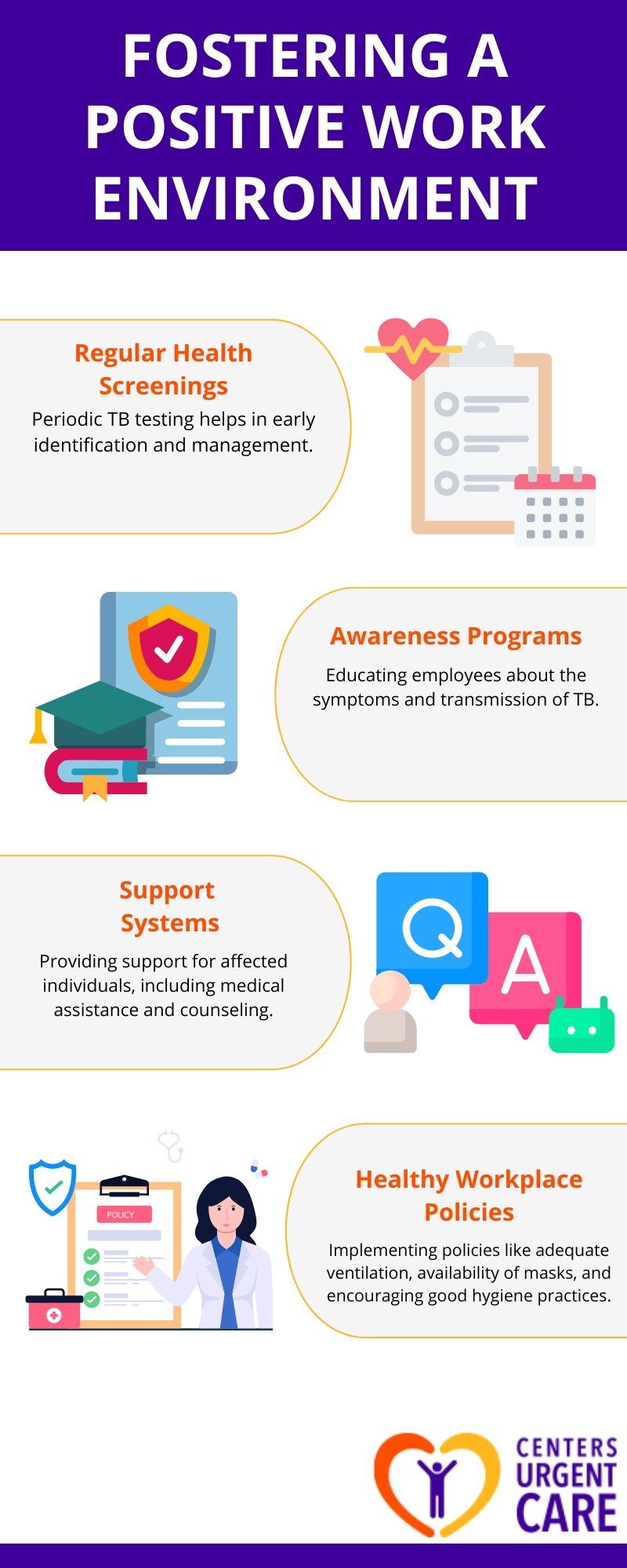
- Regular Screening and Testing: Employers should implement routine TB testing and screening for employees, especially those in high-risk industries or geographic locations with elevated TB prevalence.
- Education and Training: Providing education and training about TB symptoms, transmission, and prevention methods helps employees recognize the signs early and seek prompt medical attention.
- Isolation Protocols: Establishing protocols for isolating individuals who exhibit TB symptoms or have been diagnosed with TB can prevent the spread of the disease within the workplace.
- Access to Medical Care: Facilitating access to medical care and treatment for employees diagnosed with TB ensures they receive the necessary care and reduces the risk of transmission.
- Workplace Hygiene: Promoting good hygiene practices, such as proper ventilation, regular cleaning, and providing personal protective equipment (PPE), can significantly reduce the risk of TB transmission.
- Collaboration with Health Authorities: Employers should work closely with public health authorities to stay updated on TB control guidelines and protocols and implement them effectively in the workplace.
Understanding the risks of untreated tuberculosis and implementing appropriate TB control strategies, employers can create a safer and healthier work environment, reducing the spread of this contagious disease.
Employee Health and Wellness
To ensure a thriving and productive workforce, prioritizing employee health and wellness is essential. Early detection of tuberculosis (TB) and fostering a supportive work environment are crucial strategies in this endeavor. By identifying TB cases early and promoting preventive measures, employers can protect the well-being of their teams and maintain a compliant, efficient workplace. Below, we outline key approaches to achieving these goals, from detection methods to strategies that enhance workplace health and safety:
Early Detection of Tuberculosis
Early detection of Tuberculosis (TB) plays a crucial role in maintaining a healthy workforce. Detecting TB early helps in managing and treating the disease before it can spread to others. Employers often require TB tests to ensure that the disease is identified promptly.
Early detection involves two primary types of tests:
- Tuberculin Skin Test (TST)
- Interferon-Gamma Release Assays (IGRAs)
Early detection allows for:
- Quicker initiation of treatment
- Reduced risk of spreading TB to coworkers
- Improved prognosis for the affected employee
Promoting a Healthy Work Environment
Employers play a key role in fostering a healthy work environment. This is achieved through various measures aimed at safeguarding the well-being of all employees.