According to the Centers for Disease Control and Prevention (CDC), countless emergency room visits could have been handled at an urgent care clinic instead. Many people aren’t sure which facility to choose when illness or injury strikes—and that uncertainty leads to overcrowded ERs and higher medical bills.
Services like a full STD panel are often available at urgent care clinics, making them a convenient and affordable choice for non-emergency testing and treatment. Learning when to choose urgent care helps you get the right care faster and more affordably.
When to Choose Urgent Care?
Choose urgent care for non-life-threatening medical issues that still need prompt treatment. These include minor injuries, infections, or sudden illnesses that can’t wait for a primary care appointment but don’t require ER-level intervention.
Urgent care centers offer walk-in availability, extended hours, and on-site labs or imaging—making them a practical choice for same-day care. They’re best used when you need fast relief but aren’t facing a medical emergency.
What Conditions are Treated at Urgent Care?
Not every medical issue demands an ER visit. Urgent care clinics are equipped to treat a wide variety of health concerns. These facilities fill the gap between primary care and emergency departments.
Here’s what typically falls within the scope of urgent care treatment:
After-hours fever in kids? Weekend ankle sprain? Sudden painful urination with no doctor available? Urgent care can handle these and more.
Common illnesses and symptoms treated:
- Ear infections
- Strep throat
- Flu and cold symptoms
- Sinus infections
- Nausea, vomiting, and diarrhea
- Mild dehydration
Minor injuries urgent care can manage:
- Sprains and strains
- Simple fractures (non-compound)
- Minor cuts needing stitches
- Minor burns
- Back pain
- Sports injuries
Other issues often treated at urgent care:
- Allergic reactions (mild to moderate)
- Skin rashes and insect bites
- Pink eye
- Urinary tract infections (UTIs)
- Migraine or headache (non-life-threatening)
- Mild asthma attacks

When Should You Skip Urgent Care and Go to the ER Instead?
While urgent care clinics cover a wide range of conditions, they are not a substitute for emergency care. Emergency rooms are better equipped to handle critical, life-threatening situations that require advanced medical interventions. You should go to the ER if you experience chest pain or pressure—especially if the pain radiates to your arm or jaw—difficulty breathing, sudden weakness or numbness on one side of the body, slurred speech, confusion, seizures, uncontrollable bleeding, a high fever in infants under three months, major trauma or head injury, or loss of consciousness. These are all medical emergencies where every minute counts, and receiving prompt ER care could mean the difference between life and death.
Why Not Just Wait for a Primary Care Appointment?
Primary care is your first stop for managing long-term conditions and routine checkups—but not always for sudden issues. Delaying care can worsen conditions or prolong discomfort.
Here’s when urgent care is a better alternative:
- You can’t get a same-day appointment with your doctor.
- Your condition worsens outside office hours.
- You need a lab test or X-ray on short notice.
- Symptoms develop over the weekend or holiday.
For example, if you develop a rash that’s rapidly spreading on Saturday morning, waiting until Monday could lead to unnecessary discomfort or complications. This is exactly when urgent care is the right choice.
What Services Can You Expect at an Urgent Care Clinic?
While services may vary depending on the location, most urgent care centers typically offer a range of medical services, including diagnostic tests for flu, strep, and mono, as well as bloodwork, urinalysis, and X-rays. They also provide basic wound care, prescription medications, vaccinations, and physicals for school or sports. Urgent care providers often include board-certified physicians, nurse practitioners, and physician assistants, ensuring patients receive quality care along with clear follow-up instructions to support proper recovery. For men, these centers can also play a critical role in detecting silent infections—read “What Men Need to Know About Silent STD Infections” to understand why early testing matters.
5 Benefits of Choosing Urgent Care
Urgent care offers a streamlined, affordable, and efficient way to address immediate health concerns. It’s a middle ground that ensures you don’t overpay at the ER or wait days to see your doctor.
Key advantages of urgent care clinics:
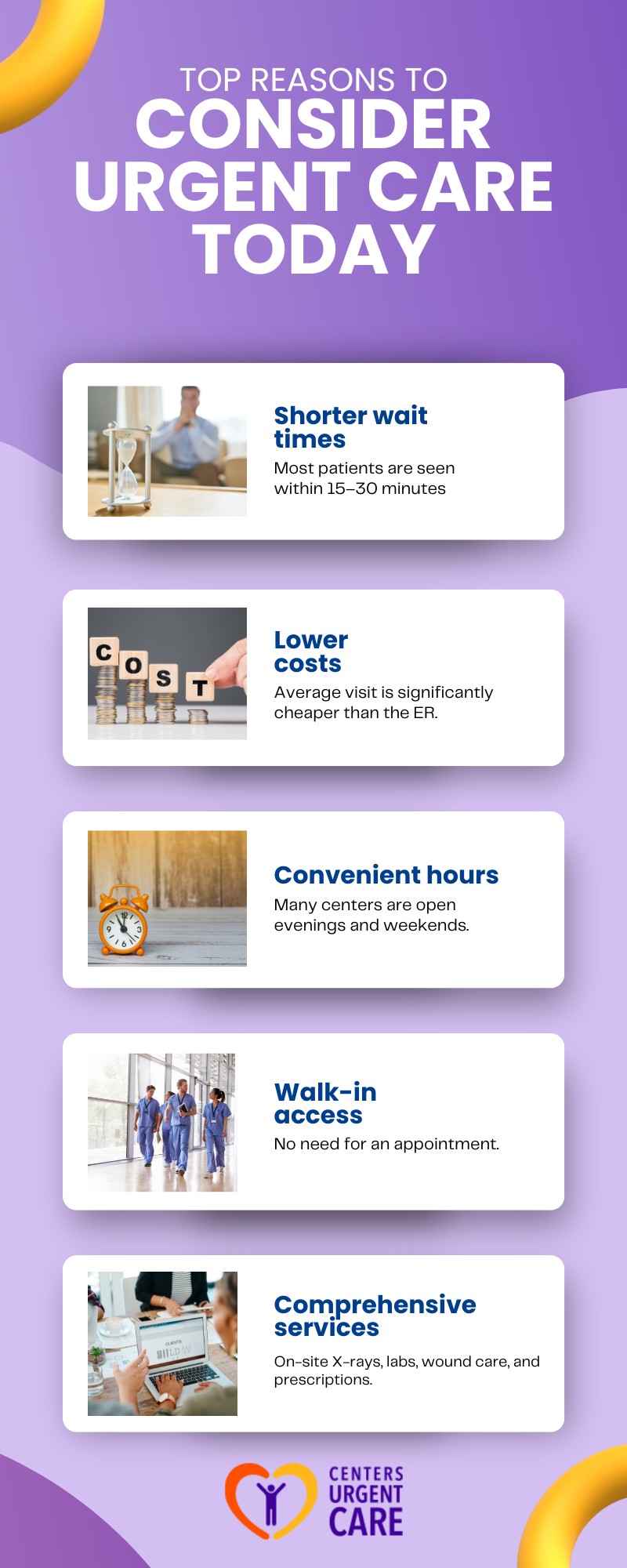
In many cases, urgent care offers hospital-grade treatment without the hospital-grade price tag—especially valuable for uninsured or underinsured patients.
What Should You Bring to an Urgent Care Visit?
Preparation helps speed things up. Bring the following if possible:
- A valid ID
- Insurance card (if applicable)
- List of medications you’re taking
- Information about allergies
- A brief history of your symptoms
Most clinics accept walk-ins, but many also allow online check-ins or call-ahead options to reduce your wait time.
Need a Fast and Reliable Urgent Care Center?
At Centers Urgent Care, we provide fast, high-quality care for both children and adults. Whether you’re dealing with a minor fracture, flu symptoms, or an unexpected allergic reaction, our walk-in clinics are ready to help—without the long waits or high ER costs.
With multiple urgent care centers in NYC, we’re right around the corner when you need us. Our facilities are equipped with onsite labs, imaging, and experienced staff to get you the relief you need—fast.
Don’t wait. Get the right care, right now. Contact us today!