
Quick morning stretches are short, intentional movements done right after waking up to activate muscles, improve circulation, and enhance flexibility. These stretches typically target the spine, hips, hamstrings, and shoulders, and can be completed in under 10 minutes. Whether you’re getting ready for a workout or recovering from a minor injury like stitches, these stretches help reset the body and prepare both mind and muscles for the day ahead.
Why are Morning Stretches Important?
Morning stretches are important because they help wake up your body and mind, improve blood circulation, and gently ease your muscles into the day. After hours of sleep, your body can feel stiff and sluggish—stretching helps reduce that tension and prepares you to move more freely. It can also boost your energy, improve posture, and even enhance mental clarity by promoting better oxygen flow. Starting your day with a few simple stretches sets a positive tone and helps prevent discomfort or injury throughout the day.
What Should You Stretch First in the Morning?
Waking up, your body needs time to warm up. Instead of jumping into high-impact movements, ease into your day with these targeted areas:
- Neck and Shoulders – to reduce tension and improve posture.
- Spine and Lower Back – for mobility and core support.
- Hips and Hamstrings – to release tightness and improve flexibility.
- Calves and Ankles – for stability and blood flow.
Start with the spine and work outward to the extremities to activate the central nervous system effectively.
How Long Should A Morning Stretch Routine Take?
A good morning stretch session can take as little as 5 minutes and up to 15 minutes depending on your schedule. The goal is consistency. Even if you only have a few minutes, moving intentionally through a series of key stretches can improve your mobility, mood, and readiness for the day.
5 Best Quick Morning Stretches To Add To Your Routine
It’s important to select stretches that target major muscle groups and can be done without equipment. After a long night of stillness, your body craves movement—so let’s break down the most effective ones.
Standing Forward Fold (Hamstrings and Spine)
This stretch helps relieve lower back tension and stretch out tight hamstrings.
- Keep your feet positioned about hip-width apart and stand upright.
- Bend at your hips and gently lean forward.
- Let your arms hang or grab opposite elbows.
- Hold for 30 seconds.
Cat-Cow Stretch (Spine Mobility)
A yoga-inspired movement that brings mobility to the spine and opens the chest.
- Get down on your hands and knees to start.
- Inhale, arch your back (cow pose), lifting head and tailbone.
- Exhale, round your spine (cat pose), tucking chin and pelvis.
- Repeat for 8–10 rounds.
Side Stretch (Obliques and Shoulders)
This releases tightness from sleeping on your side.
- Stand with feet together.
- Raise both arms overhead and clasp hands.
- Lean gently to one side for 20 seconds, then switch.
Hip Flexor Stretch (Hips and Lower Back)
Ideal for reducing hip tightness and supporting proper alignment.
- Step your right foot forward into a lunge.
- Lower the left knee to the floor.
- Keep your chest upright and press hips forward.
- Hold for 30 seconds each side.
Child’s Pose (Full Body Relaxation and Stretch)
A grounding pose that lengthens the spine and calms the nervous system.
- Kneel with toes together and knees apart.
- Sit back onto your heels and stretch arms forward.
- Rest forehead on the mat.
- Breathe deeply for 1 minute.

Should You Stretch Before or After Coffee?
There’s no strict rule, but experts suggest doing your quick morning stretches before consuming caffeine. Stretching before coffee helps awaken the body naturally through movement, which can minimize dependency on stimulants. Plus, it supports healthier digestion when performed before food or drink intake.
Can Stretching Replace Morning Exercise?
Stretching isn’t a replacement for cardio or strength training, but it’s a vital foundation for a balanced morning routine. Quick morning stretches activate key muscle groups, reduce tension, and prepare your body for more intensive activities later in the day. Think of it as the warm-up your body needs, even if your full workout comes later.
How To Make Morning Stretching A Daily Habit
Making stretching a habit starts with preparation and realistic goals. You don’t need to commit to a 30-minute yoga session each morning. Instead:
- Lay out a yoga mat before bed to serve as a visual cue.
- Use a timer or morning alarm set 10 minutes earlier.
- Follow a set sequence of 5 stretches so it becomes muscle memory.
- Track your mood and energy levels post-stretch to stay motivated.
Pair your stretch time with an activity you already do daily (like brushing your teeth) for habit stacking.
5 Tips To Avoid Injury During Morning Stretches
Even with low-impact movements, stretching improperly can lead to strain or discomfort. Follow these safety tips:
- Don’t stretch to the point of pain—tension is okay, pain is not.
- Warm up your joints with gentle movements before static stretches.
- Breathe continuously—never hold your breath.
- Keep your movements slow and mindful.
- Stay hydrated to support joint and muscle function.
Can Stretching in The Morning Help With Posture?
Yes. Many postural issues stem from muscular imbalances and stiffness developed during prolonged sitting or poor sleeping positions. Stretching in the morning:
- Loosens tight chest and shoulder muscles
- Strengthens the lower back and core
- Promotes awareness of body alignment
- Reduces strain on the spine
This makes it easier to maintain proper posture throughout the day, especially for people working at desks.
Morning Stretching vs. Evening Stretching
Both are valuable, but they serve different purposes.
- Morning stretches activate and energize your body for movement and alertness.
- Evening stretches calm the nervous system, relieve stress, and help you sleep better.
If time allows, incorporating both into your day offers maximum benefits. However, if you must choose one, morning stretching provides a better return on investment for energy, mobility, and injury prevention. For more practical strategies to ease discomfort and boost daily function, check out our article Fibromyalgia Pain Hacks That Actually Work.
Benefits Of Quick Morning Stretches For Different Age Groups
Different demographics experience unique benefits from morning stretching:
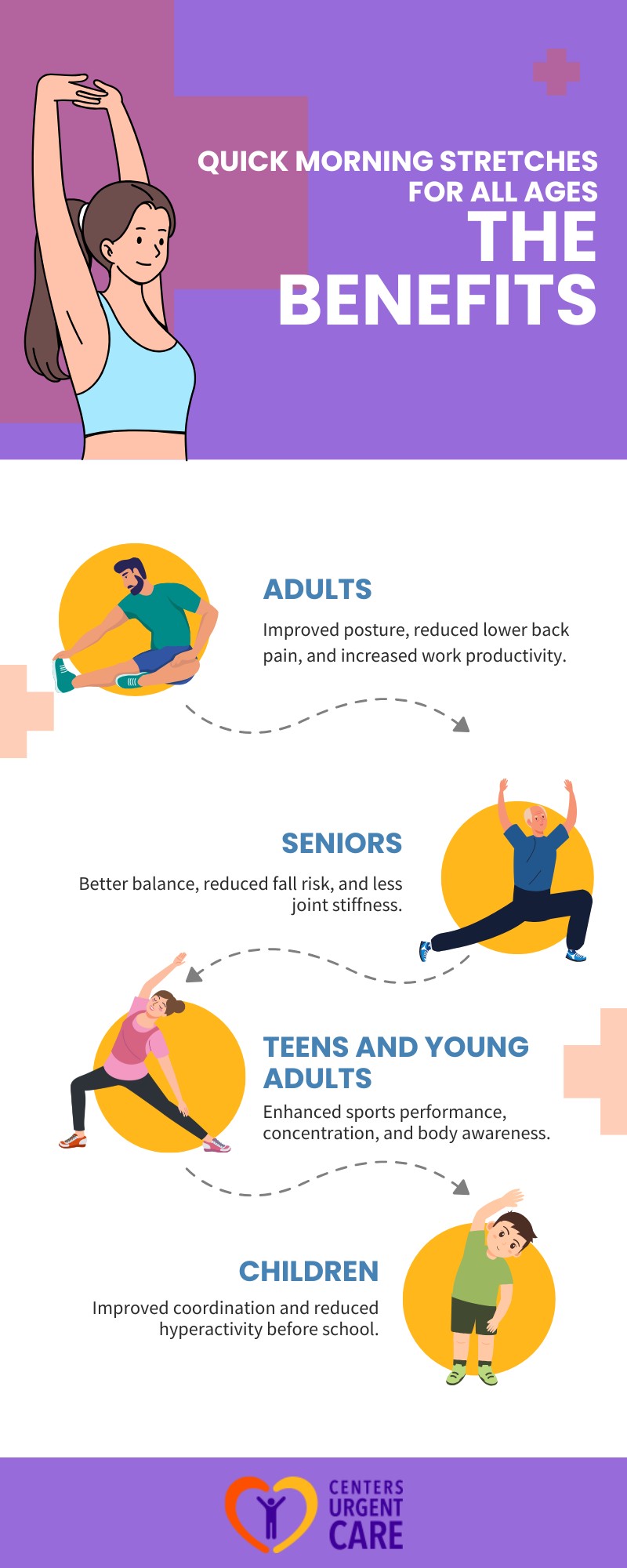
Quick morning stretches offer lifelong advantages when integrated early and practiced consistently.
Final Thoughts On Making Quick Morning Stretches A Lifestyle Shift
Quick morning stretches are a low-effort, high-reward practice that most people can adopt. You don’t need a gym membership or equipment—just your body, some quiet space, and a few intentional minutes.
Consistently doing this, you’ll likely notice:
- Fewer aches and pains
- Better mental focus
- Increased flexibility and energy
- Improved emotional resilience
So tomorrow morning, before reaching for your phone or coffee—take a moment, stretch, and let your body say “thank you.”
Need Help with Aches, Pains, or Stiffness? Visit Centers Urgent Care Today
If you’re experiencing persistent stiffness, discomfort during stretching, or pain that doesn’t improve, it might be time to consult a professional. At Centers Urgent Care, we offer fast, high-quality urgent care services for children and adults. Whether you’re dealing with a muscle strain or want guidance on safe stretching techniques, our medical team is here to help.
Conveniently located for those looking for urgent care in New York, Centers Urgent Care provides walk-in services with minimal wait times. Contact us today to get the care and support you need to feel your best—every morning.