

According to the CDC, fibromyalgia affects about 4 million U.S. adults—roughly 2% of the population. Many live with widespread chronic pain, fatigue, and sleep disruption. While medication is often prescribed, it’s not the only path forward. Many individuals have learned to control their symptoms through non-drug strategies that promote body awareness, stress regulation, and sustainable daily habits—much like how urgent care offers practical solutions for acute needs such as stitches at urgent care, these approaches provide accessible relief without long-term reliance on medication.
Managing Fibromyalgia Pain Without Medication
Managing fibromyalgia pain without medication is possible through a combination of lifestyle adjustments, physical therapies, and behavioral strategies. These methods aim to reduce pain intensity, improve sleep, and restore function by addressing root contributors like stress, muscular tension, and inflammation.
What Lifestyle Changes Help Relieve Fibromyalgia Pain?
One of the most powerful ways to reduce fibromyalgia symptoms is through consistent lifestyle changes. These can provide structure to daily routines and minimize symptom flare-ups. Rather than relying on short-term fixes, these strategies offer sustainable tools that support both physical and mental health.
Here’s how lifestyle habits can help:
- Stick to a regular sleep schedule: Go to bed and wake up at the same time daily, even on weekends. Poor sleep increases pain sensitivity and fatigue.
- Limit caffeine and screen time before bed: Blue light and stimulants can disrupt melatonin production and lower sleep quality.
- Create a calming bedtime routine: Deep breathing, journaling, or gentle stretches can prepare the body for restorative sleep.
Beyond rest, other lifestyle changes can significantly improve how the body handles pain.
Consider these additional adjustments:
- Stay hydrated: Dehydration can increase fatigue and muscle cramping.
- Avoid processed foods: High-sugar and high-sodium items may trigger inflammation.
- Pace yourself: Use time blocks or timers for tasks to prevent burnout and manage energy throughout the day.
- Join a support group: Connecting with others living with fibromyalgia can reduce isolation and offer emotional support.
Can Exercise Reduce Fibromyalgia Pain?
Exercise is often feared by those with fibromyalgia due to post-exertional pain—but the right kind of movement can actually reduce discomfort over time. The key lies in low-impact, consistent activity that respects the body’s current limits while gradually building strength.
Helpful movement practices include:
- Walking: Just 10–20 minutes a day improves circulation and reduces stiffness.
- Tai Chi or Qigong: These meditative movements ease muscular tension and balance.
- Water aerobics: Exercising in warm water reduces joint strain and pain intensity.
- Stretching and yoga: Target gentle, slow movements that promote flexibility and release fascia.
Start small—5 minutes is enough. Gradually increase intensity and duration based on how your body responds. And if that increased activity ever leads to minor injuries, like scrapes or bruises, it’s good to know when professional care might be needed—check out our article When to Visit Urgent Care for Cuts & Bruises to learn more.

How Does Stress Affect Fibromyalgia?
Stress is one of the biggest contributors to fibromyalgia flare-ups. When the body is constantly in “fight or flight” mode, muscles tense, sleep worsens, and pain becomes more severe. Learning to regulate your stress response can directly improve symptoms.
Effective stress-reduction tools:
- Cognitive Behavioral Therapy (CBT): Helps reframe negative thoughts and manage anxiety linked to pain.
- Mindfulness-Based Stress Reduction (MBSR): Meditation and breathwork improve emotional regulation and reduce pain perception.
- Journaling: Writing down thoughts and feelings can reduce cognitive overload.
- Digital detox: Taking breaks from screens helps the nervous system reset and lowers overstimulation.
The goal isn’t to eliminate all stress—but to strengthen your response to it.
Are There Dietary Changes That Help With Fibromyalgia?
Yes—diet plays a significant role in managing fibromyalgia pain. Certain foods promote inflammation and worsen symptoms, while others provide the nutrients needed to support nerve function and cellular repair.
Foods that may worsen symptoms:
- Processed meats
- Refined sugars
- MSG and artificial sweeteners
- Excess alcohol and caffeine
Foods that may improve symptoms:
- Omega-3-rich fish (like salmon and sardines)
- Leafy greens and colorful vegetables
- Whole grains (quinoa, oats, brown rice)
- Anti-inflammatory spices (turmeric, ginger)
Track what you eat using a food diary to identify patterns between diet and flare-ups.
What Alternative Therapies Help Manage Fibromyalgia Naturally?
Paired with lifestyle changes, alternative therapies can offer extra relief from chronic pain. These options support the body’s natural healing processes and often come with little to no side effects.
Consider integrating the following:
- Massage Therapy: Reduces muscle stiffness and improves blood flow.
- Acupuncture: Targets specific nerve pathways linked to pain modulation.
- Chiropractic Care: Can help realign the spine and reduce muscular imbalance.
- Heat and Cold Therapy: Heat relaxes tense muscles; cold reduces localized inflammation.
- Aromatherapy: Essential oils like lavender or peppermint can calm the nervous system and relieve headaches.
Always consult a trained specialist to ensure these treatments are safe for your specific condition.
How Important is Routine In Managing Fibromyalgia?
Fibromyalgia thrives in unpredictability. Fluctuating energy levels and pain make consistency difficult—but building structure into your day can reduce stress and stabilize symptoms.
Having a daily routine reduces cognitive load, improves emotional stability, and ensures regular self-care activities are maintained—even during flare-ups.
Tips for creating a fibromyalgia-friendly routine:
- Break your day into manageable chunks.
- Schedule rest periods between tasks.
- Prepare meals in advance to prevent decision fatigue.
- Use alarms or reminders for medications and hydration.
Consistency—even in small actions—builds resilience.
Does Therapy Help With Fibromyalgia?
Mental health therapy, particularly for conditions like anxiety or depression (which often co-occur with fibromyalgia), can make a measurable difference in pain tolerance and symptom control. Fibromyalgia isn’t just a physical condition—it involves a deeply complex mind-body relationship.
Types of therapy that help include:
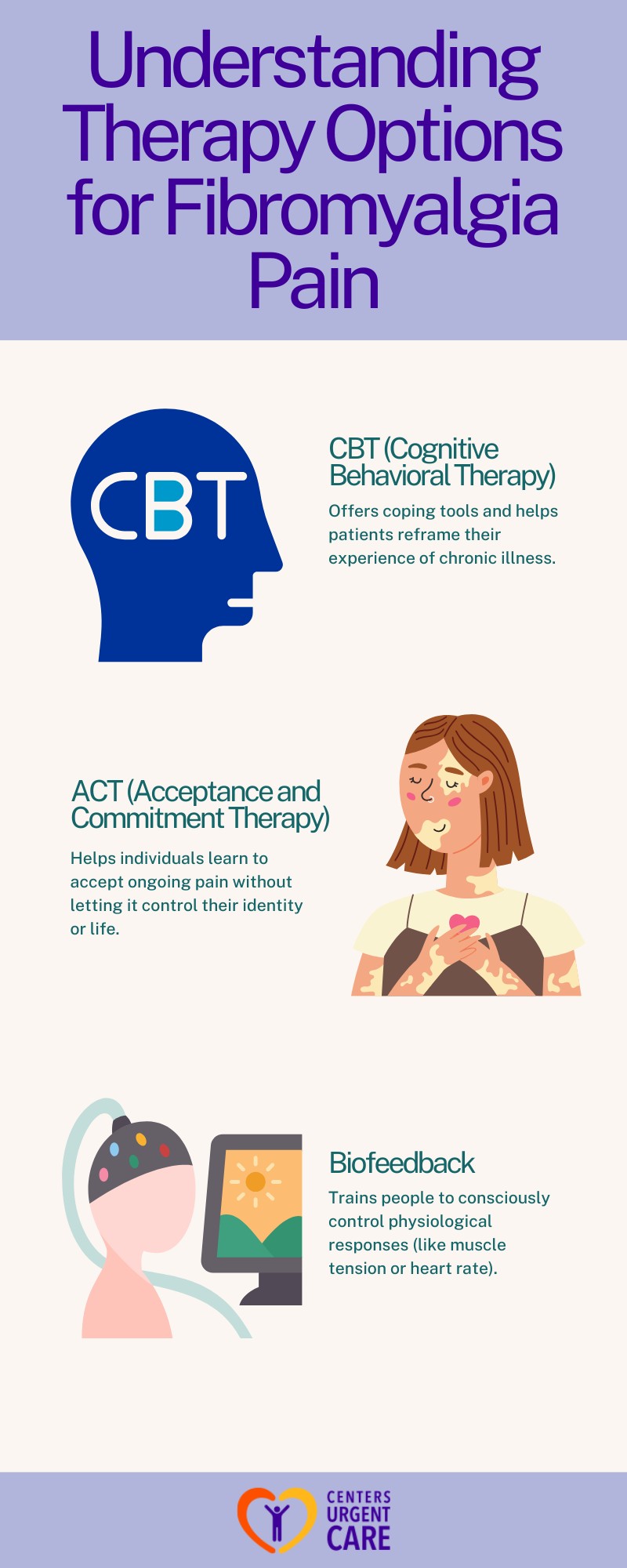
Emotional regulation is a critical part of managing fibromyalgia without medication.
Get Help Today at Centers Urgent Care
If you’re navigating the challenges of managing fibromyalgia pain or need support during a flare-up, Centers Urgent Care can help. Our experienced team offers high-quality, fast care for children and adults, including treatment for pain-related conditions and physical stress. As one of the top urgent care centers in NYC, we’re here to guide you toward recovery—even without long waits or extensive appointments.
Visit us today and get the personalized care you need to feel better. Let us support you on your journey to better health—without relying solely on medication.