

The Department of Transportation (DOT) physical exam is an essential requirement for individuals who wish to drive commercial vehicles in the United States. The DOT physical ensures that drivers are physically fit to operate large vehicles safely, protecting both the driver and others on the road. One of the common questions that arise during the process is whether the DOT physical includes a vision test. In this article, we will explore the role of vision in the DOT physical, the requirements for passing the test, and why vision is an important part of commercial driving.
Does The Dot Physical Include A Vision Test?
Yes, the DOT physical includes a vision test as part of the overall evaluation. The test typically checks for the ability to see clearly at various distances, ensuring that drivers can safely operate a vehicle. The DOT requires a minimum visual acuity of 20/40 in each eye, with or without correction, and the ability to detect colors to identify traffic signals and hazards. If you need assistance with a vision test or other health concerns, urgent care centers can provide timely evaluations.
The vision test during the DOT physical also assesses peripheral vision. A driver must be able to see a wide field of vision, which is crucial for safe driving. If an individual does not meet the vision standards, they may be required to wear corrective lenses while driving or, in some cases, may need to undergo further testing or treatment to pass the exam.
The Purpose of the DOT Physical
The DOT physical exam is a thorough medical evaluation required for individuals who wish to obtain or renew their commercial driver’s license (CDL). The purpose of the DOT physical is to determine whether a driver has any medical conditions or physical limitations that could impair their ability to safely operate a commercial vehicle.
The exam covers various aspects of a driver’s health, including hearing, blood pressure, and general physical fitness. It is designed to ensure that drivers are capable of performing their duties without endangering themselves, their passengers, or other people on the road.
Vision in the DOT Physical
Vision is one of the most critical components of the DOT physical exam. A commercial driver’s ability to see clearly is essential for safe driving, as good vision directly impacts a driver’s ability to assess road conditions, traffic, and other drivers. Vision problems such as poor eyesight, color blindness, or visual impairments can create significant risks on the road, and as such, the DOT physical includes a vision test to assess a driver’s ability to see.
During the exam, the examiner will assess a driver’s vision in several ways, including checking their visual acuity and peripheral vision. The exam will also determine whether the driver requires corrective lenses (glasses or contacts) and whether they meet the minimum vision standards required by the DOT.
What Vision Standards Are Required by the DOT?
The DOT has established specific vision standards that all commercial drivers must meet in order to pass the physical exam. These standards are designed to ensure that drivers have adequate vision to safely operate large vehicles.
Visual Acuity
Visual acuity refers to how well a person can see at various distances. The DOT requires drivers to have a minimum of 20/40 vision in each eye, either with or without corrective lenses. This means that a driver should be able to read letters on a standard eye chart from 20 feet away, with both eyes open.
If a driver does not meet the 20/40 requirement with their natural vision, they may still pass the exam if they wear corrective lenses, such as glasses or contact lenses, during the test. It is important to note that drivers who require corrective lenses must wear them whenever they are driving.

Peripheral Vision
Peripheral vision is the ability to see objects outside of one’s direct line of sight. The DOT also requires commercial drivers to have a minimum amount of peripheral vision. Specifically, drivers must be able to see at least 70 degrees in the horizontal meridian in each eye. This helps ensure that drivers can detect hazards from the side, such as other vehicles, pedestrians, or obstacles, which is essential for safe driving.
If a driver has restricted peripheral vision or has a condition that affects their field of vision, they may be required to provide additional medical documentation to demonstrate their ability to drive safely. In some cases, drivers with limited peripheral vision may be disqualified from driving commercial vehicles.
Color Vision
Although the DOT does not require drivers to pass a color vision test in most cases, the ability to distinguish between red, amber, and green is crucial for safe driving. This ability is important for recognizing traffic signals and understanding the condition of traffic lights. Drivers who cannot pass a color vision test due to color blindness may still be eligible for a commercial driver’s license if they meet other vision requirements.
In some cases, drivers with color blindness may be required to submit additional documentation or pass a special driving test to ensure their ability to drive safely.

What Happens If a Driver Fails the Vision Test?
If a driver fails the vision test during the DOT physical, they may not be issued a medical certificate to drive. However, there are several options available for drivers who do not meet the vision requirements but still wish to drive commercial vehicles.
Corrective Lenses
In many cases, a driver who fails the vision test without corrective lenses can still pass the exam by wearing glasses or contact lenses during the test. If a driver is required to wear corrective lenses, they must wear them at all times while driving a commercial vehicle. Failure to do so could result in disqualification.
Waivers or Exemptions
In certain cases, drivers who do not meet the standard vision requirements may be eligible for a waiver or exemption. For example, some drivers with limited peripheral vision may be able to obtain a waiver if they can demonstrate their ability to drive safely.
Drivers who fail the vision test should consult with their medical examiner to discuss their options. In some cases, it may be possible to correct the vision issue or apply for a special exemption.
Additional Considerations
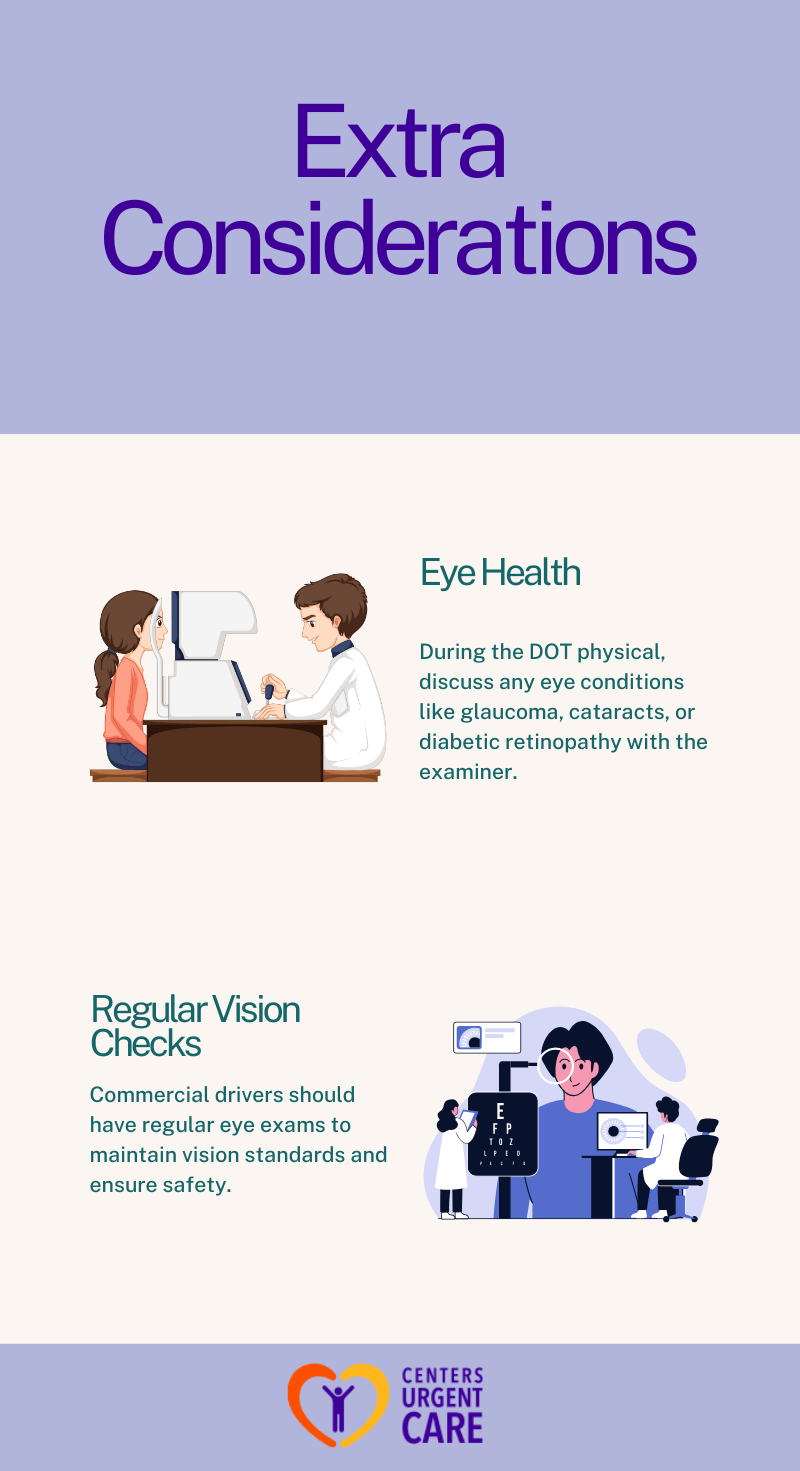
The Importance of Regular Vision Care for Commercial Drivers
Commercial drivers are responsible for the safety of themselves and others on the road, which is why maintaining good vision is so important. Regular vision care is essential for all drivers, but it is especially crucial for those operating large vehicles in commercial settings.
Drivers should schedule routine eye exams with an optometrist or ophthalmologist to ensure their vision remains up to standard. Additionally, drivers should monitor their vision and seek corrective measures as needed, including wearing glasses or contacts.
Staying proactive about their vision health, commercial drivers can avoid potential issues that may affect their ability to pass the DOT physical exam and continue driving safely.
The DOT physical exam includes a vision test to assess a commercial driver’s ability to see clearly, both near and far, as well as their peripheral vision. Drivers must meet the minimum vision requirements to safely operate commercial vehicles. If they fail the vision test, they may still pass the DOT physical by wearing corrective lenses or obtaining a waiver in some cases. Regular eye exams and maintaining good vision health are crucial for commercial drivers to stay safe on the road and meet the necessary driving requirements. At Centers Urgent Care, we offer fast, high-quality urgent care services for children and adults, including DOT physical exams. If you’re looking for urgent care centers in NYC, don’t hesitate to contact us today to schedule your exam or learn more about our services!
Sources: