

Polycystic Ovary Syndrome (PCOS) is a common hormonal disorder among women of reproductive age. Diagnosing PCOS is crucial for managing its symptoms and preventing potential complications, just as DOT Physical are essential for assessing drivers’ health. Let’s delve into the key aspects of its diagnosis.
Rotterdam Criteria
The Rotterdam Criteria are the most widely accepted guidelines for diagnosing PCOS. According to these criteria, a diagnosis can be made if two out of the following three are present:
- Irregular Menstrual Cycles: This includes cycles that are infrequent, absent, or prolonged.
- Clinical or Biochemical Hyperandrogenism: Signs include hirsutism (excessive hair growth), acne, androgenic alopecia (male-pattern hair loss), or elevated androgen levels in blood tests.
- Polycystic Ovarian Morphology: Identified through a transvaginal ultrasound, this involves having 12 or more follicles in each ovary measuring 2-9 mm in diameter, or an increased ovarian volume (>10 mL).
Physical Examination and Tests
Proper diagnosis of PCOS usually involves a combination of physical examinations and tests. Healthcare providers often start by discussing the patient’s medical history and symptoms. This is followed by a physical exam which may include a pelvic examination.
Tests performed might include:
Ultrasound:
- A transvaginal ultrasound is typically used to look at the ovaries and check for cysts.
- It also helps in assessing the thickness of the endometrium (lining of the uterus).
Blood Tests:
- Hormone Levels: To measure levels of androgens (like testosterone), luteinizing hormone (LH), and follicle-stimulating hormone (FSH).
- Blood Glucose Levels: To assess for insulin resistance or type 2 diabetes.
- Lipid Profile: To check cholesterol and triglyceride levels, as women with PCOS have a higher risk of developing cardiovascular issues.
Diagnosing PCOS can be complex, and it’s recommended to consult with a healthcare provider to interpret the tests and symptoms accurately. An early diagnosis and understanding of the condition can lead to better management and a healthier life for those affected.
Signs and Symptoms of PCOS
Polycystic ovary syndrome (PCOS) is a common endocrine disorder affecting people of reproductive age. The diagnosis of PCOS typically hinges on the presence of specific signs and symptoms. Understanding these can help in early detection and management.
Menstrual Irregularities
One of the hallmark symptoms of PCOS is menstrual irregularities. This includes infrequent, irregular periods or prolonged menstrual cycles. Individuals may experience less than nine menstrual periods per year, intervals of more than 35 days, or abnormally heavy periods (menorrhagia).
Hyperandrogenism
Another critical symptom is hyperandrogenism, which refers to elevated levels of male hormones in the body. This can manifest in several ways, including:
- Hirsutism: Excessive hair growth on the face, chest, and back.
- Acne: Persistent or severe acne that doesn’t respond to typical treatments.
- Androgenic alopecia: Thinning of hair or male-pattern baldness.
Healthcare providers assess for hyperandrogenism through both clinical evaluation and biochemical tests.
Polycystic Ovarian Morphology
Polycystic ovarian morphology is identified through transvaginal ultrasonography. This involves the presence of multiple small cysts on the ovaries, often described as having a “string of pearls” appearance. To meet the criteria for polycystic ovarian morphology, an ovary must have:
- 12 or more follicles measuring 2-9 mm in diameter.
- Increased ovarian volume.
Signs and Symptoms: Menstrual Irregularities
- Definition – Infrequent, irregular, or prolonged menstrual cycles
- Diagnostic Method – Medical history and menstrual tracking
Signs and Symptoms: Hyperandrogenism
- Definition – Elevated levels of male hormones
- Diagnostic Method – Clinical evaluation and blood tests
Signs and Symptoms: Polycystic Ovarian Morphology
- Definition – Multiple small cysts on ovaries
- Diagnostic Method – Transvaginal ultrasound
Recognizing these primary signs and symptoms is crucial for the timely and accurate diagnosis of PCOS, allowing for appropriate treatment and management strategies to be put in place.

Monitoring and Screening for PCOS
Monitoring and screening are essential components in the management of Polycystic Ovary Syndrome (PCOS). These ongoing processes help to track the progression of the syndrome and manage associated symptoms effectively.
Regular Health Checks
Patients with PCOS should undergo regular health checks to monitor various health parameters. Regular screening can help in early detection and mitigation of potential complications like type 2 diabetes, high blood pressure, and heart problems. Key health checks include:
- Body Mass Index (BMI)
- Blood Pressure
- Metabolic Parameters (e.g., blood glucose levels, cholesterol, and triglycerides)
- Hormone Levels
Regular health checks facilitate prompt intervention, reducing the long-term risks associated with PCOS.
- BMI – Every 3-6 months
- Blood Pressure – Every 6-12 months
- Blood Glucose Levels – Annually
- Cholesterol Levels – Annually
- Hormone Levels – As recommended by healthcare provider
Psychological Screening
PCOS not only affects physical health but also has a profound impact on psychological well-being. Patients with PCOS are at a higher risk of experiencing mental health issues such as depression, anxiety, and sleep disorders. Regular psychological screening is crucial for early identification and management of these issues.
Key areas for psychological screening include:
- Depression
- Anxiety
- Obstructive Sleep Apnea
Healthcare providers should incorporate mental health evaluations as part of routine care for patients with PCOS.
- Depression – Every 6-12 months
- Anxiety – Every 6-12 months
- Obstructive Sleep Apnea – As recommended by healthcare provider
Integrating regular health checks and psychological screenings into the management plan, healthcare providers can offer comprehensive care for individuals with PCOS, ensuring both physical and mental well-being.
Management Options for PCOS
Effective management of Polycystic Ovary Syndrome (PCOS) involves a combination of lifestyle modifications, hormonal treatments, and medications aimed at addressing various symptoms. Here’s a closer look at the primary management options:
Weight Management
Weight management plays a crucial role in managing PCOS symptoms. Losing weight can improve symptoms such as menstrual irregularities and insulin resistance. A weight loss of 5%-10% can make a significant difference.
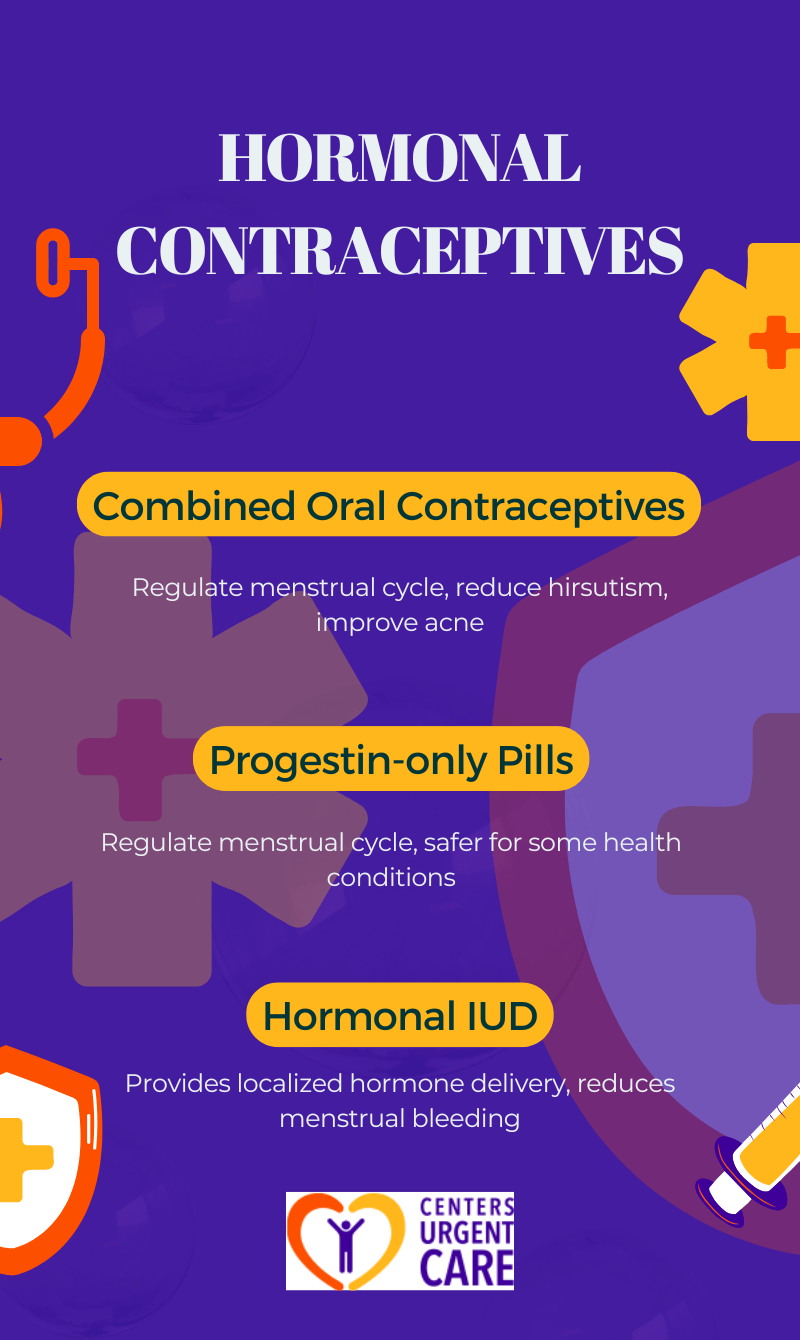
Hormonal Contraceptives
Medications for Symptoms
Several medications are available to manage specific symptoms of PCOS. These medications target issues such as insulin resistance, anovulation, and hyperandrogenism.
Medication: Metformin
- Purpose – Insulin resistance
- Benefits – Improves insulin sensitivity, helps with weight management
Medication: Anti-androgen Agents
- Purpose – Hyperandrogenism
- Benefits – Reduces hirsutism and acne
Medication: Inositol
- Purpose – Menstrual irregularities
- Benefits – Improves ovulation and menstrual cycle regularity
Medication: Clomiphene Citrate
- Purpose – Anovulation
- Benefits – Induces ovulation, aids in fertility
These management options, whether individually or combined, aim to provide comprehensive care for those experiencing PCOS. It’s essential to work with healthcare professionals to tailor treatments to individual needs, ensuring the most effective outcomes.
Lifestyle Changes for PCOS
Lifestyle changes play a significant role in managing Polycystic Ovary Syndrome (PCOS). Adopting specific dietary and exercise routines can help manage symptoms and improve overall health.
A combination of diet modifications and regular exercise can significantly improve the management of PCOS. These lifestyle changes help with weight management, symptom control, and overall well-being, ultimately enhancing quality of life. At Centers Urgent Care, we offer fast, high-quality urgent care services in NYC for both children and adults, ensuring that you receive the support you need in managing your health. If you’re looking for assistance in PCOS management or any urgent care needs, contact us today at our urgent care center. We’re here to help you achieve better health and peace of mind!
Sources:

HOW I WAS CURED FROM HERPES VIRUS
I am writing this testimonial with immense gratitude and a renewed sense of hope in my heart. For years, I battled with the physical and emotional torment caused by the herpes virus. It felt like an unending struggle, until I discovered a remarkable solution that changed my life forever. Like many others, I had tried countless remedies, medications in search of a cure. I had lost hope, resigned to the belief that herpes was something I would have to live with indefinitely. However, fate intervened and led me to a breakthrough that altered the course of my life. Upon stumbling on a revolutionary treatment option, my skepticism slowly transformed into a flicker of hope. The treatment was a natural remedy from Dr Awase [ HERBS ] Over time, as I followed the treatment diligently, I started noticing positive changes and I experienced a boost in my overall well-being. I am ecstatic to share that I am now herpes-free confirmed by my Dr after a test was done. The treatment I received was nothing short of miraculous and I couldn’t be more grateful. I have regained my self-confidence and the burden that once weighed heavily upon me has been lifted. I was cured of my herpes virus through natural medication.
If you, like me, have been struggling with herpes and searching for a way out, please know that hope exists. May my story inspire hope in the hearts of those who need it. He also specializes in getting rid of HPV, OVARIAN CYST, PCOS, HEPATITIS and a lot more.
Contact on WhatsApp +2349074997110
Email:- dr.awaseherbalhome@gmail. com
2025 has changed my life. I never believed I would be cured by a spell caster who specializes in herbal cure and magical spells. I am talking about the help Doctor Odunga gave to me. I have been cured of herpes HPV which has plagued me for over 2 years. I am very happy to tell others that if you want to be cured or get your ex back spells and get pregnant naturally, even financial blessing through lottery, there is only one place to be and that is with Dr Odunga Spell Temple. Am so happy that just 3 days after taking DR ODUNGA Herbal treatments my herpes was cured permanently. DR ODUNGA also have cure to #HIV #Diabetes #Lupus #Tinnitus #Fibroid #Cancer #Hepatitis B, #Syphilis #Infertility etc … If you have this ailment or whatsoever you might be suffering from you should contact him at his EMAIL: odungaspelltemple@gmail.com OR VIA Whats App +2348167159012