

Feeling like the world is spinning? You might be experiencing a condition called vertigo. This unsettling sensation can be disorienting and disruptive. Let’s delve into the common symptoms of vertigo, so you can better understand what’s happening to your body and when it’s time to seek medical attention.
Definition of Vertigo
Vertigo is characterized by a feeling of dizziness and a perception that either the individual or their surroundings are in motion. This sensation of spinning can last for a while, and it may come and go intermittently. It is important to note that vertigo is not the same as general dizziness, as it specifically refers to a spinning sensation.
Causes of Vertigo
The vestibular system, located in the inner ear, plays a vital role in providing information to the brain about an individual’s movement, positioning, and spatial orientation. Vertigo symptoms can occur when this system is affected by the conditions below.
- BPPV (Benign Paroxysmal Positional Vertigo): BPPV occurs when little calcium particles in the ear canal become dislodged from their normal positions. Particles this size can then stimulate the balance receptors in the eardrum, resulting in a spinning sensation or headaches.
- Meniere’s Disease: Meniere’s disease is marked by an accumulation of fluid in the ear canal, which causes changing pressures. This fluid imbalance can result in periodic cases of vertigo, hearing loss, tinnitus, and a feeling of fullness in the impacted ear.
- Labyrinthitis: These conditions are frequently caused by viral infections that inflame the inner ear. Inflammation might interfere with the normal function of the vestibular system, resulting in vertigo symptoms.
Symptoms of Vertigo
Understanding these symptoms is crucial in identifying whether you may be experiencing vertigo. The sensations experienced and the impact on balance are key indicators of this condition.
Sensations Experienced
When someone experiences vertigo, they often describe a spinning, whirling, or tipping sensation. It can feel as if you or your surroundings are in motion when they aren’t. This false sensation of movement is different from feeling light-headed or dizzy. The intensity and duration of these sensations can also vary depending on the individual.
In addition to the spinning or whirling sensation, other symptoms may accompany vertigo. These can include:
- Nausea or vomiting
- Sweating
- Abnormal eye movements (nystagmus)
- Feeling unsteady or off-balance

Impact on Balance
Vertigo can have a significant impact on a person’s balance. The false sensation of movement can make it difficult to walk, stand, or perform everyday activities. Individuals with vertigo may experience episodes of unsteadiness, stumbling, or even falling.
The impact on balance can lead to a fear of falling and a decrease in overall mobility. It can also affect a person’s quality of life, making it challenging to participate in certain activities or environments that may trigger or worsen vertigo symptoms.
Types of Vertigo
Vertigo can manifest in different forms, with varying causes and symptoms. Understanding the different types of vertigo can help in finding appropriate treatment. The two main types of vertigo are RSV-HSN vertigo and central vertigo.
RSV-HSN Vertigo
RSV-HSN (Recurrent Spontaneous Vertigo-Hypersensitivity to Sensory Stimuli) vertigo is characterized by more severe bouts of motion sickness. Individuals with RSV-HSN vertigo may experience recurrent episodes of vertigo triggered by certain sensory stimuli, such as sudden head movements or specific visual patterns. These episodes can be intense, often accompanied by nausea and vomiting.
The underlying cause of RSV-HSN vertigo is typically related to issues with the vestibular system, which is responsible for maintaining balance and spatial orientation. Conditions such as benign paroxysmal positional vertigo (BPPV), Ménière’s disease, and vestibular migraines can contribute to RSV-HSN vertigo. Seeking medical advice is crucial for an accurate diagnosis and appropriate treatment.
Central Vertigo
Central vertigo, on the other hand, is associated with dysfunction in the central nervous system, specifically the brainstem or cerebellum. This type of vertigo may cause signs and symptoms such as feeling like the room is spinning, being tilted, rocking, feeling unbalanced, or being unsteady. Unlike RSV-HSN vertigo, central vertigo is not typically triggered by specific sensory stimuli.
Central vertigo can result from various underlying conditions, including head injuries, strokes, and certain medications. It is important to seek medical attention to identify the root cause and determine the most appropriate treatment. By seeking medical advice and undergoing a proper diagnosis, individuals experiencing vertigo can receive the necessary treatment to alleviate their symptoms.
Diagnosis and Treatment
When experiencing symptoms of vertigo, seeking medical advice is crucial for proper diagnosis and treatment. A healthcare professional will be able to evaluate your symptoms and recommend appropriate treatment options.
Seeking Medical Advice
If you are experiencing dizziness, vertigo, or lightheadedness that persists or is severe, sudden, or associated with chest pain, fainting, shortness of breath, or a high fever, it is generally recommended to see a doctor. These symptoms may indicate an underlying condition that requires medical attention.
During your visit, the doctor will conduct a thorough medical history review and physical examination. They may ask you questions about your symptoms, their duration, and any factors that trigger or worsen them. Be prepared to provide detailed information to help the doctor make an accurate diagnosis.
To further assess your condition, the doctor may recommend additional tests. These can include:
- Videonystagmography (VNG): This test measures eye movements to evaluate the function of the inner ear and the brain’s response to specific stimuli.
- Electronystagmography (ENG): Similar to VNG, ENG assesses eye movements to detect any abnormalities related to the vestibular system.
- Magnetic Resonance Imaging (MRI): An MRI scan may be ordered to rule out any structural issues or other underlying causes of vertigo.
Treatment Options for Vertigo
The treatment for vertigo varies depending on the cause and severity of the condition. In many cases, vertigo resolves without treatment as the brain adapts to changes in the inner ear. However, if treatment is necessary, several options may be considered:
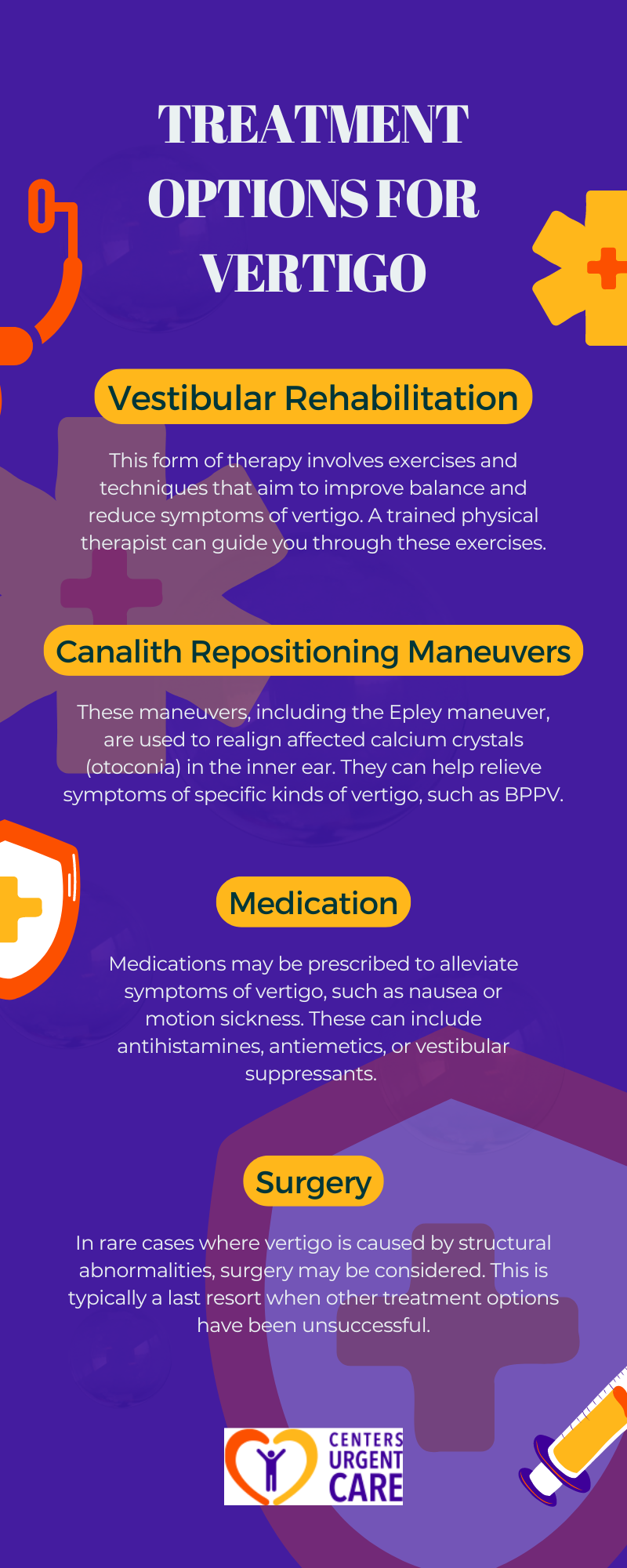
It’s essential to work closely with your healthcare provider to determine the most appropriate treatment plan for your specific case. They will take into account factors such as the underlying cause, severity of symptoms, and your overall health. With the right diagnosis and treatment, people can improve their quality of life.
If you’re experiencing persistent or worsening vertigo symptoms, don’t hesitate to seek expert care. Centers Urgent Care offers the best urgent care in New York, providing swift and accurate diagnoses, along with tailored treatment plans. Our experienced medical team is dedicated to helping you regain your balance and well-being.
Contact us today to schedule an appointment or learn more about our services!
2025 has changed my life. I never believed I would be cured by a spell caster who specializes in herbal cure and magical spells. I am talking about the help Doctor Odunga gave to me. I have been cured of herpes HPV which has plagued me for over 2 years. I am very happy to tell others that if you want to be cured or get your ex back spells and get pregnant naturally, even financial blessing through lottery, there is only one place to be and that is with Dr Odunga Spell Temple. Am so happy that just 3 days after taking DR ODUNGA Herbal treatments my herpes was cured permanently. DR ODUNGA also have cure to #HIV #Diabetes #Lupus #Tinnitus #Fibroid #Cancer #Hepatitis B, #Syphilis #Infertility etc … If you have this ailment or whatsoever you might be suffering from you should contact him at his EMAIL: odungaspelltemple@gmail.com OR VIA Whats App +2348167159012