
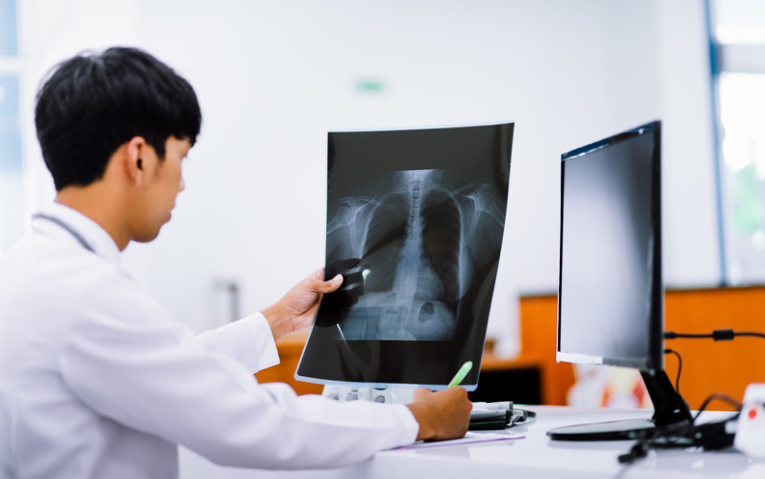
Lung cancer remains one of the leading causes of cancer-related deaths globally. Early detection is crucial for improving survival rates and treatment outcomes. One of the primary methods used in detecting lung cancer is imaging, with chest X-rays often being the first step in diagnosing potential lung issues. Types of X-rays play a significant role in this process, with chest X-rays being one of the most commonly utilized. But can chest X-rays show lung cancer?
In this article, we explore the role of chest X-rays in detecting lung cancer, their effectiveness, limitations, and why additional testing is typically required.
Can Chest X-rays Show Lung Cancer?
Yes, chest X-rays can show lung cancer, especially if the tumor is large or located in certain areas of the lungs. An X-ray may reveal a visible mass, abnormal shadows, or changes in the lung’s structure that could indicate cancer. However, it is important to note that smaller tumors or those in less accessible areas may not always appear on an X-ray.
While a chest X-ray can be a useful initial tool for detecting lung cancer, it is not always definitive. Doctors may recommend additional tests, such as a CT scan or biopsy, for a more accurate diagnosis. At Centers Urgent Care, we provide fast and high-quality imaging services to help identify potential concerns. If you’re experiencing symptoms or need further evaluation, contact us to schedule your visit.
What is a Chest X-Ray?
A chest radiograph is a widely used diagnostic procedure that employs a minimal dose of radiation to produce images of the internal structures of the chest, such as the heart, lungs, airways, blood vessels, and bones. It is a quick and non-invasive procedure that provides valuable information about the condition of the lungs and surrounding organs. A chest X-ray can help identify a variety of lung conditions, such as pneumonia, tuberculosis, and lung cancer.
How Chest X-Rays Work
For a chest X-ray, the individual is positioned either standing or seated before a device that releases a measured dose of radiation. The X-rays travel through the chest, with different tissues absorbing the radiation in varying amounts. Dense structures, such as bones, absorb more X-rays and appear white on the image, while less dense tissues, like the lungs, appear darker. A radiologist examines the images for abnormalities that could indicate lung disease or other conditions.
Types of Lung Cancer That May Appear on Chest X-Rays

Limitations of Chest X-Rays in Detecting Lung Cancer
While chest X-rays are useful in identifying potential lung cancer, they have several limitations. Not all lung cancers show up clearly on X-rays, and some tumors may be missed due to the limitations of the imaging technique.
Difficulty Detecting Small Tumors
Chest X-rays are not the most effective tool for detecting small tumors or early-stage lung cancer. Small or early tumors may be too tiny to be visible, or they may be hidden by other structures in the chest, such as the heart or ribs. This is why chest X-rays are often not sufficient for a definitive lung cancer diagnosis, especially in the early stages when the cancer is more treatable.
Overlapping Conditions
Other conditions, such as infections, scarring, or benign tumors, can also appear on a chest X-ray as masses or abnormalities that may be mistaken for cancer. This can lead to false positives, where a non-cancerous condition is misdiagnosed as lung cancer. Conversely, some cancers may not be visible on an X-ray at all.
Limited Detail
A chest X-ray provides only a two-dimensional image, which limits the ability to examine structures in more detail. This means that while a chest X-ray may show a suspicious mass, it cannot provide enough information to assess the exact size, location, or characteristics of the tumor. To get a clearer picture, doctors may need to order additional imaging tests, such as a CT scan or MRI.
When is a Chest X-Ray Used to Screen for Lung Cancer?
Chest X-rays are commonly used for various purposes, including routine check-ups, diagnosing respiratory conditions, and detecting lung cancer. However, they are not typically used as the primary method for lung cancer screening.
Routine Check-Ups and Symptoms
If a patient presents with symptoms such as persistent coughing, chest pain, or unexplained weight loss, a doctor may recommend a chest X-ray to help identify the cause. If a suspicious mass or abnormality is seen on the X-ray, further tests, such as a CT scan, may be ordered to confirm the diagnosis.
Lung Cancer Screening in High-Risk Individuals
In certain cases, chest X-rays may be used as part of a lung cancer screening program for individuals at high risk. This typically includes people who have a long history of smoking or are exposed to environmental factors that increase the risk of lung cancer. However, more advanced imaging techniques, such as low-dose CT scans, are now preferred for lung cancer screening due to their higher sensitivity and ability to detect smaller tumors.

The Role of Other Diagnostic Tools in Lung Cancer Diagnosis
Since chest X-rays have limitations in detecting lung cancer, doctors often rely on other diagnostic tools for a more accurate diagnosis. These tools can provide more detailed images and help confirm the presence of cancer.
CT Scans: The Gold Standard for Lung Cancer Diagnosis
A computed tomography (CT) scan is a more advanced imaging test that provides detailed, cross-sectional images of the chest. CT scans are much more sensitive than chest X-rays and can detect smaller tumors, as well as provide detailed information about the size, location, and shape of the mass. Because of their higher sensitivity, CT scans are often used to follow up on abnormal chest X-ray findings or as part of routine lung cancer screening for high-risk individuals.
MRI and PET Scans
In some cases, magnetic resonance imaging (MRI) or positron emission tomography (PET) scans may be used to gather even more detailed information about lung cancer. MRI scans use powerful magnets and radio waves to create detailed images of the body’s internal structures, while PET scans can help determine how active a tumor is by showing areas of increased metabolic activity. These tests are typically used when additional detail is needed for staging the cancer or determining the extent of its spread.
Biopsy: The Definitive Diagnosis
While imaging tests like chest X-rays, CT scans, and MRI can suggest the presence of lung cancer, a biopsy is the only definitive way to confirm the diagnosis. During a biopsy, a small sample of tissue is removed from the lung and examined under a microscope to check for cancerous cells. There are several ways to perform a biopsy, including using a needle to extract a sample or performing a bronchoscopy, where a thin tube is inserted into the airways to collect tissue samples.
Chest X-rays can play a valuable role in the early detection of lung cancer, but they are not always sufficient for a definitive diagnosis. While they can identify suspicious masses or abnormalities in the lungs, they may not be able to detect small or early-stage tumors. Due to their limitations, doctors often rely on additional imaging tests, such as CT scans or MRIs, to confirm the diagnosis. A biopsy is typically needed for a definitive diagnosis.
For individuals at high risk for lung cancer or experiencing symptoms, discussing screening options with a healthcare provider is crucial. Early detection plays a vital role in improving outcomes, and advances in diagnostic imaging significantly enhance the accuracy of diagnosis and treatment. At Centers Urgent Care, we provide fast, high-quality urgent care services for children and adults, ensuring you receive timely and comprehensive care. If you’re seeking trusted urgent care in New York, don’t hesitate to contact us today to prioritize your health and well-being!
Sources:
2025 has changed my life. I never believed I would be cured by a spell caster who specializes in herbal cure and magical spells. I am talking about the help Doctor Odunga gave to me. I have been cured of herpes HPV which has plagued me for over 2 years. I am very happy to tell others that if you want to be cured or get your ex back spells and get pregnant naturally, even financial blessing through lottery, there is only one place to be and that is with Dr Odunga Spell Temple. Am so happy that just 3 days after taking DR ODUNGA Herbal treatments my herpes was cured permanently. DR ODUNGA also have cure to #HIV #Diabetes #Lupus #Tinnitus #Fibroid #Cancer #Hepatitis B, #Syphilis #Infertility etc … If you have this ailment or whatsoever you might be suffering from you should contact him at his EMAIL: odungaspelltemple@gmail.com OR VIA Whats App +2348167159012