

Vitamin D is an essential nutrient that plays a crucial role in regulating calcium and maintaining strong bones. Around 1 billion people worldwide are estimated to have low levels of vitamin D, making it one of the most common deficiencies globally. Despite its importance, vitamin D is often overlooked, leading to various health issues. People with a deficiency often experience a range of symptoms that can affect both their physical and mental well-being. To help prevent a deficiency, it’s important to be mindful of foods to avoid that can interfere with the body’s ability to absorb or utilize vitamin D properly.
If left untreated, a vitamin D deficiency can lead to complications such as weakened bones, osteoporosis, and even an increased risk of chronic diseases. Therefore, recognizing the common symptoms of vitamin D deficit is crucial for seeking timely treatment and maintaining overall health.
5 Common Symptoms of Vitamin D Deficit
A vitamin D deficiency can present in many ways. Some of the most common symptoms might be subtle at first but can become more noticeable as time goes on.
- Fatigue and Tiredness: One of the most common signs of low vitamin D is feeling fatigued or excessively tired, even after getting adequate rest. This can lead to decreased productivity and general feelings of exhaustion.
- Bone and Muscle Pain: Vitamin D plays a crucial role in calcium absorption, which is vital for bone health. A lack of this essential vitamin can lead to aching bones, back pain, and muscle weakness.
- Depression: Low levels of vitamin D have been linked to mood disorders, including depression. In fact, studies have found that individuals with low vitamin D levels are more likely to experience symptoms of depression.
- Frequent Infections: Vitamin D helps to regulate the immune system, and its deficiency may increase your risk of infections, especially respiratory illnesses.
- Hair Loss: A deficiency in vitamin D has also been associated with hair loss, particularly in individuals suffering from alopecia areata.
How Does Vitamin D Deficiency Affect Bone Health?
Vitamin D is critical for calcium absorption, and without it, the body cannot effectively use the calcium in the food we eat. As a result, people with low vitamin D levels often experience weaker bones and more frequent fractures. In severe cases, this can lead to conditions like osteomalacia (softening of the bones) or osteoporosis (brittle bones).
When vitamin D levels are low, the body compensates by pulling calcium from the bones, which can lead to further bone weakening and an increased risk of fractures. If you’re monitoring your health closely, especially after conception, it’s important to recognize subtle changes early. 5 Common Symptoms After Embryo Implantation You Should Watch For highlights key signs to be aware of. For example, low vitamin D levels can cause your body to pull calcium from your bones, leading to weakening and higher fracture risk—something to keep in mind during this critical phase.

How Does Vitamin D Deficiency Affect Your Mood?
There is a growing body of evidence linking vitamin D deficiency with mood disturbances and mental health issues. For example, low vitamin D levels are associated with higher rates of depression, anxiety, and other mood disorders.
However, more research is needed to fully understand the relationship between vitamin D and mental health.
What are the Risk Factors for Vitamin D Deficiency?
Some individuals are more prone to vitamin D deficiency due to various factors. These groups include:
- Older Adults: As we get older, our skin’s ability to produce vitamin D from sunlight diminishes, and we often find ourselves spending more time indoors.
- People with Darker Skin: Melanin, the pigment responsible for darker skin, reduces the skin’s ability to produce vitamin D from sunlight.
- People with Limited Sun Exposure: Those who live in areas with long winters or spend a lot of time indoors are at a higher risk.
- Obese Individuals: Vitamin D is a fat-soluble vitamin, meaning that excess body fat can store it, reducing its availability for the body to use effectively.
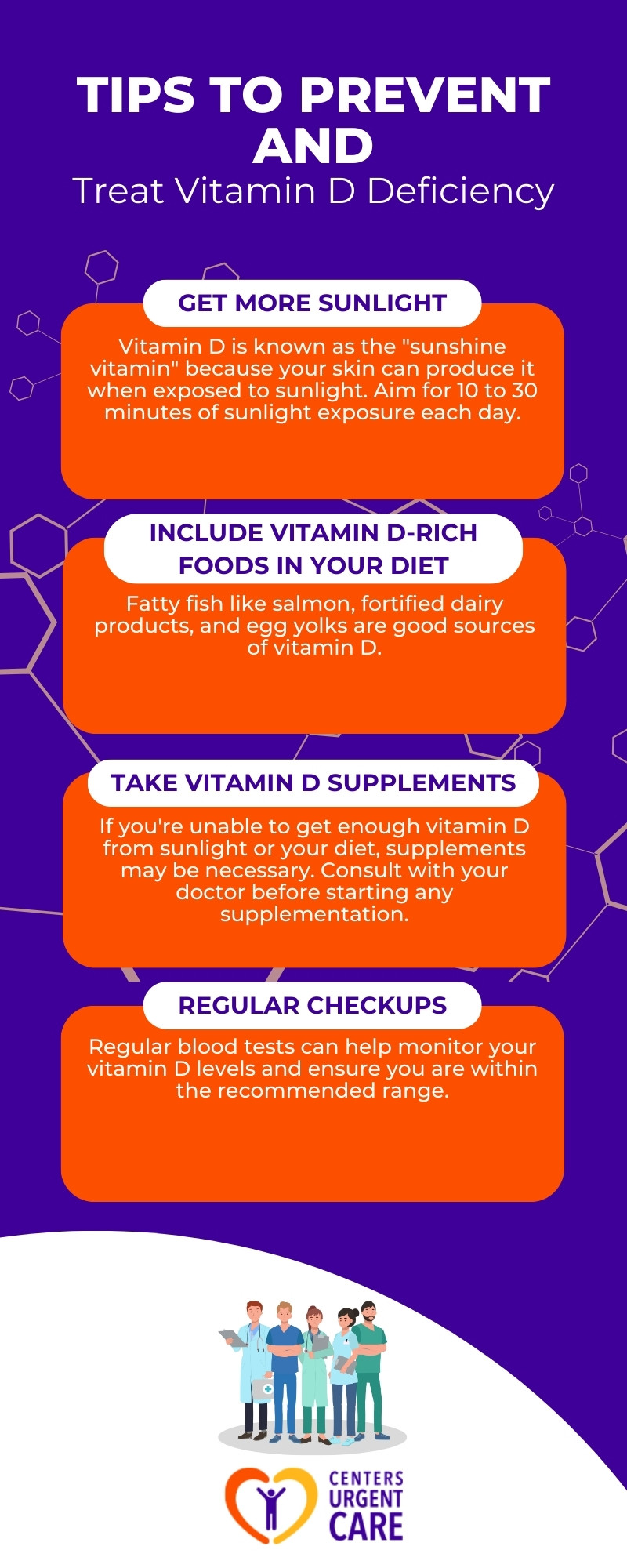
How to Prevent and Treat Vitamin D Deficiency?
Prevention and treatment of vitamin D deficiency often start with lifestyle changes and, in some cases, supplements. Here’s what you can do:
What Should You Do If You Experience These Symptoms?
If you’re experiencing common symptoms of vitamin D deficit, such as fatigue, bone pain, or muscle weakness, it’s essential to consult a healthcare professional. A blood test can determine your vitamin D levels, and your doctor will be able to guide you on the appropriate treatment.
Need Help? Visit Centers Urgent Care for Fast, Reliable Service!
If you’re experiencing symptoms of vitamin D deficiency, seeking medical help is the first step to feeling better. Centers Urgent Care offers high-quality urgent care services for both children and adults. Whether you need a blood test to check your vitamin D levels or a consultation on how to improve your health, we are here to help.
Our 24-hour urgent care in NYC is available for all your healthcare needs. Don’t wait—reach out to us for fast, expert care today!