
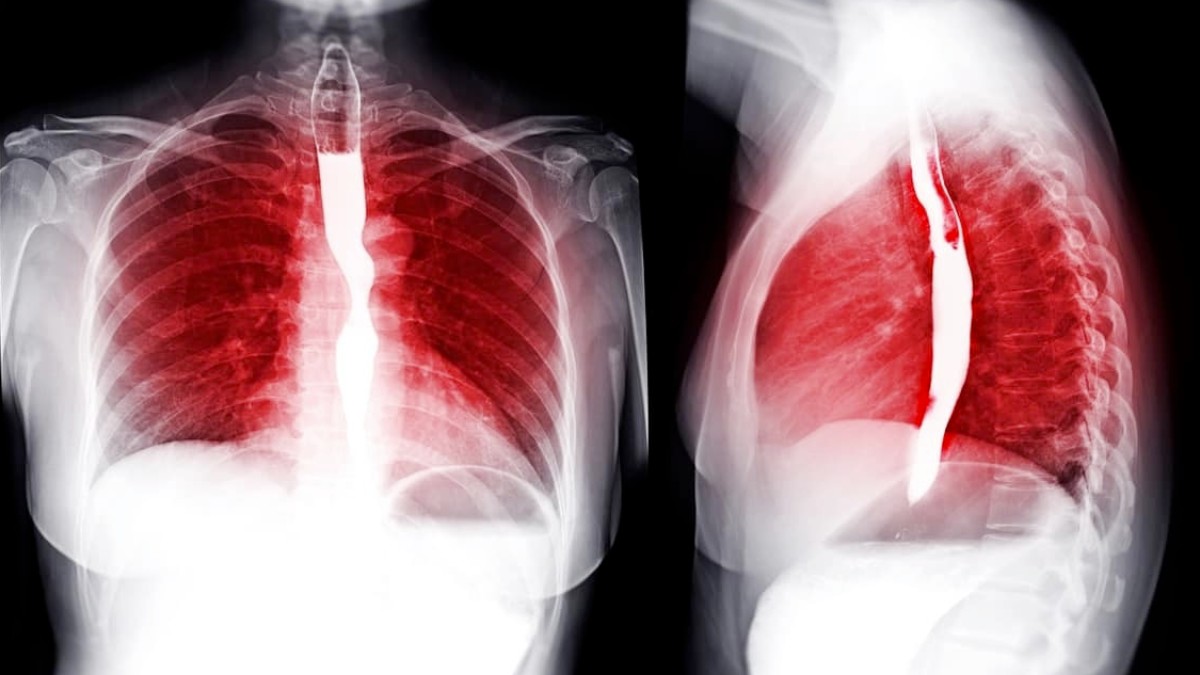
Contrast X-rays for gastrointestinal imaging tests help highlight internal organs in greater detail, making abnormalities easier to detect. These enhanced visuals allow radiologists to identify problems like blockages, ulcers, tumors, and narrowing in the GI tract with improved accuracy—just as a chest X-ray offers clear imaging of the lungs and heart, contrast studies provide a sharper look at the digestive system.
The Need for Better GI Diagnostics
According to the National Institute of Diabetes and Digestive and Kidney Diseases (NIDDK), approximately 60 to 70 million people in the U.S. are affected by digestive diseases annually. Conditions like GERD, ulcers, and IBS are common—but often difficult to pinpoint with standard imaging. That’s where contrast-enhanced GI imaging comes in. It bridges the gap between vague symptoms and precise diagnosis.
Conventional X-rays often fall short in detailing soft tissues and lining in the digestive tract. When used alone, they may miss smaller or subtler abnormalities. Contrast materials, however, illuminate the inner walls of the GI system, improving diagnostic yield significantly.
How Do Contrast X-rays Work?
Contrast X-rays involve the introduction of a contrast agent—usually barium or iodine—into the gastrointestinal tract. These substances coat the lining of organs or fill hollow structures, making them appear more clearly on X-rays.
- Barium sulfate is typically used for the upper and lower GI tract.
- Iodine-based contrasts are used when barium isn’t ideal, such as in patients with suspected bowel perforation or allergies.
Once the contrast is administered orally, rectally, or via injection (depending on the type of test), X-ray images are captured in real-time or as still shots. The resulting images provide better definition and detail than traditional X-rays alone—making it even more important for caregivers to understand how these procedures are safely conducted. For a deeper look into how to keep your child protected during imaging, check out our article Must-Know Pediatric X-Ray Safety Protocols for Parents.
What Conditions Can Be Detected with GI Contrast Imaging?
A standard X-ray might overlook subtle or early-stage GI issues. In contrast, contrast-enhanced imaging can help diagnose:
- Esophageal strictures or spasms
- Gastroesophageal reflux disease (GERD)
- Hiatal hernias
- Ulcers and erosions in the stomach or intestines
- Tumors or polyps in the GI tract
- Diverticula in the colon
- Obstructions or blockages
- Intestinal malrotation or motility issues
This range of coverage is why physicians often recommend contrast X-rays for gastrointestinal imaging tests when symptoms like chronic abdominal pain, unexplained weight loss, or persistent indigestion arise.

Are Contrast X-rays Safe?
Generally, yes. Most people tolerate contrast materials well. However, like any diagnostic test, there are a few risks and considerations to keep in mind.
Common Side Effects (Usually Mild):
- Nausea or bloating
- Temporary constipation (especially with barium)
- Metallic taste (with iodine)
Rare Risks:
- Allergic reaction to contrast dye (more common with iodine)
- Leakage of contrast into the abdominal cavity in case of perforation (requires prompt attention)
Physicians will carefully assess your health history and current symptoms before recommending this imaging method. In many urgent care settings, contrast X-rays offer a fast, efficient way to identify serious gastrointestinal problems without resorting to more invasive procedures.
4 Types of Contrast X-ray Tests for the GI Tract
There are several diagnostic tests involving contrast that target different areas of the digestive system. Each one serves a specific purpose:
Barium Swallow
Used to examine the esophagus and upper stomach. Often ordered for individuals with difficulty swallowing or suspected GERD.
Upper GI Series
Covers the esophagus, stomach, and the first part of the small intestine (duodenum). Helps detect ulcers, tumors, or blockages.
Small Bowel Follow-Through (SBFT)
Follows the movement of contrast through the entire small intestine. Useful for detecting Crohn’s disease or malabsorption issues.
Barium Enema (Lower GI Series)
Visualizes the large intestine and rectum. Commonly used for screening colon abnormalities, diverticulosis, or chronic constipation.
What to Expect During the Procedure
The process for contrast X-rays varies slightly depending on the body area being examined, but here’s a general breakdown:
Preparation:
- May include fasting 6–8 hours prior.
- Bowel prep (laxatives or enemas) may be required for lower GI studies.
During the Test:
- You’ll ingest or receive the contrast agent.
- A radiologist captures a series of X-rays while you lie, stand, or turn in various positions.
- You might be asked to hold your breath during image capture for clarity.
Aftercare:
- Drink plenty of fluids to flush out the contrast.
- Mild digestive changes (e.g., chalky stools) may occur for a day or two.
The entire process usually takes 30 minutes to an hour, making it a fast option for diagnostic imaging—especially in urgent care scenarios.
Advantages of Using Contrast in GI Imaging
Contrast X-rays stand out for several reasons:
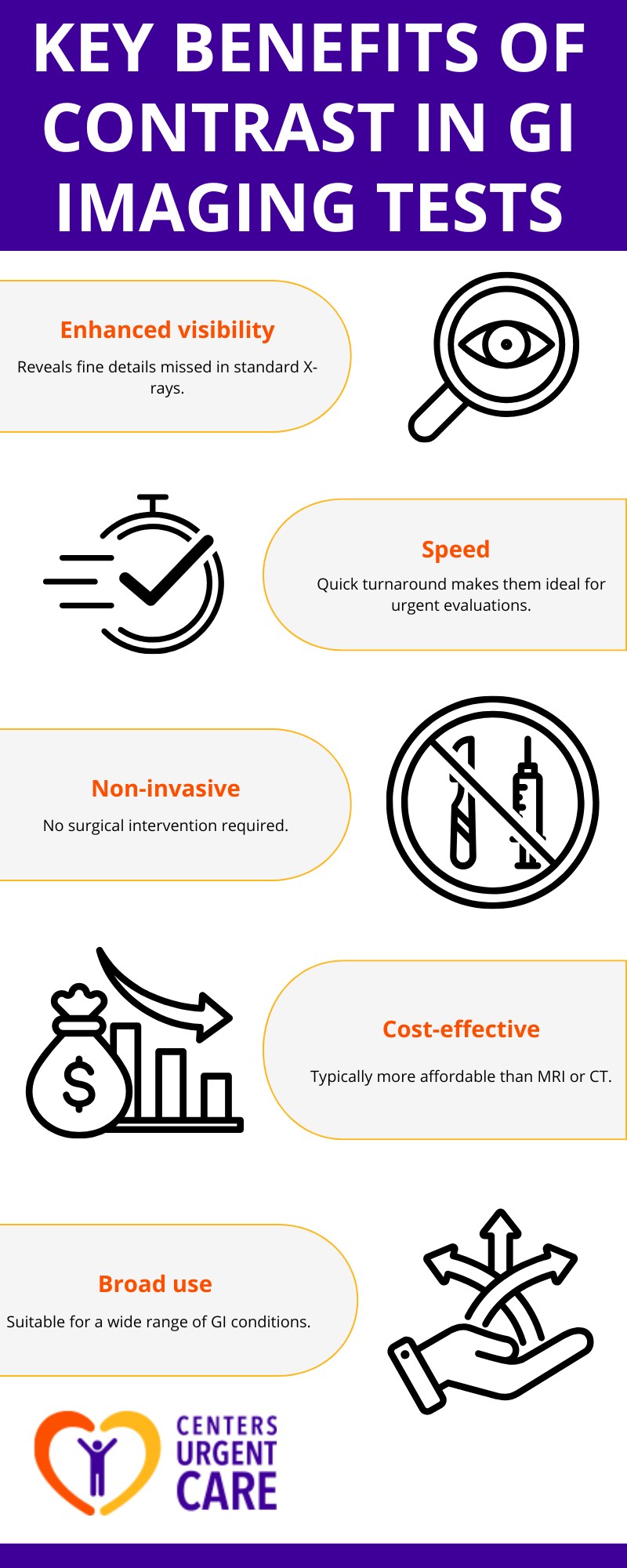
These benefits make contrast GI imaging a practical choice in many healthcare settings.
Why Contrast X-rays for Gastrointestinal Imaging Tests Matter
Contrast X-rays continue to play a vital role in GI diagnostics. They help uncover problems that standard imaging can overlook, from ulcers and strictures to masses and motility issues. The versatility, speed, and clarity these tests offer make them a go-to tool in modern medicine.
Whether you’re dealing with unexplained symptoms or a chronic digestive condition, contrast X-rays for gastrointestinal imaging tests can provide the insight your provider needs to guide treatment. And when time is of the essence, a prompt and accurate diagnosis can make all the difference.
Need Fast GI Diagnostic Testing?
If you need expert evaluation and quick access to diagnostic services—including contrast X-rays for gastrointestinal imaging tests—our team at Centers Urgent Care is here to help. Our urgent care in New York offer high-quality, efficient care for both children and adults in a comfortable, walk-in setting.
Whether you’re managing long-term digestive issues or need an urgent workup, we’re ready with advanced imaging and experienced providers. Contact us today or walk in—your health can’t wait.