

Infertility is a life-altering challenge that affects millions of couples worldwide. According to the Centers for Disease Control and Prevention (CDC), about 19% of women in the U.S. experience difficulty in getting pregnant or carrying a pregnancy to term. In many cases, in vitro fertilization (IVF) has emerged as a reliable and effective solution for couples who struggle with infertility. As part of the IVF process, X-rays are sometimes used to assess reproductive health and help guide treatment decisions.
IVF provides a path to parenthood, allowing individuals and couples to overcome various fertility challenges through advanced reproductive technology. But what exactly is IVF, how does it work, and what should you know before considering it as a treatment option? Let’s explore IVF as a key tool in coping with infertility and how it can help bring families together.
What is IVF and How Does It Help with Infertility?
IVF, or in vitro fertilization, is a medical process that helps individuals and couples struggling with infertility. The process includes encouraging the ovaries to produce several eggs, collecting the eggs, fertilizing them with sperm in a lab setting, and then transferring the resulting embryos into the uterus. This procedure helps overcome infertility caused by issues like low sperm count, blocked fallopian tubes, or ovulatory disorders.
Understanding the Struggles of Infertility
Infertility can be an emotionally and physically exhausting journey. For many couples, the path to parenthood is filled with disappointment, uncertainty, and frustration. The reasons for infertility are varied and complex, ranging from medical conditions to lifestyle factors. One of the biggest challenges is dealing with the emotional toll of repeated unsuccessful attempts to conceive.
Infertility can affect both men and women. For men, low sperm count, poor sperm motility, or structural issues in the reproductive system can cause difficulties. For women, issues such as ovulatory disorders, endometriosis, or blocked fallopian tubes can make pregnancy difficult. In many cases, the cause of infertility may remain unknown, further complicating the situation.
When faced with infertility, many people turn to assisted reproductive technologies (ART), and IVF is often the first line of treatment for couples struggling to conceive.
How IVF Works: A Step-by-Step Guide
The IVF process involves several important steps designed to help couples overcome infertility and achieve pregnancy. Here’s an overview of how IVF works:
Ovarian Stimulation and Monitoring
The first step in the IVF process is stimulating the ovaries to produce multiple eggs. Fertility medications are prescribed to encourage the ovaries to produce more eggs than in a natural cycle. This is crucial because not all eggs will successfully fertilize or develop into healthy embryos.

Egg Retrieval
Once the eggs are mature, they are retrieved from the ovaries through a minor surgical procedure called aspiration. This procedure is done under sedation, and a needle is used to collect the eggs from the follicles in the ovaries.
Fertilization
The eggs are then fertilized in the laboratory. The sperm, either from the male partner or a donor, is introduced to the eggs. In some cases, sperm may need to be injected directly into the egg through a procedure called intracytoplasmic sperm injection (ICSI), particularly if there are sperm issues.
Embryo Development and Transfer
After fertilization, the embryos are monitored for growth and development over several days. The best-quality embryos are selected for transfer into the woman’s uterus. Typically, the embryo transfer is a simple, painless procedure. In some cases, genetic testing may be performed on embryos to screen for chromosomal abnormalities.
Pregnancy Test and Follow-Up
Two weeks after the embryo transfer, a pregnancy test is conducted. If successful, the woman will continue to be monitored to ensure the pregnancy develops normally. If the test is negative, the process may be repeated with a new cycle or additional interventions.
Emotional and Mental Health in Coping with Infertility
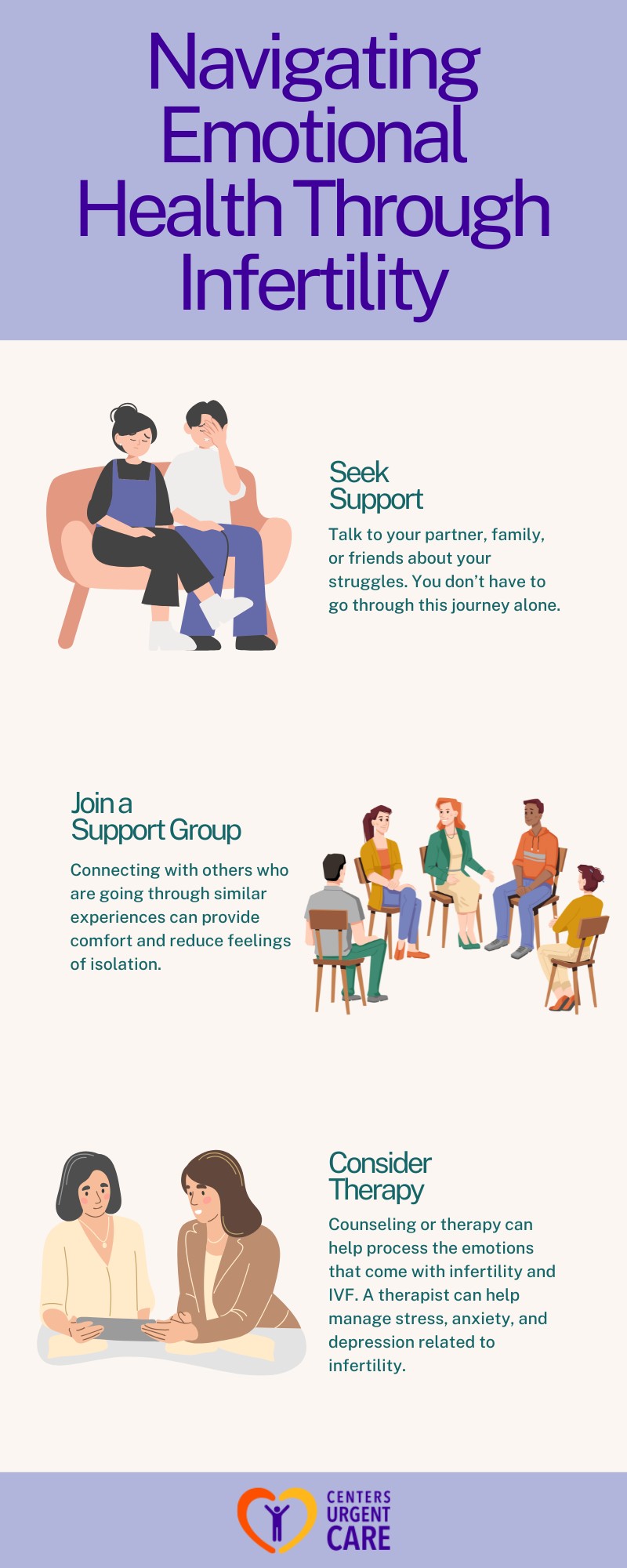
While IVF can offer a solution for many, coping with infertility can be emotionally challenging. The emotional toll of failed cycles, the pressure of financial costs, and the physical demands of the treatment can be overwhelming.
To help cope with infertility, it’s important to prioritize mental health and well-being. Consider the following strategies:
IVF Success Rates: What to Expect
One of the most common questions people have about IVF is, “What are the chances of success?” The success of IVF varies based on multiple factors, including the woman’s age, the cause of infertility, the quality of eggs and sperm, and whether genetic testing is used.
According to the American Society for Reproductive Medicine, the success rate of IVF varies:
- For women under 35, the live birth rate per IVF cycle is around 40-50%.
- For women aged 35-37, the success rate drops to around 30-40%.
- For women aged 38-40, the success rate further declines to around 20-30%.
The chances of success can be higher for some individuals, especially if they have no underlying medical issues. However, success is not guaranteed, and multiple cycles may be needed.
Is IVF the Right Path for You?
Deciding whether to undergo IVF can be a complex and deeply personal decision. It’s important to weigh the emotional, financial, and physical aspects of IVF and consider what is best for you and your partner. Consulting with a fertility specialist can help you better understand your chances of success and explore other fertility options.
If IVF is not successful, it’s important to explore other fertility treatments or consider alternative paths to parenthood, such as adoption or surrogacy.
Coping with Infertility: IVF and Your Health
In addition to dealing with the emotional aspects, infertility can also affect your physical health. It’s important to maintain overall health during the IVF process. Eating well, exercising, and managing stress can help improve your chances of success—and getting quality sleep plays a bigger role than many realize. Learn more about how sleep issues can impact your well-being in our article, The Impact of Sleep Disorders in Women’s Health.
Get Help When You Need It
If you’re coping with infertility or need immediate healthcare assistance during your IVF journey, Centers Urgent Care offers fast, reliable services. Our experienced team is dedicated to providing top-notch medical care, ensuring you receive the attention you deserve during this important time. Whether it’s for routine check-ups or urgent concerns, we are here to help. For urgent care in NY, trust us to offer swift, high-quality services for both children and adults. Contact us today to experience our compassionate care firsthand.

Honestly, this Love spell caster made me feel a lot better. My marriage was restored and my husband came back to me he apologized for all the wrongs he did and promise never to do it again. A big thanks to this wonderful psychic for bringing my husband back to me.. I never really believed in magic spells or anything spiritual but a trusted friend opened my eyes to the truth about life. My marriage was heading to divorce a few months ago. I was so confused and devastated with no clue or help on how to prevent it, till I was introduced to Dr. Excellent that did a love spell and broke every spiritual distraction from my marriage. A day later my husband started showing me love and care even better than it used to be, he’s ready to talk things through and find ways for us to stay happy. It’s such a miracle that my marriage can be saved so quickly without stress. You can also contact him for help. Here his contact. Call/WhatsApp him at: +2348084273514