When is a PPD Test Recommended?
The PPD test is typically recommended in several scenarios. These include:
- Individuals who have been in close contact with someone diagnosed with tuberculosis.
- People who have traveled or lived in regions with high tuberculosis prevalence.
- Healthcare workers who may be exposed to tuberculosis in their work environment.
- Individuals with weakened immune systems due to conditions like HIV or certain medications.
- Residents and employees of high-risk facilities, such as homeless shelters, prisons, and long-term care facilities.
Importance of Accuracy in PPD Testing
Accuracy in PPD testing is critical for proper diagnosis and management of tuberculosis. Accurate results ensure timely treatment, help prevent the spread of the disease, and protect public health. Inaccurate results, whether false positives or false negatives, can lead to unnecessary anxiety, incorrect treatment, or a failure to diagnose and treat active infections.
- Sensitivity – Detects true positives; crucial for identifying infected individuals.
- Specificity – Detects true negatives; helps avoid unnecessary treatment in non-infected individuals.
- False Positives – Can lead to unnecessary medical evaluations and treatments.
- False Negatives – May result in untreated tuberculosis, increasing the risk of disease spread.
Understanding and improving the accuracy of PPD tests is essential for effective public health strategies and patient care. By considering factors that influence accuracy, healthcare providers can ensure reliable test results and make informed treatment decisions.
Factors Influencing Accuracy
The accuracy of the PPD (Purified Protein Derivative) test, commonly used to detect tuberculosis infection, is influenced by various factors. Understanding these factors is crucial to interpreting the test results correctly and making informed medical decisions.
Sensitivity and Specificity of PPD Test
Sensitivity and specificity are key metrics in evaluating the accuracy of the PPD test. Sensitivity refers to the test’s ability to correctly identify those with the condition, while specificity measures how well the test identifies those without the condition.
Here is a table that illustrates the sensitivity and specificity percentages commonly associated with the PPD test:
- Sensitivity – 70-90%
- Specificity – 95-99%
False Positive Results
False positive results occur when the PPD test indicates an infection in a person who does not have the condition. Several factors can contribute to false positive results, including:
- Previous BCG vaccination
- Infection with non-tuberculosis mycobacteria
- Incorrect administration or interpretation of the test
False Negative Results
False negative results happen when the PPD test fails to detect an infection in a person who has the condition. Factors contributing to false negative results include:
- Recent TB infection (within 8-10 weeks)
- Very old TB infection
- Immunosuppression
- Malnutrition
Understanding the factors influencing PPD test accuracy, including sensitivity, specificity, and possible false positive and negative results, can aid in more accurate interpretation and better follow-up care.
Interpreting Test Results
Understanding the interpretation of PPD (Purified Protein Derivative) test results is crucial in assessing tuberculosis exposure. The accuracy of these readings greatly influences treatment and public health decisions.
Reading PPD Test Results
The PPD test involves injecting a small amount of tuberculin under the skin. The test is usually checked 48 to 72 hours later for a reaction. The presence and size of induration (raised, hard area) at the injection site are measured in millimeters.
- 0-4 – Generally negative
- 5-9 – Positive for high-risk groups (e.g., HIV-positive)
- 10-14 – Positive for individuals with moderate risk
- 15 or more – Positive for individuals with no known risk factors

Follow-Up Testing and Consultation
If a PPD test indicates a positive result, follow-up testing is essential. This may include a chest X-ray or other diagnostic tests to confirm or rule out active TB disease. Consulting with healthcare providers ensures accurate interpretation and appropriate next steps.
Common follow-up steps:
- Obtain chest X-ray
- Conduct sputum tests
- Evaluate for symptoms of active TB (cough, weight loss)
Dealing with Ambiguous Results
In some cases, PPD test results may be ambiguous or difficult to interpret. This can occur due to various factors such as vaccination with Bacillus Calmette–Guérin (BCG) or other infections.
Steps to handle ambiguous results:
- Consider patient history (e.g., BCG vaccination, exposure risk)
- Repeat PPD test if necessary
- Use alternative tests like Interferon-Gamma Release Assays (IGRAs)
Accurately interpreting PPD test results, following up effectively, and addressing ambiguous outcomes, healthcare providers can ensure reliable and precise tuberculosis assessments.
Improving Accuracy
Ensuring the accuracy of PPD tests is vital to effective diagnosis and treatment. Several methods can be implemented to enhance the precision of these tests.
Methods to Enhance PPD Test Accuracy
Increasing the accuracy of PPD tests can be achieved through various strategies:
- Standardization of technique: Ensuring that the test is administered in a consistent manner each time.
- Training for healthcare providers: Proper training to correctly read and interpret the test results.
- Calibration of tools: Regular calibration of equipment used in administering and reading the test for reliable performance.
- Use of control groups: Implementing control tests to validate the accuracy of the PPD test results.
Importance of Proper Administration
The accuracy of a PPD test heavily relies on its correct administration. Improper injection or misinterpretation of results can lead to errors. Elements of proper administration include:
- Correct injection technique: Ensuring the purified protein derivative is injected intradermally, not subcutaneously.
- Timing in reading results: Evaluating the test at the right time, typically 48 to 72 hours after administration.
- Consistent measurement standards: Utilizing standard methods to measure induration, not erythema.
Addressing External Factors
Various external factors can affect the accuracy of PPD tests. Addressing these can help in achieving more reliable results:
- Age and Immunosuppression: Elderly individuals or those with compromised immune systems may show different results.
- BCG Vaccination: Previous Bacille Calmette-Guérin (BCG) vaccination can cause false positive results.
- Environmental Factors: Exposure to non-tuberculous mycobacteria in the environment may influence test outcomes.
Addressing these considerations, the accuracy of PPD tests can be significantly improved, ensuring more reliable and effective health care.
Importance of PPD Test Accuracy
PPD test accuracy is a critical component in diagnosing and managing tuberculosis (TB). Accurate results from PPD tests have far-reaching consequences on individual treatment and public health.
Impact on Treatment Decisions
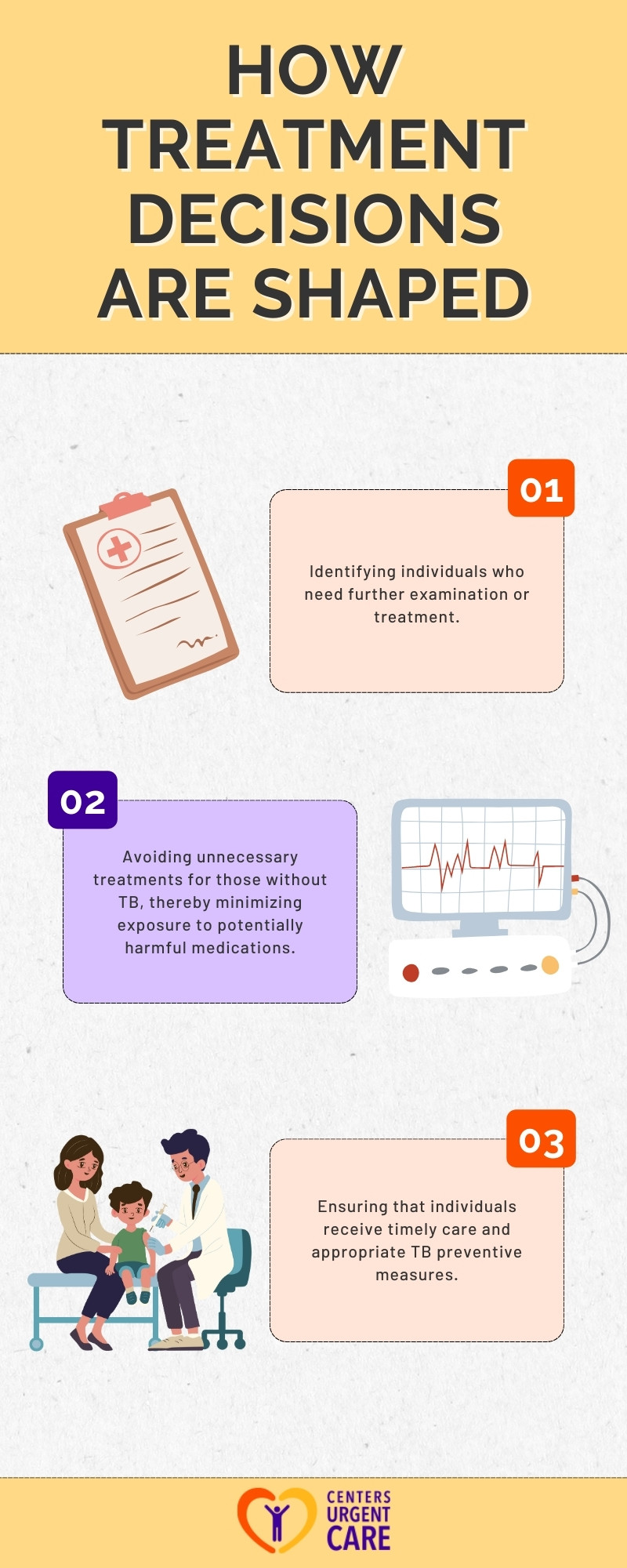
The results of a PPD test directly impact treatment plans. An accurate test helps in: