

Immunoassay tests play a pivotal role in modern healthcare, providing crucial insights into a patient’s health status. Let’s delve into the definition of immunoassay tests and understand their significance in healthcare.
Defining Immunoassay Tests
Immunoassay blood tests are diagnostic techniques that utilize the principle of antigen-antibody interactions to detect and quantify specific molecules in the blood. Urgent care providers often use these tests due to their ability to quickly and accurately identify substances of interest, such as hormones, proteins, drugs, or infectious agents. These tests rely on the high specificity of antibodies to target and identify these substances.
Role of Immunoassay Tests in Healthcare
Immunoassay tests serve as invaluable tools in healthcare for a wide range of applications. From diagnosing diseases to monitoring treatment responses, these tests provide healthcare professionals with essential information to make informed decisions regarding patient care.
Understanding the importance of immunoassay blood tests and their critical role in healthcare, individuals can appreciate the significance of these advanced diagnostic tools in the realm of modern medicine.
Types of Immunoassay Blood Tests
Exploring the realm of immunoassay blood tests unveils a spectrum of methodologies used in healthcare diagnostics. Three key types include enzyme-linked immunosorbent assay (ELISA), radioimmunoassay (RIA), and chemiluminescent immunoassay (CLIA).
Enzyme-Linked Immunosorbent Assay (ELISA)
Enzyme-linked immunosorbent assay (ELISA) is a widely employed immunoassay technique that detects the presence of antibodies or antigens in a sample. By utilizing enzymes for detection, ELISA offers high sensitivity and specificity. Here’s a comparison of ELISA with a focus on specific parameters:
- Sensitivity – High
- Specificity – High
- Speed of Analysis – Moderate
- Multiplex Capabilities – Limited
- Common Applications – Disease Diagnosis, Allergen Detection
Radioimmunoassay (RIA)
Radioimmunoassay (RIA) involves the usage of radioactive isotopes to quantify the concentration of antigens in a sample. While RIA is highly sensitive, its radioactivity poses safety considerations. Here’s a breakdown of RIA compared to ELISA:
- Sensitivity – Very High
- Specificity – High
- Speed of Analysis – Moderate
- Multiplex Capabilities – Limited
- Common Applications – Hormone Measurement, Drug Monitoring
Chemiluminescent Immunoassay (CLIA)
Chemiluminescent immunoassay (CLIA) operates by measuring the light produced during a chemical reaction to quantify analytes. CLIA offers quick results and enhanced sensitivity. Here’s an overview of CLIA in relation to ELISA and RIA:
- Sensitivity – High
- Specificity – High
- Speed of Analysis – Rapid
- Multiplex Capabilities – High
- Common Applications – Infectious Disease Testing, Tumor Marker Analysis
Understanding the nuances of these immunoassay blood tests, healthcare providers can leverage the specific strengths of each technique for precise diagnostic and monitoring purposes.
Applications of Immunoassay Tests
Immunoassay tests play a crucial role in healthcare by facilitating various applications that aid in the diagnosis, treatment monitoring, and screening of health conditions.

Diagnosis of Diseases
Immunoassay blood tests are instrumental in the diagnosis of a wide range of diseases by detecting specific biomarkers or antigens in the blood. These tests help healthcare providers identify the presence of infectious agents, autoimmune diseases, hormonal imbalances, and even certain types of cancers. By analyzing blood samples using immunoassay techniques, healthcare professionals can swiftly and accurately diagnose diseases, enabling timely treatment interventions.
Monitoring Treatment Progress
Another important application of immunoassay tests is in monitoring the progress of treatment for various medical conditions. By regularly performing immunoassay blood tests, healthcare providers can track changes in biomarker levels over time. This allows them to assess the effectiveness of treatment regimens, adjust medication dosages if necessary, and ensure that patients are responding appropriately to therapy. Monitoring treatment progress through immunoassay testing helps optimize patient care and improve health outcomes.
Screening for Health Conditions
Immunoassay tests are also invaluable for screening individuals for specific health conditions, even in the absence of symptoms. Screening tests using immunoassay methods can detect risk factors, early signs of diseases, or underlying health issues before they manifest clinically. For example, immunoassay screening tests can identify markers associated with cardiovascular disease, diabetes, infectious diseases, and more. Early detection through screening empowers healthcare providers to initiate preventive measures, promote early interventions, and ultimately improve patient outcomes.
Limitations of Immunoassay Tests
Despite their widespread use and effectiveness, immunoassay tests also come with certain limitations that healthcare providers and patients should be aware of. Understanding these limitations is essential for interpreting test results accurately and making informed decisions about healthcare outcomes.
Interference from External Factors
Another limitation of immunoassay tests is the susceptibility to interference from external factors. Various factors such as medications, substances in the body, or underlying medical conditions can impact the accuracy of immunoassay test results. For instance, certain medications or dietary supplements may affect the levels of biomarkers measured in the test, leading to inaccurate results. It is crucial for healthcare providers to consider these external factors when interpreting immunoassay test results.

Cost Considerations
Cost is also a significant limitation associated with immunoassay tests. While these tests offer valuable diagnostic information, they can be expensive, especially if multiple tests are required for comprehensive evaluation. The cost of immunoassay tests may vary depending on the type of test, laboratory equipment, reagents, and expertise required to perform the test. In some cases, cost considerations might limit patient access to certain immunoassay tests, potentially impacting timely diagnosis and treatment.
Understanding the limitations of immunoassay tests is essential for healthcare providers to make informed decisions about patient care and treatment strategies. By addressing potential for false results, considering external factors that may affect test accuracy, and being mindful of cost implications, healthcare professionals can utilize immunoassay tests effectively while minimizing risks associated with these limitations.
Future Trends in Immunoassay Technology
In the dynamic landscape of healthcare technology, immunoassay tests continue to evolve, paving the way for new advancements in medical diagnostics and personalized treatment approaches. Let’s explore the future trends in immunoassay technology, focusing on advancements in assay techniques, integration with digital health platforms, and the potential impact on personalized medicine.
Advancements in Assay Techniques
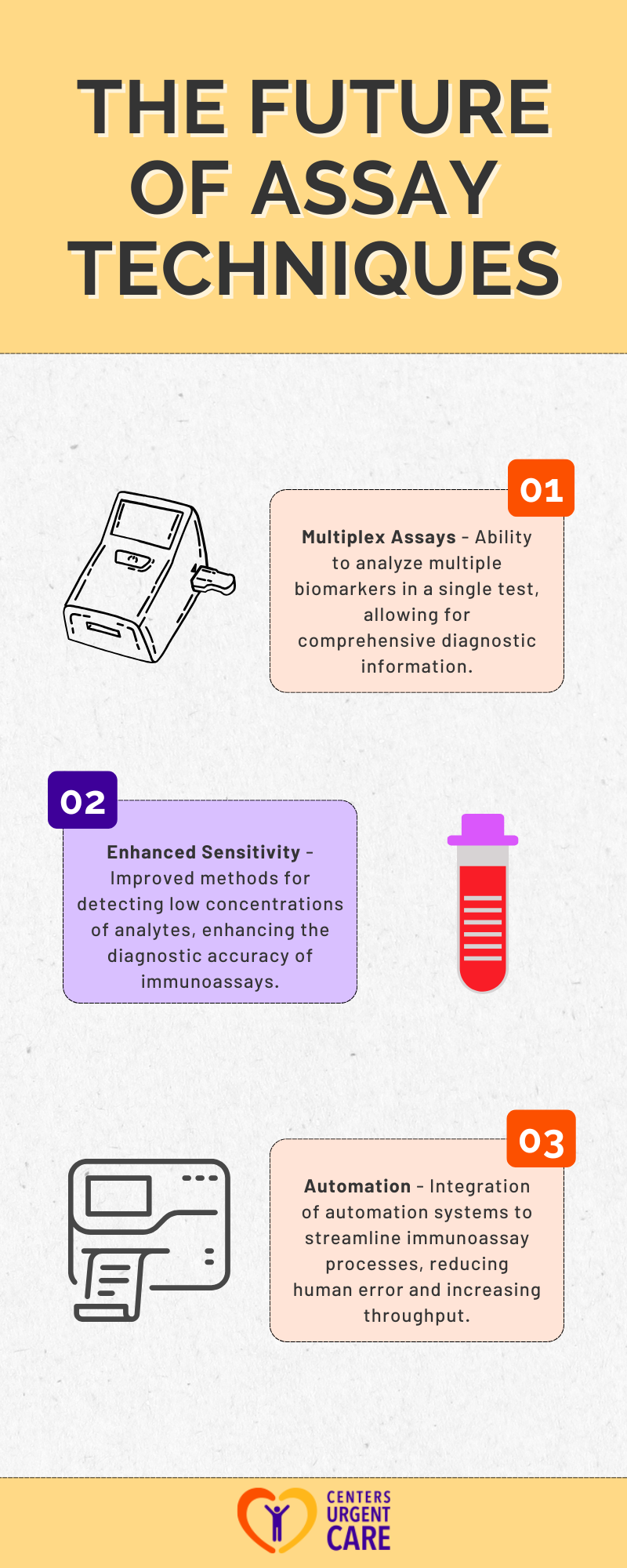
As technology progresses, assay techniques are constantly being refined and enhanced to improve sensitivity, specificity, and efficiency. One notable advancement is the development of multiplex immunoassays, which enable the simultaneous detection of multiple analytes in a single sample.
Integration with Digital Health Platforms
The integration of immunoassay tests with digital health platforms is revolutionizing the way healthcare is delivered and managed. By connecting immunoassay data to electronic health records and telemedicine platforms, healthcare providers can access real-time diagnostic information and make informed decisions remotely.
- Remote Monitoring – Allows for real-time monitoring of patient health status, facilitating early intervention and personalized treatment plans.
- Data Sharing – Enables seamless sharing of immunoassay results across healthcare providers, promoting collaborative patient care and continuity of treatment.
- Patient Engagement – Empowers patients to take an active role in their healthcare by providing access to their immunoassay data and promoting health awareness.
Potential Impact on Personalized Medicine
The integration of advanced immunoassay technologies with personalized medicine holds great promise for tailoring treatment strategies to individual patients based on their unique biomarker profiles. By leveraging immunoassay data to identify specific disease markers and predict treatment responses, healthcare providers can deliver precision medicine interventions that optimize patient outcomes.
- Biomarker Identification – Utilizing immunoassays to identify biomarkers associated with specific diseases, guiding targeted therapy selection.
- Treatment Optimization – Tailoring treatment regimens based on individual patient responses to therapies, maximizing efficacy and minimizing side effects.
- Prognostic Assessment – Predicting disease progression and treatment outcomes through immunoassay analysis, enabling proactive healthcare interventions.
The future of immunoassay technology is filled with promise, with advancements in digital healthcare platforms poised to enhance diagnostic capabilities, streamline patient care, and drive forward personalized medicine. At Centers Urgent Care, we’re dedicated to providing fast, high-quality urgent care in New York services for children and adults, ensuring accessible and reliable health support when you need it most. If you’re looking for urgent care, contact us today to see how we can assist with your healthcare needs!
Sources:
2025 has changed my life. I never believed I would be cured by a spell caster who specializes in herbal cure and magical spells. I am talking about the help Doctor Odunga gave to me. I have been cured of herpes HPV which has plagued me for over 2 years. I am very happy to tell others that if you want to be cured or get your ex back spells and get pregnant naturally, even financial blessing through lottery, there is only one place to be and that is with Dr Odunga Spell Temple. Am so happy that just 3 days after taking DR ODUNGA Herbal treatments my herpes was cured permanently. DR ODUNGA also have cure to #HIV #Diabetes #Lupus #Tinnitus #Fibroid #Cancer #Hepatitis B, #Syphilis #Infertility etc … If you have this ailment or whatsoever you might be suffering from you should contact him at his EMAIL: odungaspelltemple@gmail.com OR VIA Whats App +2348167159012