

While many scraped knees are treatable at home, ignoring proper wound care can lead to complications like infection, delayed healing, and scarring. If you’re ever unsure where to turn between urgent care and a pediatrician, knowing how to assess the severity of the injury can make a big difference. Whether you’re dealing with a child’s playground accident or your own tumble during a jog, understanding what to do for scraped knees can help you treat them effectively and confidently.
How to Clean a Scraped Knee Safely
Cleaning a wound is the most important part of first aid. Dirt and bacteria are the biggest threats when it comes to scrapes. Even shallow abrasions can get infected if not cleaned properly.
Here’s what to do before you apply any ointment or bandage:
- Wash your hands thoroughly with soap and warm water.
- If the scrape is bleeding, gently press a clean cloth or sterile gauze pad against it for several minutes.
- Rinse the wound under cool or lukewarm running water. Avoid using hydrogen peroxide or alcohol—they can irritate skin tissue.
- Use mild, unscented soap around the area, not inside the wound.
- If there’s visible dirt or debris, use sterilized tweezers to remove it carefully.
This step sets the foundation for recovery. If the wound isn’t cleaned properly, even antibiotic ointments won’t prevent bacteria from growing.
How Long Does a Scraped Knee Take to Heal?
Most scraped knees heal within 7 to 10 days with proper care, while deeper abrasions may take up to two weeks. Children often heal slightly faster than adults because of their more active skin regeneration. Several factors influence healing time, including the depth and size of the wound, hygiene and how often the dressing is changed, overall health and age, and nutritional status—particularly the intake of vitamin C, zinc, and protein, which are vital for skin repair. If a scab forms, it’s important not to pick at it, as scabs protect the regenerating skin underneath.
Signs of Infection in a Scraped Knee
Even small wounds can become infected, so it’s important to know what to look for if a scraped knee appears irritated or painful. Watch for signs such as increasing redness around the wound, warmth or swelling in the area, yellow or green discharge, a foul odor, or even fever and fatigue in more severe cases. If any of these symptoms are present, it’s best to seek urgent medical attention, as antibiotics or further wound cleaning might be needed.
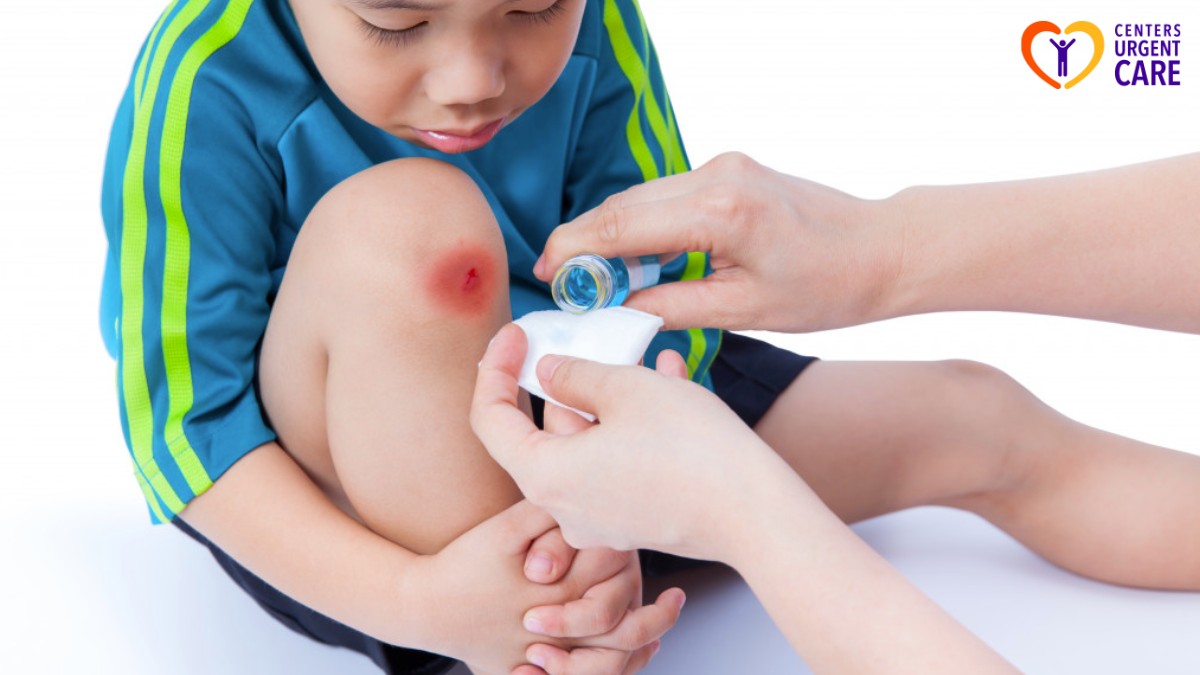
When to Go to Urgent Care for a Scraped Knee
Most minor abrasions can be treated at home, but certain situations require professional medical attention. You should visit urgent care if the scrape is larger than 2 to 3 inches, if you suspect that gravel, glass, or other debris remains in the wound, or if bleeding doesn’t stop after 10 minutes of applying pressure.
It’s also important to seek care if the wound was caused by rusty metal or a dirty object, if you haven’t had a tetanus shot in the last five years, or if you notice signs of infection. In these cases, it’s not just about knowing what to do for a scraped knee—it’s about recognizing when home care isn’t enough and taking proactive steps to prevent injuries in the first place, like reviewing our article Home Safety Checklist for Your Child’s Protection.
What to Do for Scraped Knees in Children
Kids fall a lot, and scraped knees are part of growing up. But treating a child’s wound involves a bit more patience and care.
Make it less scary by:
- Explaining what you’re doing in simple terms
- Using pain-free antiseptics
- Distracting them with a toy or video
- Offering a reward afterward (like a sticker)
Avoid over-bandaging the wound. Breathable, flexible coverings work best for active children. Also, remind them not to scratch or peel at healing skin.
Preventing Scrapes in the First Place
While no one can avoid every fall, you can take steps to reduce risk, especially for children and athletes.
Tips include:
- Wearing knee pads during sports or biking
- Keeping sidewalks and stairs clear of hazards
- Teaching children to watch where they walk or run
- Making sure shoes fit well and provide good traction
- Using proper safety gear when skating or rollerblading
You might not prevent every scraped knee, but you can definitely reduce the number and severity of injuries.
Quick Do’s After Treating a Scraped Knee
Even after you’ve cleaned and dressed the wound, a few smart habits can support faster, complication-free healing. Here are some helpful post-care tips to keep in mind:

What Not to Do for Scraped Knees
Even with good intentions, certain actions can delay healing or make things worse.
Avoid:
- Using hydrogen peroxide or alcohol directly on the wound
- Peeling off a healing scab
- Skipping cleaning because it “doesn’t look bad”
- Applying too much ointment, which can clog the skin
- Using old or expired bandages
Stick to clean, modern supplies and avoid outdated home remedies. Modern wound care is more effective and less painful.
Need Fast Care for a Scraped Knee?
At Centers Urgent Care, we provide fast, high-quality urgent care services for children and adults, including expert treatment for minor injuries like scraped knees, cuts, and bruises. Our skilled medical professionals make sure your wound is properly cleaned, dressed, and monitored to avoid infection or long-term damage. Whether you need help removing debris or want peace of mind, our team is ready to assist.
We’re conveniently located for those seeking urgent care in New York City. Don’t hesitate to contact us or walk in today—we’re here to help when you need it most.