

A sudden twist, slip, or awkward landing can change your entire day. One moment you feel steady. The next brings pain, swelling, and uncertainty. Urgent care centers are designed for moments like this. X-ray urgent care is often associated with fast injury evaluation, and urgent care plays a key role in timely imaging. X-rays help identify what is happening beneath the surface without delay. Is it a sprain? Is it a fracture? Imaging provides clarity when symptoms overlap. This guide explains what to expect before, during, and after an urgent care X-ray visit using simple language and real-world pacing. You will walk away knowing how quick imaging supports smart decisions and steady recovery. Continue reading to see how urgent care X-rays turn uncertainty into clear direction.
The First Moments: Arrival and Initial Evaluation
You arrive. You explain what happened. A medical provider listens carefully and observes movement, swelling, and pain patterns. They ask when the injury occurred and how it feels now. These details guide the next step.
Urgent care centers treat non-life-threatening injuries such as falls, sports mishaps, and sudden joint pain. Large health services studies show that urgent care settings manage roughly one-third of acute musculoskeletal injuries nationwide.
If bone involvement seems possible, an X-ray is recommended. This step helps rule out serious injury early and supports accurate care planning.
Why X-Rays Matter for Sprains and Fractures
Sprains involve stretched or torn ligaments. Fractures involve bone damage. The symptoms often look the same. Swelling appears. Pain increases with movement. Bruising may follow.
X-rays remove the guesswork. They reveal bone alignment and small cracks that physical exams alone can miss. Orthopedic research shows that up to one in five ankle injuries first labeled as sprains later reveal small fractures on imaging.
Accurate imaging helps ensure the right treatment begins immediately. That clarity supports safe healing and steady recovery.
X-Ray Urgent Care

Urgent care centers handle many health needs in one place. It reflects fast diagnostics and streamlined injury evaluation. That same efficiency applies to imaging services.
Most urgent care locations have on-site digital X-ray equipment. Images are produced within minutes. Providers review results during the same visit. Studies on diagnostic workflow show that on-site imaging shortens diagnosis time by more than half compared to off-site referrals.
Quick answers reduce stress and support timely care decisions.
What Happens During the X-Ray
The X-ray process is straightforward. It is also brief.
You may be asked to remove metal items. Jewelry can interfere with images. A trained technologist positions the injured area and asks you to stay still. The machine takes the image in seconds.
Modern digital X-rays are painless. Radiation exposure remains very low. Safety research confirms that today’s imaging systems operate well within established safety limits for both adults and children.
The experience is calm, quick, and predictable.
Common Injuries Seen on Urgent Care X-Rays
Urgent care X-rays often evaluate familiar injury patterns:
- Ankle injuries after twisting
- Wrist pain following falls
- Finger injuries from sports
- Foot pain from missteps
- Rib pain after impact
Each image tells a story. Providers examine bone spacing, alignment, and structure. They explain findings in everyday language.
For example, a runner may fall during a jog and develop swelling and pain. An X-ray confirms no fracture. Care focuses on support rather than immobilization. Imaging removes uncertainty early.
Quick Imaging for Timely Injury Care
The concept behind X-ray urgent care is access without delay. That same model supports injury imaging.
Urgent care fills the space between home care and emergency services. Research on healthcare delivery describes this as appropriate-level care. Patients receive timely evaluation without unnecessary escalation.
For injuries, this means faster imaging, fewer steps, and coordinated care in one visit.
After the X-Ray: Reviewing the Results
In many cases, results are available during the visit. The provider reviews the images and explains what they show. Normal findings are highlighted. Areas of concern are pointed out clearly.
If a fracture appears, stabilization begins immediately. If no break is present, treatment focuses on soft tissue support. Patient education studies show that visual explanations improve understanding and recall of medical instructions.
Seeing the image helps the plan make sense.
Care After Imaging for Sprains
When imaging confirms a sprain, care focuses on recovery support. Providers often recommend:
- Resting the joint
- Short icing sessions
- Compression support
- Elevation when possible
Sports medicine research shows that early supportive care shortens recovery time for mild and moderate sprains. Movement returns gradually as comfort improves.
The goal is steady healing without added strain.
Care After Imaging for Fractures
Fractures vary in severity. Some require simple immobilization. Others need structured follow-up.
Urgent care provides immediate stabilization with splints or braces. Clear instructions guide daily care. Follow-up plans ensure continuity. Early immobilization has been shown to reduce discomfort and protect surrounding tissue.
You leave with support in place and a clear next step.
Quick Comparison: Sprain vs. Fracture
| Feature | Sprain | Fracture |
| Tissue involved | Ligament | Bone |
| Swelling | Common | Common |
| Bruising | Possible | Possible |
| X-ray result | Normal bone | Visible crack or break |
| Initial care | Supportive | Immobilization |
This comparison highlights why imaging matters when symptoms overlap.
Safety and Comfort During Imaging
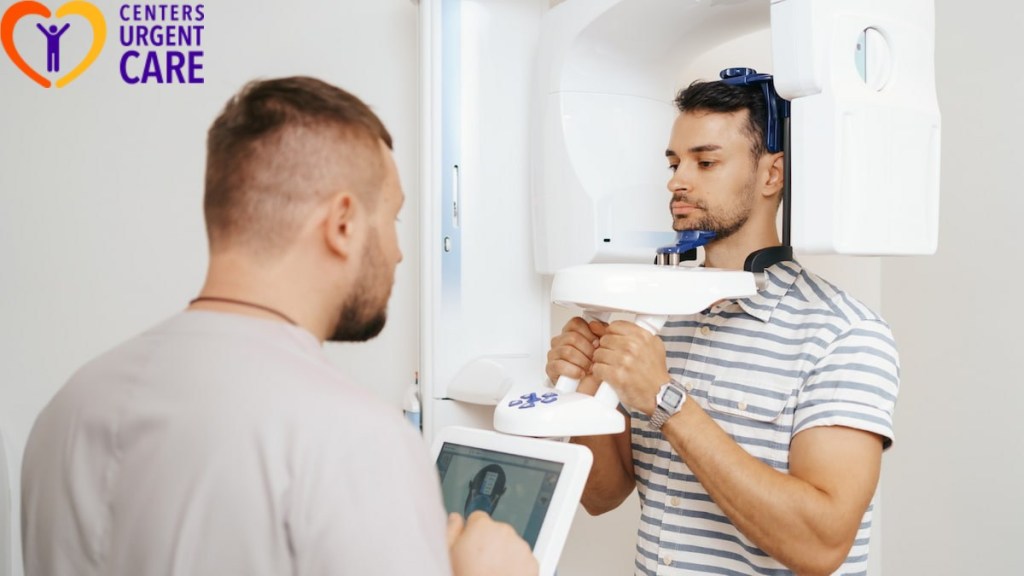
Radiation safety is a common concern. Modern digital X-rays address this effectively. Exposure levels are significantly lower than older imaging systems.
Safety guidelines emphasize shielding and precise targeting. These measures protect surrounding areas while capturing clear images.
Comfort matters as well. Technologists explain each step and adjust positioning carefully. The process remains patient-centered throughout.
When X-Rays Are Not Enough
X-rays are excellent for bones. Soft tissue injuries may require other imaging tools.
Urgent care providers explain these limitations openly. When needed, they guide next steps for additional evaluation. Healthcare efficiency studies show that proper imaging selection improves outcomes and reduces unnecessary testing.
Preparing for Your Visit
Preparation helps streamline care. Wear loose clothing. Be ready to describe how the injury happened. Note when pain began.
Clear information supports accurate evaluation and imaging decisions. Urgent care works best when communication flows both ways.
Your input completes the picture.
Frequently Asked Questions
1. Can an X-ray show healing progress later on?
Yes. Follow-up imaging can show bone alignment and healing stages when recommended.
2. Do X-rays help with old injuries that flare up?
They can. Imaging may reveal changes linked to past trauma.
3. Can swelling affect X-ray clarity?
Swelling does not block bone visibility, according to imaging studies.
4. Are X-rays useful for finger injuries caused by typing strain?
Even if someone feels only a little soreness, stiffness, or occasional twinges from typing, an X-ray can still be useful to check for hidden bone issues.
5. Can imaging guide return-to-activity timing?
Yes. Clear images help providers suggest safe movement timelines.
Your Next Step Toward Answers
Moving forward with clarity matters after an injury. An urgent care X-ray visit feels focused and efficient. You arrive with questions, and Centers Urgent Care helps turn those concerns into clear next steps without delay. From sprains to fractures, imaging guides smart decisions that protect movement and support safe healing. Results arrive fast. Explanations stay simple. Clear steps make recovery feel manageable and less overwhelming.
If you are in New York and need quick imaging guidance, this approach keeps care moving in the right direction. Centers Urgent Care is ready to support you with timely X-rays, clear communication, and a care plan that fits your day. Reach out today to get the answers you need and start moving forward with confidence and ease.