According to the Centers for Disease Control and Prevention (CDC), cases of congenital syphilis in the U.S. have surged in recent years. In 2021 alone, over 2,000 cases were reported, marking a concerning rise in preventable infections. This increase highlights the importance of early detection of congenital syphilis in newborns to prevent long-term complications—and underscores why STD testing during pregnancy plays such a vital role in protecting both mother and baby.
How Does Congenital Syphilis Affect a Newborn’s Skin?
Skin symptoms are often among the first visible indicators of congenital syphilis in infants. The rashes linked to this infection typically appear on the palms of the hands and soles of the feet, areas not commonly affected by other newborn rashes.
Before you see the rash, you might notice that your baby has peeling skin or reddish patches that don’t fade when touched. These skin issues may be accompanied by small blisters or ulcers. Over time, if untreated, these skin lesions can leave scars or dark spots.
What are the Nasal and Respiratory Signs of Congenital Syphilis?
Congenital syphilis in newborns frequently leads to a distinct nasal discharge known as snuffles. This isn’t an ordinary runny nose.
Parents should watch for:
- Thick, bloody, or pus-like nasal discharge
- Difficulty breathing or noisy breathing sounds
- Frequent sneezing, unrelated to environmental factors
This nasal discharge is highly infectious. It’s one of the main ways the bacteria can spread to others handling the baby, so quick medical attention is vital.
Are There Systemic Signs of Congenital Syphilis in Infants?
Beyond skin and nasal symptoms, congenital syphilis can impact a newborn’s internal organs and general health. These signs might not be as immediately obvious but are serious.
Here’s what to look out for:
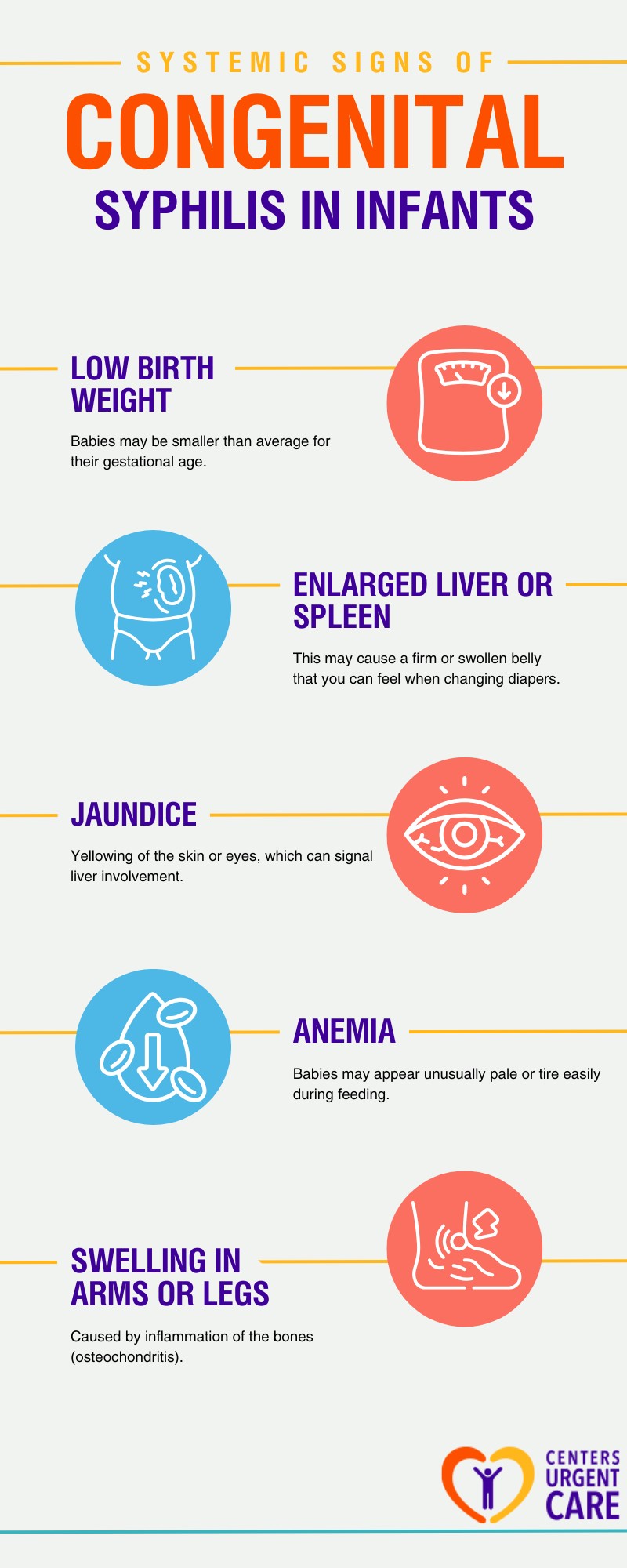
If any of these are present, getting a medical evaluation without delay is critical.
Can Congenital Syphilis Cause Bone and Joint Problems in Newborns?
Yes, congenital syphilis in newborns can affect the bones and joints early in life. This condition, sometimes called syphilitic osteochondritis or periostitis, leads to pain and limited movement.
Key signs include:
- Limited movement of arms or legs (pseudo-paralysis)
- Pain when the limbs are touched or moved
- Swelling over certain bones, especially the long bones of the arms and legs
These symptoms may be subtle at first. Parents often notice the baby avoids using one arm or leg or cries when the limb is handled.
When Do Signs of Congenital Syphilis Usually Appear?
Early signs typically develop within the first two months of life, though timing can vary. Some newborns show symptoms within the first few weeks, while others may remain asymptomatic until later.
It’s important to know that babies can pass routine newborn exams at birth and still develop signs afterward. This is why follow-up appointments and monitoring are crucial, especially if the mother had untreated syphilis during pregnancy.
How is Congenital Syphilis Diagnosed in Newborns?
Doctors rely on a combination of physical exams, blood tests, and sometimes imaging studies to confirm congenital syphilis in newborns. They look for characteristic signs and order tests such as:
- Nontreponemal and treponemal blood tests: To detect syphilis antibodies.
- X-rays of long bones: To spot bone damage or inflammation.
- Spinal fluid testing: To check for central nervous system involvement.
Prompt diagnosis allows for early treatment, often with penicillin, which can prevent most complications if started in time.
What Should Parents Do If They Notice Signs of Congenital Syphilis?
If you observe any of the symptoms described—whether skin rash, snuffles, or limb issues—seek medical care immediately. Early treatment can prevent severe long-term harm.
Key steps to take:
- Contact your pediatrician or an urgent care facility right away.
- Avoid close contact with others until your baby has been evaluated.
- Keep a record of all prenatal care and testing, as it can help guide your baby’s treatment.

When To Visit Urgent Care
If you suspect congenital syphilis in newborns or see any of the signs discussed, do not wait. The team at Centers Urgent Care is ready to provide fast, high-quality evaluations and care for your child. We understand how stressful it is to worry about your baby’s health, and we act quickly to get answers and start the right treatment.
Visit one of our urgent care centers in NYC today. Our facilities are equipped to assess your newborn’s condition without delay. Contact us now for peace of mind and expert care.