

Wellness Tips from Josef Schenker, MD
Welcome to our Wellness Tips blog series, where Dr. Josef Schenker, Medical Director at Centers Urgent Care, shares his expertise to help you feel your best. With years of experience in internal medicine and emergency care, Dr. Schenker offers simple, practical advice that makes taking care of your health easier. From tips to improve your daily habits to strategies for staying ahead of potential health challenges, this series is here to inspire you to put your well-being first.
Wrist Sprain Management
A sprained wrist is a common injury. It can happen to anyone, whether you’re an athlete, a busy professional, or just going about your day. While it’s usually not severe, it can cause significant pain and inconvenience.
Dr. Josef Schenker shares his expertise on understanding and managing a sprained wrist, including symptoms, treatment options, and recovery tips.
Dr. Josef Schenker Explains the Symptoms of Wrist Sprain
Recognizing a sprained wrist is the first step toward effective treatment. Dr. Josef Schenker explains that the symptoms of a wrist sprain can vary depending on the severity of the injury:
- Pain is usually the first sign of a sprained wrist. It can be sharp or dull and typically worsens with movement or pressure.
- Your wrist may swell up quickly after the injury. Swelling will make it look puffy and feel tender to the touch.
- Discoloration may appear around the injured area. Discoloration around the injured area may develop as a result of damage to the blood vessels.
- A wrist injury can limit your mobility. It can limit your wrist’s range of motion and make it uncomfortable to move your hand or fingers.
- The injured wrist may feel weaker than the uninjured one. This weakness can make it difficult to perform regular tasks.
These symptoms can make everyday activities challenging, which is why knowing how to address a sprained wrist is crucial.
Josef Schenker, MD, Explains How to Heal a Sprained Wrist Fast
Healing a sprained wrist quickly involves a mix of immediate care and ongoing management. According to Dr. Schenker, starting with the R.I.C.E. method is key:
- Rest: Avoid using the injured wrist to prevent further damage. Use your other hand for tasks whenever possible.
- Ice: Apply an ice pack to the wrist for 15-20 minutes every 2-3 hours. This helps reduce swelling and numbs the area, alleviating pain.
- Compression: Wrap the wrist with an elastic bandage to provide support and limit swelling. Make sure it’s snug but not too tight to avoid cutting off circulation.
- Elevation: Keep your wrist elevated above heart level whenever possible to reduce swelling. Propping it up on pillows while resting can be helpful.
What to Do if Wrist Sprain is Swelling
If your wrist starts swelling, it’s crucial to act fast to bring it under control. Dr. Schenker recommends these steps:
- Continue with the R.I.C.E. method: Rest, ice, compression, and elevation are key to managing swelling.
- Over-the-counter medication: Nonsteroidal anti-inflammatory drugs (NSAIDs) like ibuprofen can help reduce swelling and alleviate pain.
- Avoid heat: Do not apply heat to a swollen wrist, as it can increase swelling. Save heat therapy for later stages of recovery when swelling has subsided.
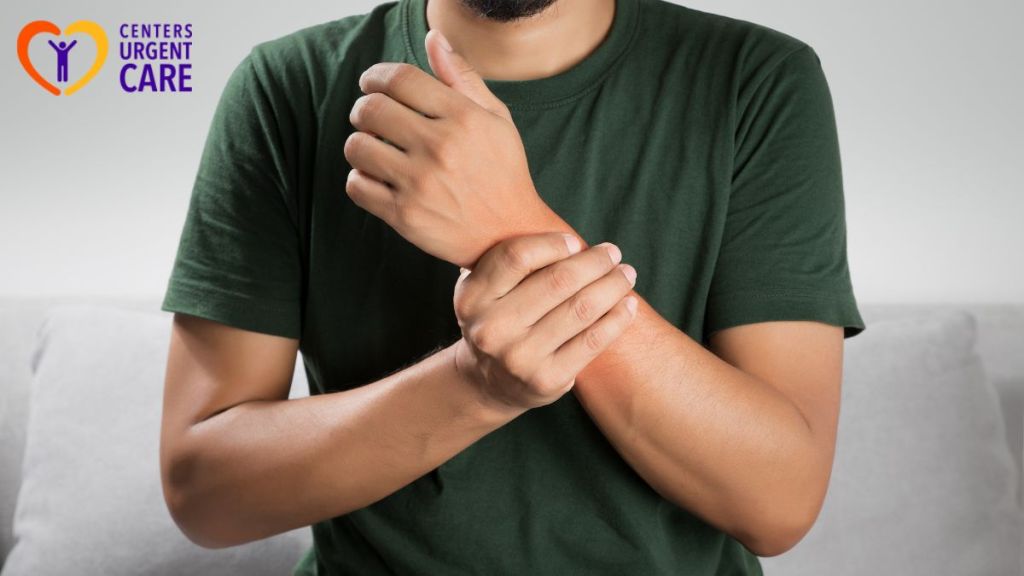
How to Care for a Sprained Wrist
Caring for a sprained wrist goes beyond immediate treatment. Dr. Schenker recommends these ongoing care tips:
- Gradual use: As the pain and swelling decrease, it’s important to ease back into using your wrist. Start by gently moving it to prevent stiffness, but be careful not to push through any pain.
- Support: Use a wrist brace or splint for extra support during the healing process, especially during activities that may strain the wrist.
- Physical therapy: If your doctor recommends it, physical therapy can be really helpful. It can build back strength and flexibility in your wrist, making sure you regain full function without overdoing it.
What Not to Do With a Sprained Wrist
It’s just as important to know what to avoid when dealing with a sprained wrist. Josef Schenker, MD advises against:
- Ignoring the pain: Pushing through pain can worsen the injury and delay healing.
- Overusing the wrist: Avoid activities that strain the wrist or put pressure on it until fully healed.
- Skipping follow-up care: Not adhering to follow-up appointments or recommended treatments can lead to chronic issues.
Wrist Sprain Exercises
Caring for a sprained wrist goes beyond immediate treatment. Here are some effective wrist sprain exercises to aid in healing:
- Wrist Range of Motion Exercises: Gentle wrist circles and bending movements help improve flexibility and reduce stiffness. Perform these slowly and smoothly to avoid aggravating the injury.
- Wrist Flexor and Extensor Stretch: Hold your arm out straight with your palm facing down, then gently pull back your fingers with your other hand to stretch the wrist flexors. Next, flip your hand so your palm faces up and gently pull back your fingers to stretch the extensors. Hold each stretch for about 15-30 seconds, repeating 3-5 times.
- Wrist Flexion and Extension: With your forearm resting on a table or your knee, hold a lightweight (such as a small dumbbell or a water bottle) in your hand. Slowly bend your wrist upwards (flexion) and then downwards (extension). Start with 10 repetitions, gradually increasing as your wrist strengthens.
- Wrist Supination and Pronation: Hold a lightweight in your hand with your elbow bent at 90 degrees and your palm facing upwards. Rotate your forearm outward (supination) and then inward (pronation), keeping your wrist stable. Perform 10-15 repetitions in each direction, focusing on controlled movements.
- Grip Strengthening: Squeeze a stress ball or a soft rubber ball in your hand and hold for 5-10 seconds before releasing. Repeat this 10-15 times to strengthen the muscles in your hand and forearm.
These exercises should be performed gently and without causing pain. Start with low resistance and gradually increase as your wrist heals and gains strength. Always consult with your healthcare provider or physical therapist before beginning any new exercise program.

When to Seek Professional Help
Seeking professional help early can lead to a quicker recovery and prevent potential complications. If in doubt about the severity of your wrist injury, it’s always better to err on the side of caution and consult a healthcare provider. Here are signs to watch for:
- Persistent Pain: If the pain is intense and doesn’t improve with rest and over-the-counter painkillers.
- Severe Swelling or Bruising: Excessive swelling or bruising that doesn’t improve with rest and ice may indicate a more serious injury like a fracture or ligament tear, warranting medical evaluation.
- Difficulty Moving or Using Your Wrist: If you experience significant difficulty moving your wrist, gripping objects, or performing daily activities, a healthcare provider can determine if there’s underlying damage that needs attention.
- Numbness or Tingling: Persistent numbness, tingling sensations, or weakness in the hand or fingers may indicate nerve involvement, requiring prompt evaluation to prevent long-term complications.
- Previous Wrist Injuries: If you’ve had previous wrist injuries or ongoing issues with your wrist, it’s best to consult a specialist to ensure proper management and prevent recurrent injuries.
Josef Schenker, MD, Answers Frequently Asked Questions:
A mild to moderate wrist sprain typically takes about 4 to 6 weeks to heal with proper rest, ice, compression, elevation (R.I.C.E.) and gradual rehabilitation exercises. Severe sprains or injuries involving fractures may take longer and require medical supervision for optimal recovery.
Yes, mild to moderate sprained wrists often heal on their own with proper care, including rest, ice, compression, and elevation (R.I.C.E.) and avoiding activities that strain the wrist. Severe sprains or those involving fractures may require medical intervention for optimal healing.
A sprained wrist usually hurts around the wrist joint itself, often on the palm side or the thumb side of the wrist. Pain may also radiate into the hand or up the forearm, depending on the severity and location of the injury.
The scaphoid fracture is often considered the most serious wrist fracture. It can lead to complications like avascular necrosis (bone death due to lack of blood supply) if not treated promptly, potentially affecting long-term wrist function.
Yes, you can drive with a sprained wrist, but it depends on the severity of the injury and your comfort level. It’s important to ensure you can safely control the vehicle without causing further pain or compromising your ability to drive.
No, wrist injuries are not necessarily permanent. With proper treatment, including rest, rehabilitation, and sometimes medical intervention, many wrist injuries can heal fully, allowing individuals to regain normal function and mobility in the affected wrist.
Yes, you can go to urgent care for a sprained wrist. Places like Centers Urgent Care can assess and treat sprained wrists, providing immediate care such as X-rays, splinting, or referrals to specialists if needed, ensuring proper management and recovery.
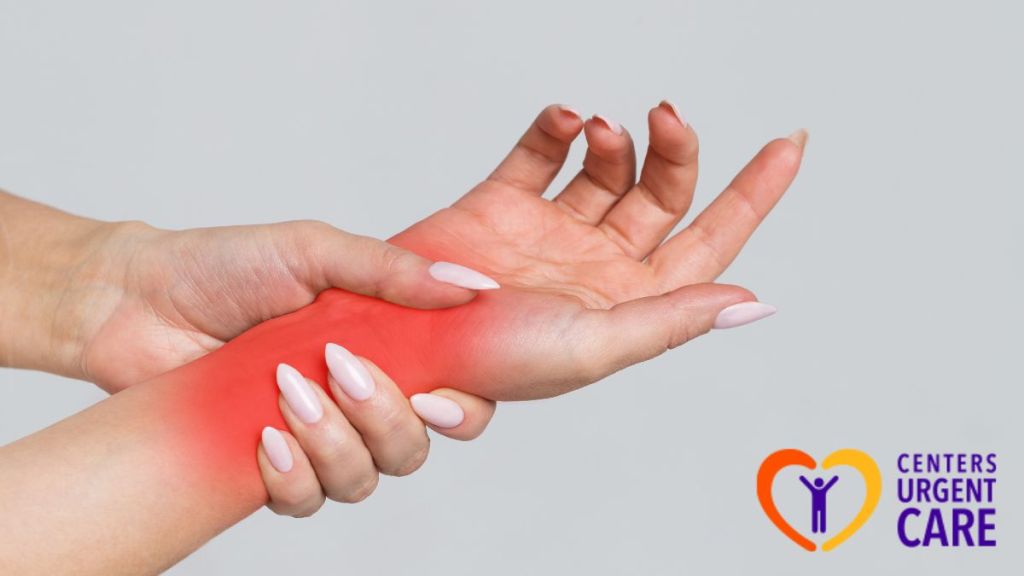
Get a Grip on Your Wrist Sprain Recovery
In dealing with a sprained wrist, remember that prompt action and proper care are key to a speedy recovery. Whether you’re recovering from a minor sprain or need expert care for a more serious injury, Centers Urgent Care is here to support you every step of the way. Led by Dr. Josef Schenker, our team of trained professionals provides compassionate care across 12 convenient locations in New York.
Let us help you bounce back from that wrist sprain in no time. Reach out to us today!

About Josef Schenker, MD:
Dr. Josef Schenker, a board-certified expert in internal medicine and emergency medical services, brings extensive experience and compassion to his role as Medical Director and Partner at Centers Urgent Care. With leadership in SeniorCare Emergency Medical Services and as an Attending Physician at New York-Presbyterian Brooklyn Methodist Hospital, Dr. Schenker oversees critical care and treatment protocols across varied medical needs. His dedication extends to chairing NYC REMAC, ensuring adherence to state standards in emergency medical procedures. At Centers Urgent Care, Dr. Schenker's expertise ensures prompt, high-quality emergency care for patients of all ages, supported by state-of-the-art facilities including a dedicated pediatric suite.
HOW I WAS CURED FROM HERPES VIRUS
I am writing this testimonial with immense gratitude and a renewed sense of hope in my heart. For years, I battled with the physical and emotional torment caused by the herpes virus. It felt like an unending struggle, until I discovered a remarkable solution that changed my life forever. Like many others, I had tried countless remedies, medications in search of a cure. I had lost hope, resigned to the belief that herpes was something I would have to live with indefinitely. However, fate intervened and led me to a breakthrough that altered the course of my life. Upon stumbling on a revolutionary treatment option, my skepticism slowly transformed into a flicker of hope. The treatment was a natural remedy from Dr Awase [ HERBS ] Over time, as I followed the treatment diligently, I started noticing positive changes and I experienced a boost in my overall well-being. I am ecstatic to share that I am now herpes-free confirmed by my Dr after a test was done. The treatment I received was nothing short of miraculous and I couldn’t be more grateful. I have regained my self-confidence and the burden that once weighed heavily upon me has been lifted. I was cured of my herpes virus through natural medication.
If you, like me, have been struggling with herpes and searching for a way out, please know that hope exists. May my story inspire hope in the hearts of those who need it. He also specializes in getting rid of HPV, OVARIAN CYST, PCOS, HEPATITIS and a lot more.
Contact on WhatsApp +2349074997110
Email:- dr.awaseherbalhome@gmail. com
2025 has changed my life. I never believed I would be cured by a spell caster who specializes in herbal cure and magical spells. I am talking about the help Doctor Odunga gave to me. I have been cured of herpes HPV which has plagued me for over 2 years. I am very happy to tell others that if you want to be cured or get your ex back spells and get pregnant naturally, even financial blessing through lottery, there is only one place to be and that is with Dr Odunga Spell Temple. Am so happy that just 3 days after taking DR ODUNGA Herbal treatments my herpes was cured permanently. DR ODUNGA also have cure to #HIV #Diabetes #Lupus #Tinnitus #Fibroid #Cancer #Hepatitis B, #Syphilis #Infertility etc … If you have this ailment or whatsoever you might be suffering from you should contact him at his EMAIL: odungaspelltemple@gmail.com OR VIA Whats App +2348167159012