























The U.S. Department of Transportation (DOT) mandates drug testing and DOT Physical exams for transportation workers to ensure public safety. Employees in safety-sensitive roles are subject to drug and alcohol testing regulations under the DOT, which covers drivers, pilots, train operators, and other transport professionals. The primary aim of these regulations is to reduce the risk of accidents, injuries, and fatalities caused by impaired employees in the transportation industry.
While DOT drug testing plays a critical role in safety, there are concerns about the integrity of these tests. One of the major concerns is the potential for adulterated drug tests. Adulteration involves altering or tampering with a sample to produce a false result, either to mask the presence of drugs or to alter the test’s outcome. This can significantly undermine the purpose of drug testing and pose a major risk to safety.
In this article, we’ll delve into what adulterated drug tests are, how they affect DOT testing protocols, and the consequences they can have on public safety and the workplace.
Table of Contents
ToggleUnderstanding Adulteration in Drug Testing
Drug test adulteration refers to the act of altering a sample of urine, saliva, blood, or hair before or during the testing process to prevent detection of substances. In the case of DOT drug testing, the most common form of adulteration involves urine samples. People who are trying to cheat on drug tests often use substances that change the chemical composition of the sample, which may lead to a negative result when drugs are actually present in the individual’s system.
Adulterants can be purchased online, in stores, or through other underground channels. These substances may include chemicals like bleach, vinegar, or commercially available masking agents, as well as synthetic urine that is designed to mimic the properties of human urine. The goal of these adulterants is to confuse the testing process and create a false negative result.
How Adulterated Samples Affect DOT Testing
Adulterated samples pose serious risks to the integrity of DOT drug testing. If individuals succeed in tampering with their urine or other samples, it becomes difficult to determine whether the individual is using drugs or alcohol while working in a safety-sensitive position. This leads to a distorted view of the employee’s health and safety, which in turn can endanger the public.
DOT testing regulations include strict protocols to ensure the validity of test samples, including chain of custody procedures and sample collection protocols. When adulteration is suspected, the test results are considered invalid, and the employee must undergo further testing. If the adulteration is intentional, it can lead to severe penalties and consequences for the employee, including termination, legal action, and a permanent ban from safety-sensitive work positions.

The Risks of Adulterated Drug Testing in DOT
The primary concern with adulterated drug tests in the DOT is the impact on public safety. Transportation professionals, such as truck drivers, train operators, and airline pilots, are responsible for the safe transport of goods and people. If a worker manages to cheat on a drug test by altering their sample, they may be allowed to continue working despite being under the influence of drugs or alcohol. This compromises the safety of passengers, freight, and everyone on the road, track, or airspace.
A person under the influence of drugs can be impaired in their decision-making, reaction times, and overall ability to perform safety-sensitive tasks. For example, an intoxicated truck driver could be at a greater risk of causing a collision, while a pilot impaired by drugs might fail to react quickly in an emergency situation, leading to catastrophic outcomes.
Legal and Employment Consequences
Adulterating a drug test can have severe consequences for employees in the transportation industry. The DOT mandates that safety-sensitive workers undergo random drug tests and other screenings as part of their employment requirements. If an employee is caught tampering with a drug test sample, they could face the following repercussions:
- Termination: Employers are likely to terminate the employment of an individual caught cheating on a drug test, especially if the adulteration is intentional.
- Loss of CDL or Certification: Transportation professionals who require certifications, such as Commercial Driver’s Licenses (CDL) or aviation certifications, may have their credentials revoked. This can permanently disqualify them from working in certain industries.
- Legal Ramifications: Adulterating a drug test can also lead to legal consequences. In some cases, it may be considered a criminal act, leading to fines, probation, or imprisonment, particularly if the adulteration is part of a larger scheme or if the individual is found to be involved in drug trafficking.
- Ineligibility for Future Employment: Once a transportation worker is caught cheating on a drug test, they may face permanent ineligibility for employment in safety-sensitive positions under DOT regulations. This can significantly impact their future career prospects.
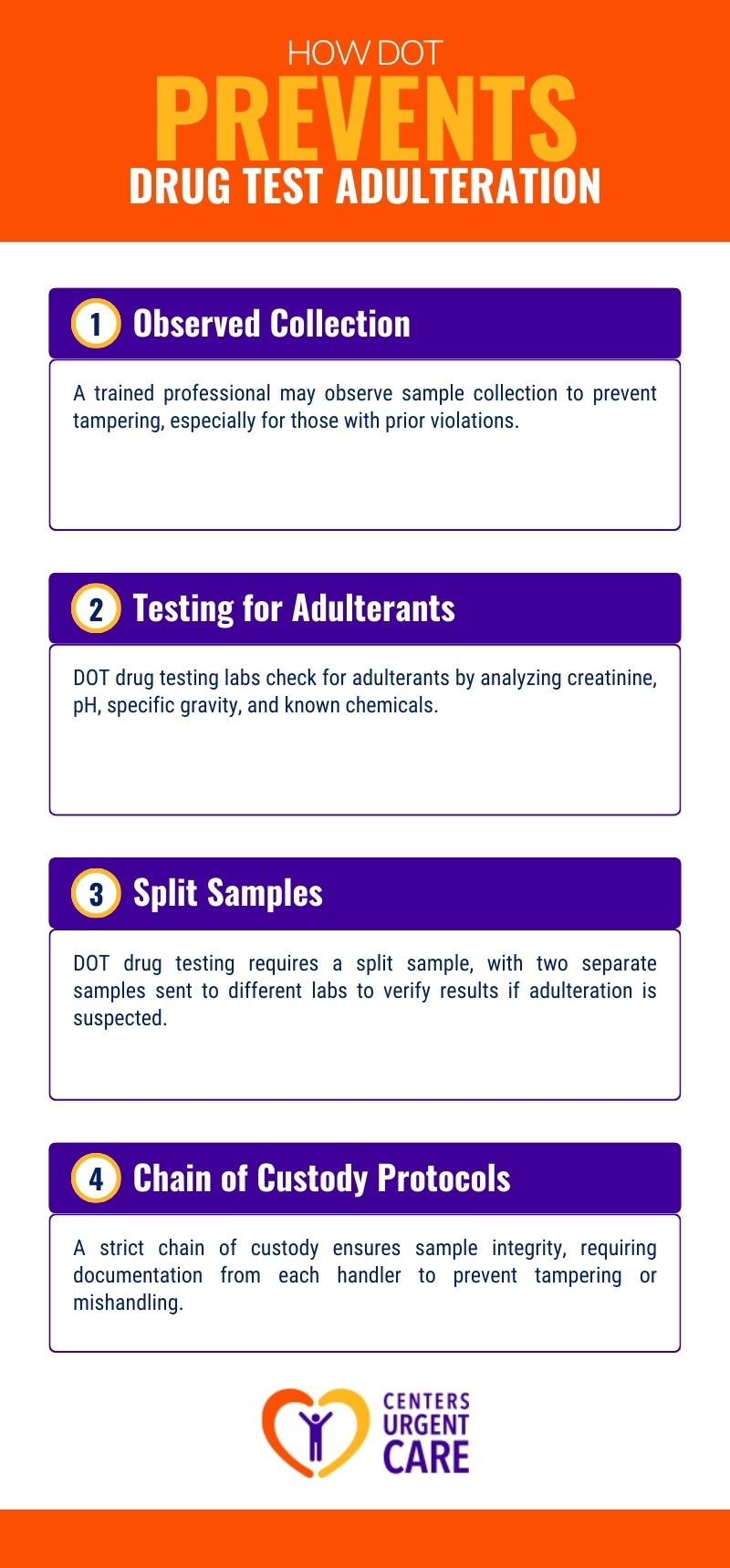
How DOT Prevents Drug Test Adulteration
The DOT has implemented strict protocols to detect and prevent adulteration in drug testing. These measures include:
In recent years, advances in drug testing technology have made it more difficult for individuals to adulterate drug samples without detection. More sensitive testing methods, such as Gas Chromatography-Mass Spectrometry (GC-MS), can identify even trace amounts of adulterants in drug test samples. Additionally, the development of faster, more accurate testing methods has improved the overall reliability of DOT drug testing.
Addressing the Problem: What Can Be Done?
To effectively address the problem of adulterated drug testing, a multi-faceted approach is needed. The following strategies offer practical solutions for tackling this issue and maintaining the integrity of the drug testing process.
Education and Awareness
One of the most effective ways to combat adulterated drug testing is through education. Employers, workers, and testing facilities must all be educated about the risks and consequences of drug test adulteration. Employees should be aware of the strict protocols in place and the severe consequences of attempting to cheat on a drug test. Employers should also educate their workers about the importance of honesty in drug testing and the impact it can have on public safety.
Stricter Penalties for Adulteration
To deter individuals from attempting to adulterate drug tests, there needs to be a clear and consistent application of penalties for those caught tampering with samples. Stronger penalties, such as long-term bans from safety-sensitive roles or permanent removal from the DOT database, would send a strong message that adulteration is unacceptable.
Regular Audits and Monitoring
To ensure that drug testing procedures are being followed correctly, DOT agencies and employers should regularly audit testing processes. Monitoring for trends in drug test results and identifying potential cases of adulteration will help prevent false negatives and maintain the integrity of the testing system.
Adulterated drug tests pose a serious threat to the safety of the public and the integrity of the transportation industry. DOT drug testing regulations are crucial to ensuring that workers in safety-sensitive positions are not impaired while performing their duties. By understanding the risks of drug test adulteration, the measures in place to prevent it, and the consequences of attempting to cheat, both employees and employers can help safeguard public safety and uphold the trust placed in the transportation industry.
It’s essential for everyone involved in the drug testing process to stay vigilant, proactive, and committed to upholding the highest standards of safety and integrity. Whether you’re an employee or an employer, recognizing the significance of DOT drug testing and the risks of adulteration helps build a safer and more trustworthy transportation system. At Centers Urgent Care, we provide fast, high-quality urgent care services for children and adults, ensuring accurate and reliable testing. If you need professional and efficient drug testing, visit us today for expert care. Contact us now and learn more about our services in urgent care in New York!
Sources:
An adulterated drug test in DOT screenings can have serious consequences, including disqualification and mandatory follow-up testing. Understanding what counts as adulteration and how to avoid it is crucial for compliance.
Adulterating a DOT drug test can lead to job loss, revoked certifications, and legal consequences. The DOT enforces strict measures to detect tampering, ensuring public safety in transportation. Employees should understand the risks and penalties to maintain compliance and workplace integrity.
This article provides a comprehensive overview of adulterated drug tests in the context of DOT regulations, emphasizing the risks they pose to public safety and workplace integrity. It explains how adulteration works, the consequences for employees caught tampering with tests, and the measures DOT has in place to detect and prevent such actions. The piece also highlights the importance of education, stricter penalties, and regular audits to maintain the reliability of drug testing. For employers and employees in safety-sensitive roles, this is a crucial read to understand the importance of adhering to DOT drug testing protocols and ensuring a safe transportation system.
Adulterated drug tests are a serious issue that undermines the safety goals of DOT regulations.