

As you’re expecting, every decision you make feels even more significant—especially when it comes to your health and the health of your baby. You might wonder about the flu vaccine and whether it’s the right choice during pregnancy. It’s natural to have questions, and we’re here to help clear the air so you can make an informed decision with confidence. Let’s explore the facts about the flu vaccine and its safety for moms-to-be.
Is The Flu Vaccine Safe For Pregnant Women?
Yes, the flu vaccine is safe for pregnant women. Health experts, including the Centers for Disease Control and Prevention (CDC) and the World Health Organization (WHO), strongly recommend it during pregnancy. The vaccine protects both the mother and baby by reducing the risk of severe flu-related complications, which can be more dangerous during pregnancy due to changes in the immune system. In addition, it’s important for pregnant women to also consider other preventive care, such as STD testing, to ensure overall health and safety during pregnancy.
Receiving the flu vaccine during pregnancy also provides protection to the baby after birth. Babies cannot receive the flu vaccine until they are six months old, so the antibodies passed on from the mother offer critical protection during those early months. It’s important to consult with your healthcare provider to ensure you receive the appropriate vaccine, as the nasal spray flu vaccine is not recommended during pregnancy.
Benefits of Flu Vaccination
- Research indicates that receiving a flu vaccine at any stage of pregnancy is considered safe, from the early weeks through to labor. Pregnant individuals who receive the flu vaccine also provide a level of protection to their newborns, extending into the crucial initial months after birth when infants are particularly vulnerable to the flu.
- Pregnant women face an increased risk of experiencing complications if they contract the flu, especially in the later stages of pregnancy. Additionally, young infants are more susceptible to severe illness if exposed to the flu, heightening the likelihood of pregnant women and their infants requiring intensive medical care.
- Pregnancy alters the body’s response to infections like the flu, with contracting the flu while pregnant potentially resulting in premature birth, low birth weight, stillbirth, or infant mortality. Thus, the flu vaccine plays a critical role in safeguarding the health of both the pregnant individual and their developing baby.
Risks of Flu Complications
- Undergoing flu vaccination during pregnancy serves as a protective measure for the pregnant individual and their baby, guarding against not only the flu but also associated complications that can pose risks to pregnancy outcomes. The flu vaccine is deemed safe for administration during any trimester of pregnancy, offering essential protection against flu-related health risks.
Importance of Flu Vaccine During Pregnancy
During pregnancy, the importance of receiving the flu vaccine cannot be overstated, with significant benefits for both the mother and the baby.
Protection for Mother and Baby
Pregnancy alters the body’s immune response, making expectant mothers more susceptible to severe complications if they contract the flu virus. Infections like the flu during pregnancy can lead to adverse outcomes such as premature birth, low birth weight, stillbirth, or infant mortality. Vaccination against the flu helps mitigate these risks and ensures the well-being of both the mother and the unborn child.
Precautions for Pregnant Women
Pregnant women face increased risks of complications if they contract the flu, particularly in the later stages of pregnancy. Infants, especially young babies, have a heightened vulnerability to severe flu-related illnesses, escalating the potential need for intensive medical interventions.
Prioritizing flu vaccination during pregnancy, expectant mothers can fortify their immune defenses, shield themselves and their infants from the flu, and promote overall health and well-being during this critical phase.

Understanding the Flu Vaccine
Evaluating the safety of the flu vaccine for pregnant women requires a comprehensive understanding of the composition of the vaccine and the potential side effects and reactions associated with it.
Composition of the Flu Vaccine
One crucial fact to note is that the flu vaccine does not contain any live viruses, ensuring that it cannot cause the flu itself. The flu vaccine usually contains inactivated or dead viruses, which trigger the immune system to create antibodies that target particular strains of the influenza virus. By introducing these inactive components, the immune system can recognize and fight off the flu virus more effectively when exposed.
Side Effects and Reactions
It is normal for individuals receiving the flu vaccine, including pregnant women, to experience some mild side effects and reactions post-vaccination. These typically include a slightly raised temperature, aching muscles, and soreness at the injection site. It’s important to understand that these reactions are the body’s immune response to the vaccine and should not be mistaken as symptoms of having contracted the flu from the vaccine.
Understanding the composition and common side effects of the flu vaccine, pregnant women can make informed decisions about the safety and benefits of receiving the flu vaccination during pregnancy. It is crucial to weigh the risks of potential flu complications against the known safety profile of the vaccine to protect both the mother and the developing baby from the serious consequences of the flu.
Recommendations for Flu Vaccination
Regarding flu vaccination for pregnant women, considering the timing of the vaccination and its impact on breastfeeding is crucial for ensuring the health and well-being of both the mother and the baby.
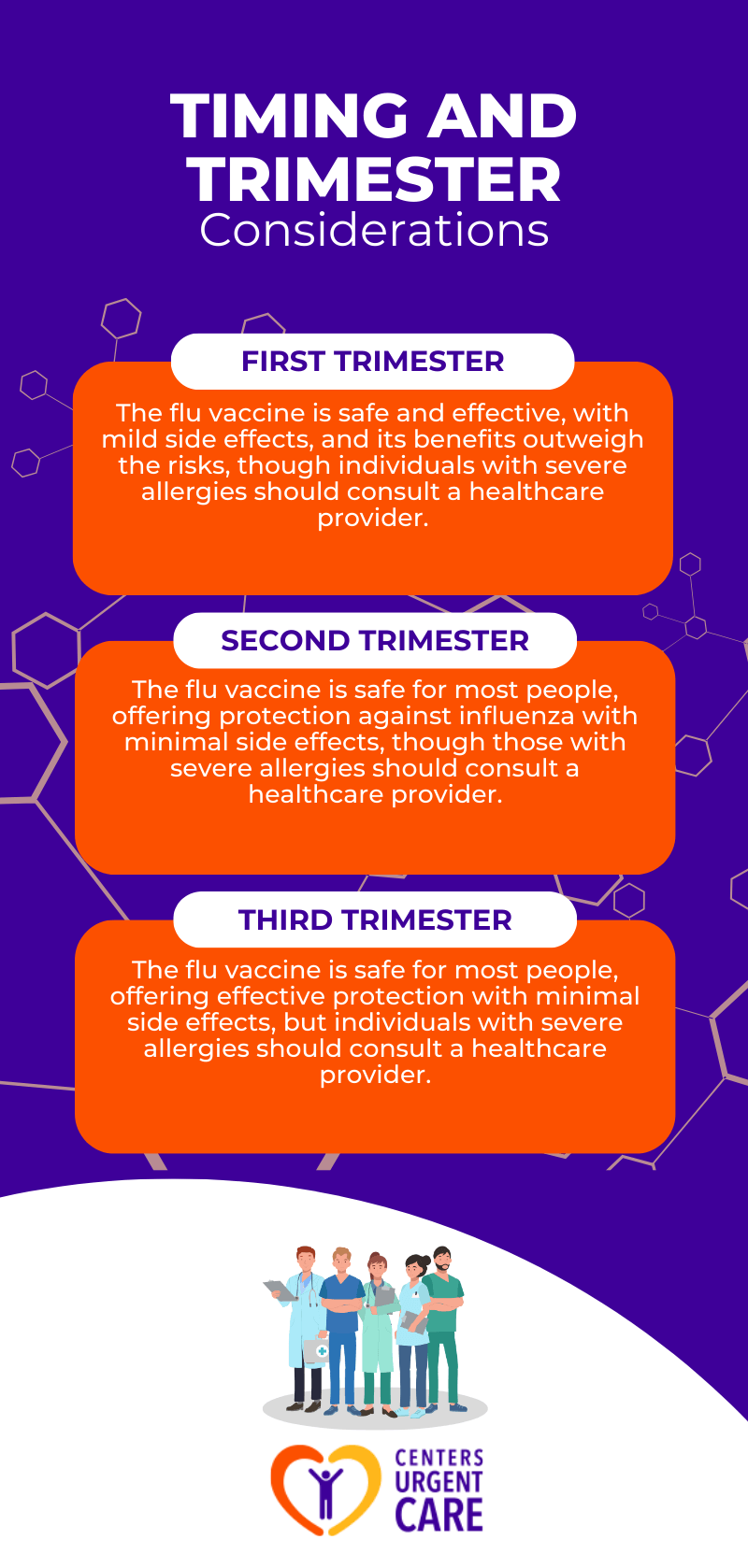
Timing and Trimester Considerations
Pregnant women face a higher risk of developing complications if they contract the flu, especially in the later stages of pregnancy. Pregnancy alters the body’s response to infections like the flu, potentially leading to unfavorable outcomes for both the mother and the baby. It is therefore recommended that pregnant women receive the flu vaccine at any stage of pregnancy, as it is safe during all trimesters.
The Centers for Disease Control and Prevention (CDC) and the American College of Obstetricians and Gynecologists (ACOG) advise that pregnant individuals should get vaccinated against the flu regardless of the trimester they are in. Ideally, receiving the flu shot as early as possible, particularly if approaching the due date, can provide protection for the baby during the critical first months after birth.
Impact on Breastfeeding
One common concern among pregnant women is the safety of breastfeeding after receiving the flu vaccine during pregnancy. It is important to emphasize that it is entirely safe to continue breastfeeding after being vaccinated with the flu vaccine. There are no adverse effects on breastfeeding that result from receiving the flu shot while pregnant.
Considering the timing and trimester considerations, as well as the impact on breastfeeding, pregnant women can make informed decisions about receiving the flu vaccine to safeguard their health and that of their newborn. By following expert guidance and recommendations, pregnant individuals can mitigate the risks associated with flu-related complications and ensure a safer and healthier pregnancy journey.
Tdap Vaccine
The Tdap vaccine is recommended during pregnancy, ideally between the 27th through 36th week. This vaccine helps protect against whooping cough (pertussis), a highly contagious respiratory infection that can be life-threatening, especially for newborns. By receiving the Tdap vaccine during pregnancy, the mother can pass on protective antibodies to her baby, providing initial immunity until the infant can receive their own vaccinations.
RSV Vaccine
Another important vaccination consideration is the RSV vaccine, typically administered during weeks 32 through 36 of pregnancy or given to the baby under 8 months of age. Respiratory syncytial virus (RSV) is a common virus that can cause severe respiratory illness in infants, potentially leading to hospitalization. By receiving the RSV vaccine during pregnancy or ensuring the baby receives the immunization, the risk of severe RSV-related complications can be significantly reduced.
The safety and effectiveness of the flu vaccine for pregnant women have been well-established. Vaccination during pregnancy not only protects the pregnant individual but also safeguards the unborn baby from the flu and associated complications that can pose risks to pregnancy outcomes. Importantly, the flu vaccine is considered safe for administration during any trimester of pregnancy.
It is recommended that pregnant women receive the flu vaccine as early as possible, particularly if they are nearing their due date. This early vaccination offers protection not only to the pregnant person but also to the newborn in the critical initial months post-birth. Furthermore, it is safe to breastfeed after receiving the flu vaccine during pregnancy, providing an additional layer of immunity to the baby.
In addition to the flu vaccine, other vaccinations like Tdap, and RSV vaccines are also safe for pregnant individuals and their babies, as endorsed by the CDC and a consortium of experts who reviewed comprehensive safety data before recommending these vaccinations during pregnancy. The safety and effectiveness of these vaccines have been established, with the benefits of vaccination outweighing any potential risks. If you’re seeking expert care or have concerns about vaccinations, contact us at Centers Urgent Care. We offer fast, high-quality services to address your healthcare needs, ensuring you feel supported every step of the way. For those in need of urgent care in New York, don’t hesitate to reach out and schedule your visit today!
Sources:
2025 has changed my life. I never believed I would be cured by a spell caster who specializes in herbal cure and magical spells. I am talking about the help Doctor Odunga gave to me. I have been cured of herpes HPV which has plagued me for over 2 years. I am very happy to tell others that if you want to be cured or get your ex back spells and get pregnant naturally, even financial blessing through lottery, there is only one place to be and that is with Dr Odunga Spell Temple. Am so happy that just 3 days after taking DR ODUNGA Herbal treatments my herpes was cured permanently. DR ODUNGA also have cure to #HIV #Diabetes #Lupus #Tinnitus #Fibroid #Cancer #Hepatitis B, #Syphilis #Infertility etc … If you have this ailment or whatsoever you might be suffering from you should contact him at his EMAIL: odungaspelltemple@gmail.com OR VIA Whats App +2348167159012