


















Key Points:
- Broken bone urgent care can treat many stable, closed fractures involving fingers, hands, wrists, arms, ankles, feet, and toes.
- Clinics may check circulation, order X-rays, and apply a splint.
- Open or deformed fractures, high-impact injuries, and suspected hip, pelvis, skull, neck, or spine fractures require emergency care.
If you suspect an injury, broken bone urgent care is appropriate for many stable, closed fractures involving fingers, toes, hands, wrists, arms, ankles, and feet. As Dr. Josef Schenker, points out, evaluating the injury’s appearance, blood flow, location, and cause dictates whether an urgent care clinic or an emergency room is your safest choice.
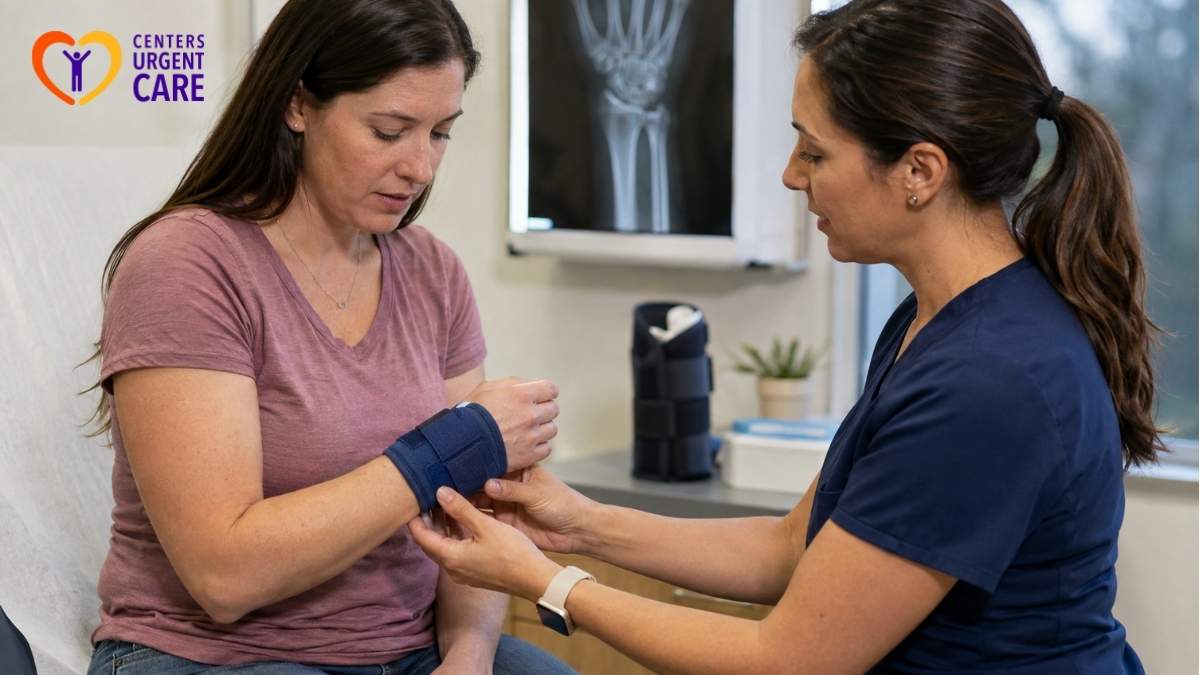
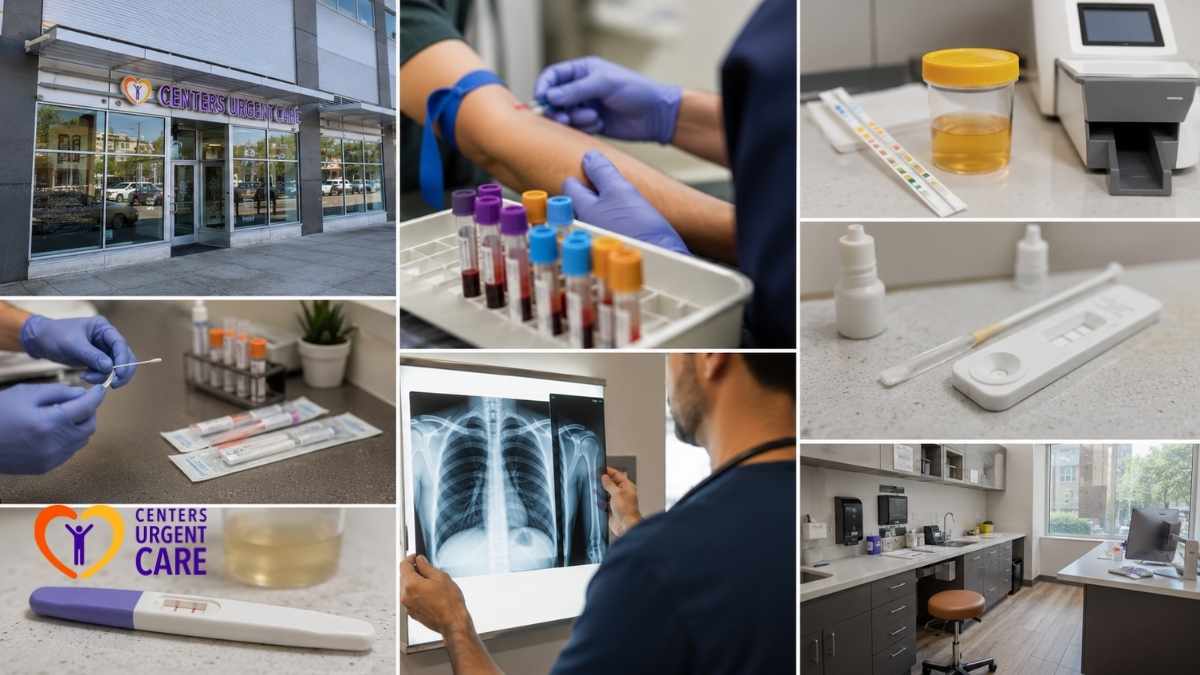
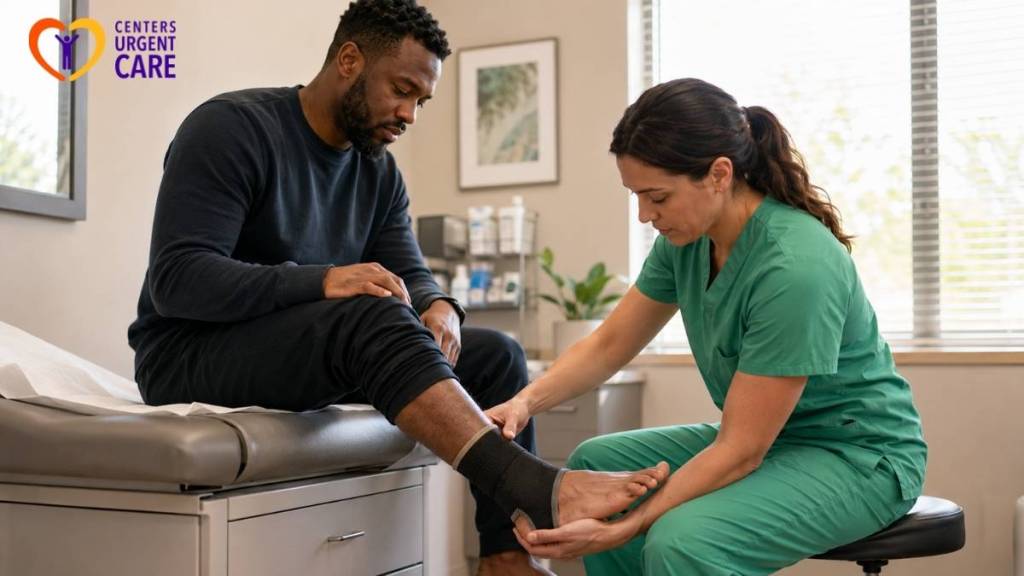
When you visit Centers Urgent Care, our team examines the injured site, checks circulation and sensation, arranges digital X-rays where available, stabilizes appropriate fractures, and refers complex cases.
We often hear, “Is it broken or sprained?” Pain, swelling, and bruising look remarkably similar, so an exam with our team is often the safest way to answer the question.
When Broken Bone Urgent Care Is the Right First Stop
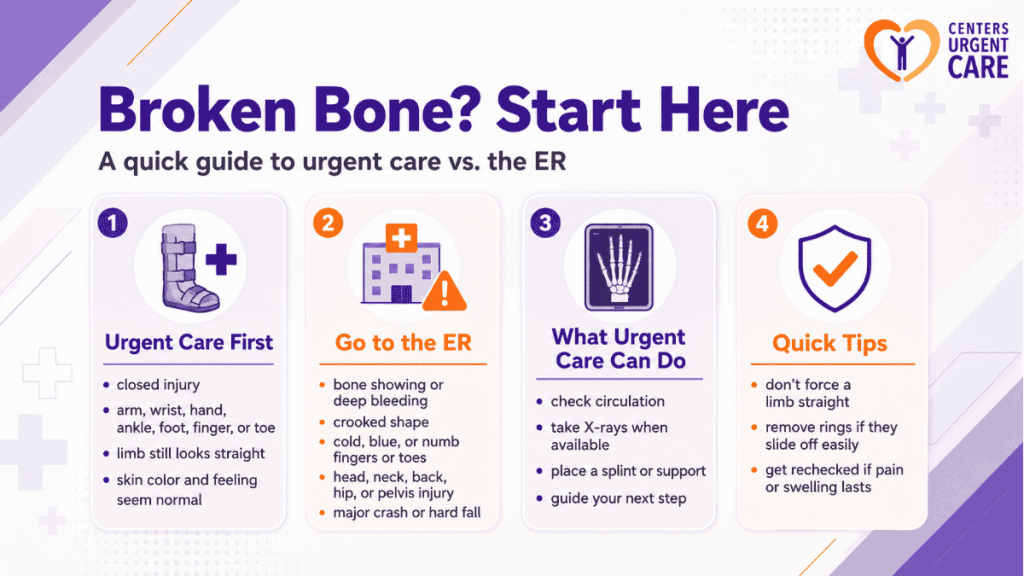
An urgent care clinic is a great option for a suspected closed fracture caused by a minor fall, sports impact, twist, or direct blow. These injuries occur beneath intact skin without severe bleeding, visible bone, or loss of blood supply.
At our clinics, we evaluate and stabilize several common injury locations:
- Fingers and toes
- Hands and wrists
- Forearms and select upper-arm injuries
- Ankles and feet
- Certain collarbone injuries
- Stable fractures where the limb remains aligned
Knowing when to evaluate an ankle injury is critical. The American College of Radiology (ACR) states that ankle X-rays are usually appropriate when a person has ankle-bone tenderness, cannot bear weight after the injury, or cannot walk four steps during evaluation.
If you are wondering about an urgent care x-ray for sprain or fracture, these guidelines help us decide whether imaging is necessary. Using broken bone urgent care for these stable situations saves time while ensuring your limb is safely evaluated.

Finger, Hand, and Wrist Fractures Often Begin at Urgent Care
Hand and wrist injuries frequently happen after a fall onto an outstretched hand, a sports impact, or a crushed finger. When you come to us, we check your grip, sensation, swelling, alignment, and blood flow before deciding on imaging and support.
Our team can apply a finger splint, wrist splint, or brace to keep the bone still and ease pain. Severe wounds, crushed hands, or fingers that appear pale or blue need immediate hospital attention.
Why Broken Bone Urgent Care May Recommend More Imaging
An initial X-ray does not always show a tiny crack right away. ACR recommends repeat hand or wrist radiographs after 10 to 14 days, magnetic resonance imaging, or computed tomography when initial X-rays are negative or unclear but a fracture is still suspected.
Dr. Schenker advises that persistent wrist pain should never be ignored just because your first image looked normal. A follow-up check through broken bone urgent care can confirm whether a hidden fracture is present.
Broken Arms, Ankles, and Feet Depend on Stability
Choosing urgent care for broken arm or urgent care for broken foot evaluations works best when the injury is closed, the limb looks straight, and your hand or foot remains warm with normal color and feeling.
When assessing these injuries, we look closely at key factors:
- Where the pain feels strongest during gentle touching
- If you can move nearby fingers or toes
- Whether rapid swelling is affecting circulation
- Whether the injury resulted from a simple fall rather than a high-speed accident
- Whether our imaging reveals bone displacement or joint involvement
If the bone is stable, we can apply a protective splint before you see a specialist. Caregivers sometimes arrive relieved because a child can still wiggle their fingers or toes. That movement is useful information, but it does not answer whether a bone has cracked.
A stable-looking injury can still need an exam. Our team can check the injured area, arrange imaging where available, protect the limb, and explain the next step. Contact your nearest Centers Urgent Care location to confirm X-ray availability before coming in.
Older Adults Need Prompt Evaluation After a Fall
A fall that seems minor at first can cause a bone fracture in an older adult. Reduced bone density, balance changes, and blood-thinning medications make older individuals far more vulnerable to serious injury.
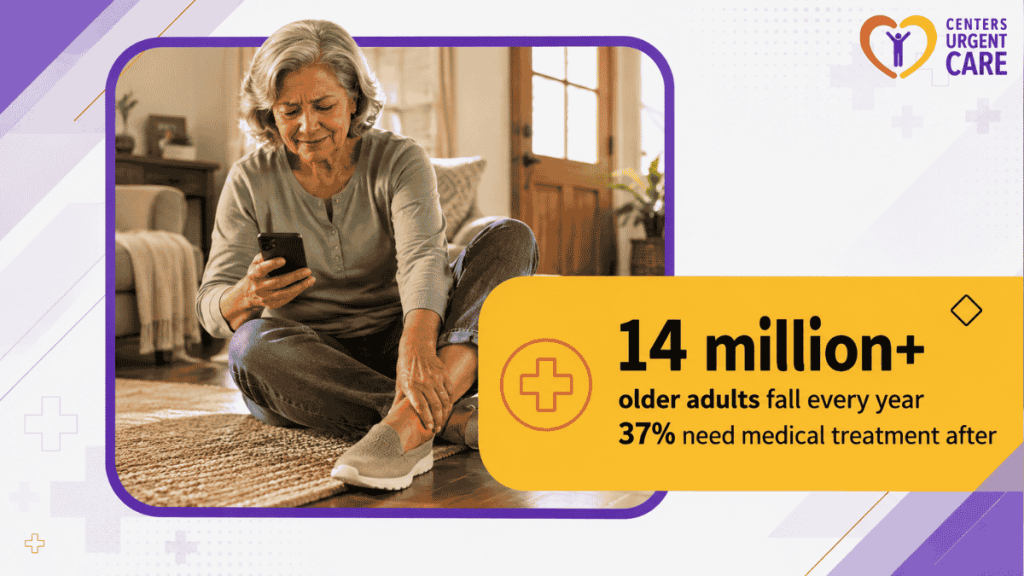
Falls represent a major concern for seniors. The Centers for Disease Control and Prevention reports that more than 14 million adults aged 65 and older fall each year, with about 37% of those who fall reporting an injury that required medical treatment or limited normal activity for at least one day.
If an older adult experiences hip or groin pain, has a shortened leg, feels confused, hit their head, or cannot stand, go straight to an emergency room. Stable wrist or hand injuries can begin at urgent care when no emergency warning signs exist.
Hip, Pelvis, Skull, and Spine Fractures Need Hospital Care
An urgent care setting is not the right choice for suspected fractures involving the hip, pelvis, skull, neck, or spine. These complex injuries often require computed tomography scans, magnetic resonance imaging, emergency surgery, or intensive hospital monitoring.
Head directly to an emergency department for any of these situations:
- Hip or groin pain after a fall with an inability to stand
- Pelvic pain following a car crash or fall from a height
- Head injuries accompanied by confusion, vomiting, fainting, or severe headache
- Neck or back injuries causing weakness, numbness, or loss of movement
- Multiple suspected fractures after high-impact trauma
The impact of these major fractures is significant. A 2023 study in the Journal of Aging and Health recorded 318,797 emergency department visits and 290,130 hospitalizations involving hip fractures among older adults in 2019, noting that about 88% of these visits and hospitalizations were caused by falls.
Open or Deformed Fractures Require Emergency Help
You cannot judge fracture severity by pain levels alone. Visible deformity, heavy bleeding, exposed bone, poor circulation, or sudden nerve numbness signal severe tissue damage requiring emergency room care.
Seek emergency room care if you notice:
- Bone sticking out through the skin
- A limb bent at an unnatural angle
- Fingers or toes turning pale, blue, or cold
- Total numbness or inability to move the area
- Uncontrolled bleeding around the injury site
- Injuries from high-speed accidents
- Suspected hip, pelvis, skull, neck, or spine injuries
Never try to straighten a crooked limb or push exposed bone back under the skin.
What Happens During a Fracture Visit With Our Team
When you visit us with a possible fracture, we guide you through a clear evaluation process:
- Our team asks how the injury occurred and reviews your medical history.
- We examine the area for swelling, tenderness, movement, circulation, and sensation.
- We decide whether an X-ray is appropriate for your specific injury.
- We review your images with you and explain what we see in plain language.
- We stabilize appropriate fractures with a comfortable splint or support.
- We arrange orthopedic follow-up or refer you to emergency care if needed.
Imaging and treatment options vary by injury type and clinic location. Urgent care treatment is often the critical first step rather than the entire healing process.
One concern we hear after applying a splint is, “Does this mean the visit did not fix it?” The splint serves a vital purpose: protecting the bone and keeping it still until your follow-up plan begins. Trusting broken bone urgent care for initial stabilization keeps you comfortable and safe.

FAQs About Broken Bone Urgent Care
Can I have a fracture if I can still move the injured area?
Yes. Being able to move a limb does not rule out a break, especially with hairline or stable fractures. Pain directly over a bone, swelling, or discomfort when bearing weight still requires evaluation. We often see caregivers assume movement means the bone is fine, but an exam proves otherwise.
Should I remove rings after a finger or hand injury?
Remove rings right away if they slide off easily, as swelling can quickly trap them and cut off blood flow. Stop immediately if moving the ring causes severe pain. Dr. Schenker advises that if jewelry gets stuck, our team can safely remove it while checking your circulation and underlying injury.
Can urgent care examine a child with a possible fracture?
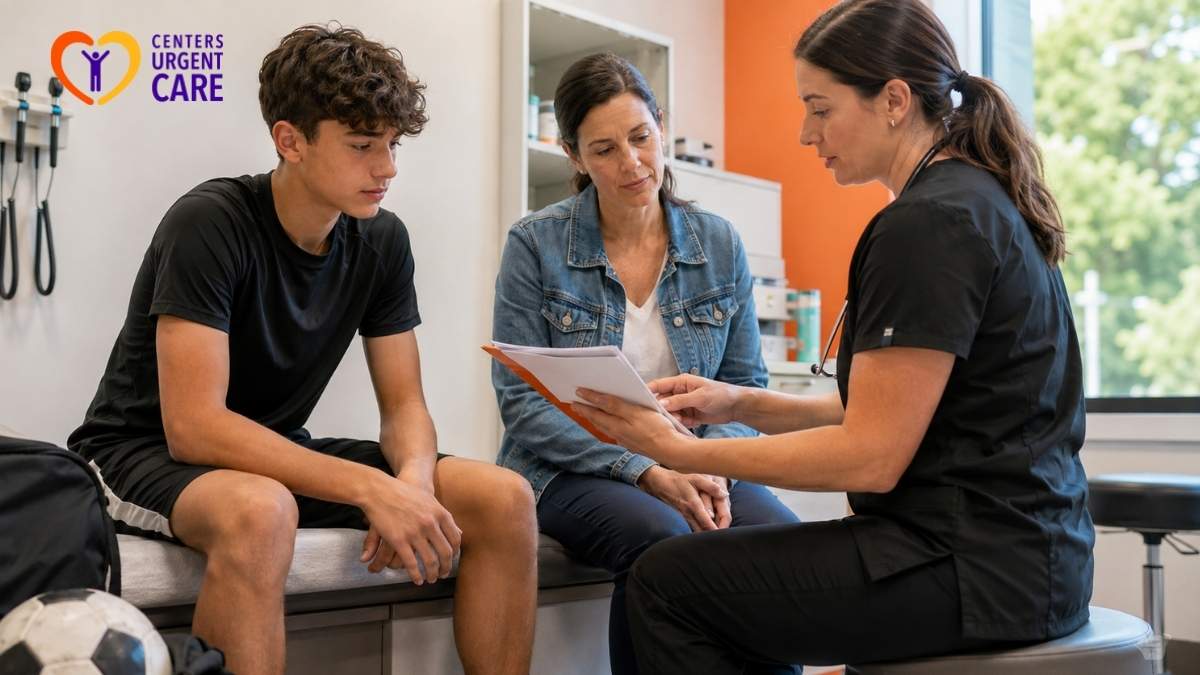
Yes, we regularly evaluate stable, closed arm, wrist, hand, ankle, or foot injuries in children. If the bone is exposed, the limb appears deformed, blood flow seems reduced, or the injury involves the head, neck, spine, hip, or pelvis, bring your child to an emergency room instead.
Choose the Right Care for a Possible Fracture
Stable, closed fractures of the hands, wrists, arms, ankles, feet, fingers, and toes can safely begin at an urgent care clinic. Open fractures, major deformities, circulation problems, high-impact accidents, and suspected injuries to the hip, pelvis, skull, or spine require immediate emergency hospital care.
At Centers Urgent Care, Dr. Schenker and our team can evaluate many non-life-threatening injuries, arrange X-rays where available, stabilize appropriate fractures, and explain any needed follow-up steps. Contact your nearest location before leaving to confirm imaging availability, or walk in whenever your injury is stable and free of emergency warning signs.

Reviewed by Dr. Josef Schenker, MD, MBA, Board-certified emergency medicine physician and Medical Director and Partner at Centers Urgent Care. Dr. Schenker oversees clinical operations across all Centers Urgent Care locations and brings years of experience in urgent and emergency care.