
























Sudden vomiting can be alarming and disruptive. While it’s often caused by a minor ailment, it can also signal a more serious underlying issue. Understanding the potential causes is crucial for effective self-care and knowing when to seek medical attention. Let’s explore the common culprits behind this unpleasant symptom!
Table of Contents
ToggleDefinition and Overview
Vomiting, also known as emesis, refers to the forceful expulsion of stomach contents through the mouth. It is a reflex action controlled by the vomiting center in the brain. When triggered, muscles in the abdomen and diaphragm contract, pushing the stomach contents upward and out of the body.
Furthermore, vomiting can be a natural protective mechanism that helps the body expel harmful substances or irritants. However, it can also be a sign of an underlying condition. Understanding the causes and accompanying symptoms of vomiting is crucial in determining appropriate treatment.
Acute Causes of Vomiting
When it comes to sudden vomiting in adults, there are several acute (short-term) causes that should be considered. Two common culprits are infections, such as gastroenteritis, and issues related to food poisoning and indigestion.
Infections and Gastroenteritis
One of the most common causes of vomiting in adults is gastroenteritis, which refers to inflammation of the stomach and intestines. This condition is often caused by viruses like norovirus or rotavirus. Symptoms of gastroenteritis include nausea, vomiting, stomach cramps, and diarrhea.
Gastroenteritis can be highly contagious and is commonly spread through contaminated food or water, or through close contact with infected individuals. It typically resolves on its own within a few days, but it’s important to stay hydrated and replenish electrolytes to prevent dehydration.
Common Causes of Gastroenteritis |
Viral infections (norovirus, rotavirus) |
Bacterial infections (such as Salmonella or Campylobacter) |
Parasitic infections (Giardia, Cryptosporidium) |

Food Poisoning and Indigestion
Food poisoning is another acute cause of vomiting in adults. Consuming contaminated food or beverages can result in the rapid onset of symptoms, including nausea, vomiting, stomach cramps, and diarrhea. Bacteria, viruses, parasites, and toxins can all cause food poisoning.
Indigestion, also known as dyspepsia, can also lead to sudden vomiting in adults. It occurs when the digestive system is unable to break down food, causing discomfort. Common triggers for indigestion include overeating, consuming spicy or fatty foods, and eating too quickly.
Common Causes of Food Poisoning |
Bacteria (Salmonella, E. coli, Campylobacter) |
Viruses (Norovirus, Hepatitis A) |
Parasites (Giardia, Cryptosporidium) |
Toxins (from certain plants, seafood, or mushrooms) |
If you experience sudden vomiting due to food poisoning or indigestion, it’s important to stay hydrated and rest. In most cases, symptoms will subside within a day or two. However, if vomiting persists or is accompanied by severe abdominal pain, blood in the vomit, or signs of dehydration, it is advisable to seek medical attention.
Chronic Causes of Vomiting
While acute vomiting is often short-lived and resolves on its own, chronic vomiting in adults can be a symptom of underlying health issues. Here, we will explore two common chronic causes of vomiting: medication side effects and substance abuse.
Medication Side Effects
Certain medications can have side effects that include nausea and vomiting. This can occur with both prescription and over-the-counter drugs. Some medications commonly associated with these side effects include:
Medication | Side Effects |
Chemotherapy drugs | Nausea, vomiting |
Opioids | Nausea, vomiting |
Nonsteroidal anti-inflammatory drugs (NSAIDs) | Upset stomach, nausea |
Antibiotics | Nausea, vomiting |
Antidepressants | Nausea, upset stomach |
If you experience chronic vomiting that coincides with starting a new medication, it is important to consult with your healthcare provider. They may be able to adjust the dosage or prescribe an alternative medication to alleviate these side effects.
Substance Abuse and Chemotherapy
Substance abuse, including excessive alcohol consumption, can lead to chronic vomiting. Alcohol irritates the stomach lining and can cause inflammation, leading to vomiting. Additionally, prolonged alcohol use can result in a condition called alcoholic gastritis, which causes chronic inflammation of the stomach lining.
In the case of chemotherapy, it is a common treatment for various types of cancer. While effective in fighting cancer cells, chemotherapy drugs can also cause gastrointestinal side effects, including nausea and vomiting. These side effects can vary depending on the specific drugs and treatment regimen.
Specific Triggers for Vomiting
Vomiting can also be triggered by various factors and conditions. In this section, we will explore two common triggers: motion sickness and alcohol consumption, as well as post-surgery recovery and gastrointestinal obstruction.
Motion Sickness
Nausea and vomiting during travel, particularly in cars, boats, or airplanes, could be a symptom of motion sickness. This condition occurs when there is a disconnect between the brain’s perception of motion and the body’s actual movement. It can be managed by various methods, such as medication, focusing on the horizon, or taking breaks.
Post-Surgery Recovery and Gastrointestinal Obstruction
After undergoing surgery, some individuals may also experience vomiting as a side effect of the anesthesia or medications. This is a normal response to the medications and the body’s adjustment to the surgical procedure. It is, however, important to follow the post-operative instructions provided by healthcare professionals.
Serious Conditions Related to Vomiting
While most cases of vomiting in adults are caused by relatively benign conditions, there are certain serious conditions that may be associated with vomiting. Two such serious conditions related to vomiting are appendicitis and pancreatitis, as well as meningitis and COVID-19.
Appendicitis and Pancreatitis
Vomiting accompanied by severe abdominal pain may be a sign of appendicitis, a condition that requires immediate medical attention. The appendix, a small pouch-like structure located in the lower right abdomen, can become inflamed or infected, leading to symptoms such as vomiting, fever, loss of appetite, and intense abdominal pain.
Surgery to remove the appendix is often necessary in cases of appendicitis. Pancreatitis, inflammation of the pancreas, can also cause vomiting along with other symptoms such as severe abdominal pain, fever, and nausea. When the pancreas becomes inflamed, it can lead to digestive disturbances, including vomiting.
Meningitis and COVID-19
While vomiting is a common symptom of various illnesses, it can be particularly concerning if it leads to other worrisome symptoms. In the case of meningitis, a potentially life-threatening infection of the membranes surrounding the brain and spinal cord, vomiting can be a symptom along with severe headache, high fever, stiff neck, and sensitivity to light, requiring urgent medical attention.
In the context of COVID-19, vomiting has been reported as a symptom in some individuals. If vomiting is accompanied by chest pain, sudden and severe abdominal pain, high fever, or a stiff neck, it is important to seek medical attention promptly. Additionally, individuals who have recently suffered a head injury or are vomiting blood should seek immediate medical attention.
Managing Vomiting in Adults
When faced with episodes of vomiting, it is important to know how to manage the symptoms effectively. This section will explore treatment and prevention strategies to help alleviate vomiting in adults, as well as when it is necessary to seek medical attention.
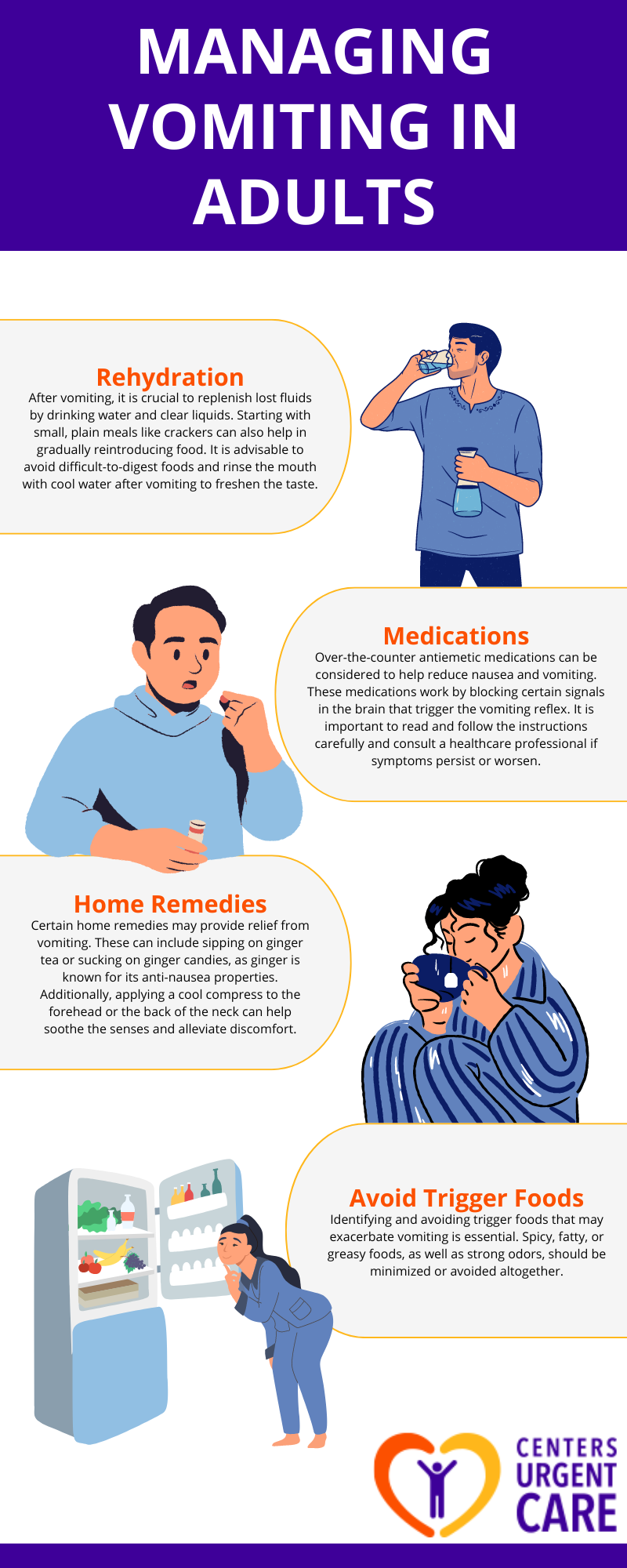
To manage vomiting in adults, there are several strategies that can be employed:
When to Seek Medical Attention
While most cases of vomiting can be managed at home, there are situations where medical attention should be sought:
- Dehydration: If vomiting is persistent and is causing dehydration, characterized by symptoms such as dry mouth, excessive thirst, dark urine, or dizziness, it is important to seek medical attention. Intravenous fluids may be necessary to restore hydration.
- Severe Symptoms: Individuals who experience severe abdominal pain, vomiting blood, or have recently suffered a head injury should seek immediate medical attention. These symptoms could indicate a more serious underlying condition that requires prompt evaluation and treatment.
- Prolonged Symptoms: If vomiting persists for more than 24 to 48 hours or is accompanied by other concerning symptoms such as severe headache, abdominal tenderness, or signs of infection, it is advisable to consult a healthcare professional for further evaluation.
- Recurrent Episodes: Recurrent episodes of vomiting along with intense, throbbing headaches lasting for hours to days may indicate migraines. In such cases, it is recommended to consult a general practitioner who can provide appropriate pain relief and prescribe anti-sickness medication if necessary.
Knowing when to seek medical attention is crucial to ensure that underlying causes of vomiting are properly diagnosed and treated. Prompt evaluation is especially important if symptoms persist, worsen, or are associated with warning signs.
If you’re in need of urgent care in New York, don’t hesitate to visit Centers Urgent Care. Our experienced providers offer fast, accurate diagnoses and effective treatments for a wide range of urgent care needs.
Contact us today to schedule an appointment or learn more about our services!
2025 has changed my life. I never believed I would be cured by a spell caster who specializes in herbal cure and magical spells. I am talking about the help Doctor Odunga gave to me. I have been cured of herpes HPV which has plagued me for over 2 years. I am very happy to tell others that if you want to be cured or get your ex back spells and get pregnant naturally, even financial blessing through lottery, there is only one place to be and that is with Dr Odunga Spell Temple. Am so happy that just 3 days after taking DR ODUNGA Herbal treatments my herpes was cured permanently. DR ODUNGA also have cure to #HIV #Diabetes #Lupus #Tinnitus #Fibroid #Cancer #Hepatitis B, #Syphilis #Infertility etc … If you have this ailment or whatsoever you might be suffering from you should contact him at his EMAIL: odungaspelltemple@gmail.com OR VIA Whats App +2348167159012