

Key Points:
- Urgent care treats many common sports injuries, such as sprains, strains, and minor fractures.
- Same-day care can reduce swelling, confirm the injury with X-rays, and start treatment like bracing or pain relief.
- Visit urgent care if pain, swelling, or mobility issues persist after a sports injury, but go to the ER for severe trauma.
A hard fall, a twisted ankle, or a collision on the court can turn a good game into a long night of questions. Parents and athletes often wonder whether to ice at home, use trauma care for sports injuries, or rush straight to the ER. The worry usually centers on one thing: getting the right care fast without losing weeks of practice or play.
Sports injuries are common. In the U.S., about 30 million children and teens play organized sports, and more than 3.5 million injuries each year keep them out of play at least once. Many of these can be handled safely by understanding the basics about “sports injuries urgent care,” especially when symptoms are painful but not life-threatening.
Why Do Sports Injuries Need Same-Day Care?
Many athletes try to “walk it off” after a fall or twist instead of focusing on sports injury treatments and prevention from the start. That delay can turn a simple sprain into a longer recovery if swelling, joint damage, or a missed fracture go unchecked in the first day or two.
Sports injuries send large numbers of kids and teens to the hospital. One national analysis found that sports-related injuries accounted for 22% of 1.4 million injury-related emergency department visits among children ages 5 to 17, and 98.7% of those visits were discharged rather than admitted to the hospital.
Same-day care matters because early acute sports injury treatment can:
- Limit swelling and pain in the first 48 to 72 hours
- Protect joints, bones, and soft tissues from further damage
- Shorten the time away from school, work, and sports when recovery is guided well
Urgent care centers focus on non-life-threatening problems that still need prompt attention, including sprains, minor fractures, and other musculoskeletal injuries. That setup makes them a good fit when you need help today but are not facing a life-or-limb emergency.
What Injuries Can Urgent Care Safely Treat?
Soft-tissue injuries are a major share of sports-related visits. For patients ages 5 to 24, sprains, strains, and dislocations account for about 28% of sports injury emergency diagnoses, while fractures account for about 18%. Those same injury types often show up in urgent care.
Typical joint and muscle injuries that urgent care can evaluate include:
- Ankle, knee, or wrist sprains after a twist or fall
- Muscle strains in the thigh, calf, shoulder, or back
- Possible minor fractures where the limb looks straight, but weight bearing hurts
Many centers function almost like sports medicine urgent care for these problems, using urgent care X-ray services alongside exams and splinting. They can examine the injury, decide whether X-rays are needed, and provide bracing, splints, or slings to protect the area until follow-up.
If there is heavy bleeding, bone sticking through the skin, or signs of head or chest trauma, emergency services are safer than any clinic. Those higher-risk scenarios are covered later in the ER section.
What Should You Do Before You Leave the Field?
The minutes after an injury set the tone for the rest of the day. Simple steps can control swelling and protect the injured area while you decide where to go.
For many sprains and strains, the long-used RICE method (Rest, Ice, Compression, Elevation) still guides early care and is often suggested for the first 48 to 72 hours. RICE can:
- Rest: Stop playing right away and take weight off the injured limb
- Ice: Apply a cold pack for short periods to help limit pain and swelling
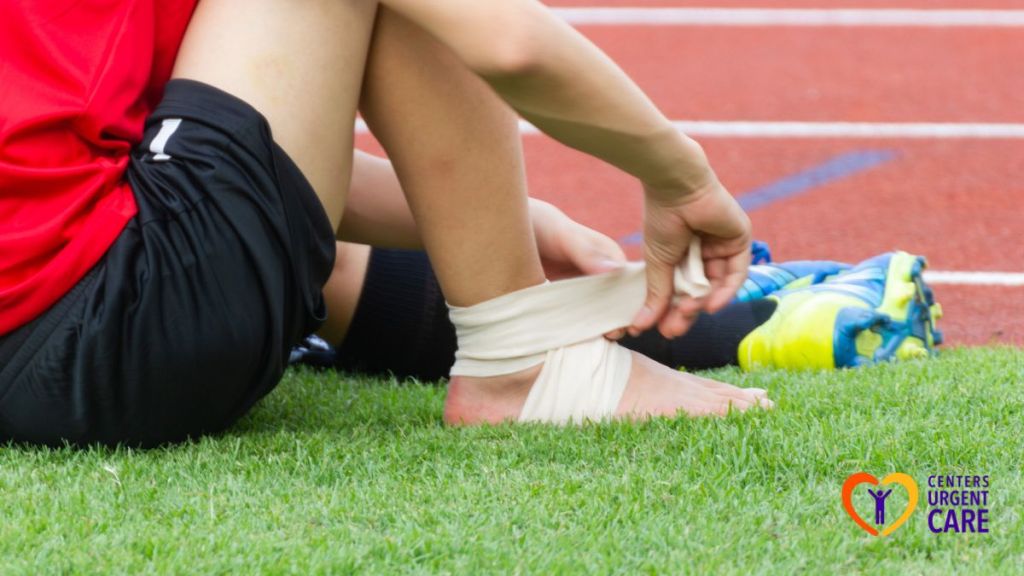
- Compression: Wrap the area with an elastic bandage for gentle support
Elevation, by propping the limb above the level of the heart, can also help reduce swelling in the first couple of days.
After those first steps, trauma care for athletes at the field or gym includes:
- Checking if the athlete can walk more than a few steps without intense pain
- Watching for numbness, tingling, or pale skin below the injury
- Removing tight gear or jewelry near a swollen joint
If walking is very painful, the joint looks unstable, or swelling rises quickly, leaving for medical care the same day is safer than waiting to “see how it feels tomorrow.”
What Happens During a Sports Injuries Urgent Care Visit?
Urgent care visits for sports injuries usually follow a clear pattern at centers that also provide lab work urgent care, even if you arrive without an appointment.
Check-In and Quick Injury Assessment
Upon arrival, staff collect basic details: how the injury happened, where it hurts, and whether the athlete could walk right after the event. A brief, quick injury assessment helps set priorities if several people are waiting.
The clinician then does a focused exam, which may include:
- Looking for deformity, swelling, and bruising around the joint or muscle
- Checking how far the joint can move without extreme pain
- Testing strength and sensation to be sure nerves and blood flow are intact
This exam helps determine whether the problem is likely a soft-tissue injury or a fracture. It also clarifies when an urgent care X-ray visit is needed for immediate injury diagnosis.
Sports Injuries Urgent Care Imaging and X-Ray Steps
Many urgent care centers can order X-rays on site. Insurers and medical boards note that these clinics often have access to X-rays and basic labs specifically for acute problems.
For ankle and foot injuries, clinicians may use a clinical decision tool called the Ottawa Ankle Rules to decide who needs imaging. These rules look at bone tenderness at key points and the ability to bear weight.
Studies show that the Ottawa Ankle Rules have very high sensitivity, close to 100%, for ruling out fractures, which helps cut down on unneeded X-rays while still catching serious injuries.
These steps fall under urgent care imaging and injury X-ray services, which aim to distinguish severe sprains from true fractures quickly and reliably.
Treatment, Splints, and Urgent Orthopedic Care
Once the diagnosis is clear, treatment starts right away. For most sprains and strains, expedited sports injury treatment focuses on pain relief, protection, and clear guidance.
Care during the visit may include:
- Applying a brace, walking boot, or sling to protect the injured area
- Using crutches or other supports when weight bearing is painful
- Giving advice about the safe use of pain relievers such as acetaminophen or ibuprofen
Suspected fractures are usually stabilized with a splint or temporary cast before the athlete goes home. When needed, urgent care teams connect patients to urgent orthopedic care or physical therapy for follow-up within days.

How Do You Heal and Get Back to Play?
Soft-tissue injuries are often classified as acute or overuse. Acute injuries follow a clear event, such as a fall or twist, while overuse injuries develop gradually when tissues are stressed before they fully heal. Clear instructions for treating sports injuries reduce the risk that an acute injury becomes a long-term problem.
After the visit, plans often include:
- Following RICE for the first few days to control pain and swelling
- Limiting activity that causes sharp pain while staying gently active in other ways
- Watching for new symptoms such as numbness, color changes, or worsening pain
For sprain and fracture care, return to play is guided by pain, strength, and motion. An athlete is usually not ready to compete again until:
- Walking and basic movements are pain-free
- Strength in the injured side matches the uninjured side
- Balance, cutting, and jumping feel steady and controlled
Follow-up with a therapistor doctor, or routine physical examinations for athletes, helps build a step-by-step plan back to sport rather than jumping straight from rest to full speed.
When Is the Emergency Room the Safer Choice?
Medical boards and large health systems agree that urgent care is best for conditions that should be treated within 24 hours but are not immediately dangerous, such as sprains, small fractures, and minor cuts.
Go straight to the ER or call emergency services instead of urgent care when a sports injury involves:
- Heavy or uncontrolled bleeding
- Bone visible through the skin or a limb that looks badly twisted
- A hard hit to the head with loss of consciousness, confusion, or repeated vomiting
- Chest pain, trouble breathing, or concern for internal injury after a major impact
In other situations, urgent care works well as sports medicine urgent care, with the option to send you to the ER if hidden problems show up during the visit.

FAQs About Sports Injuries Urgent Care
Can urgent care treat overuse sports injuries or only sudden accidents?
Urgent care can treat overuse sports injuries, not just sudden accidents. Clinicians evaluate joint pain, rule out tears or fractures, and recommend rest, activity changes, or braces. Repeated pain may lead to a referral for orthopedics or physical therapy to adjust training and prevent further injury.
Do you need a referral from a doctor before going to urgent care for a sports injury?
You do not need a referral from a doctor before going to urgent care for a sports injury. Urgent care centers, like Centers Urgent Care, accept walk-ins for same-day injuries. Insurance plans often allow direct visits, but checking your card or plan website confirms whether a referral is required in your network.
Can urgent care give sports clearance notes or return-to-play letters?
Urgent care can give sports clearance notes or return-to-play letters after an injury. Clinicians document diagnosis, activity limits, and recovery timelines. Full clearance may require a follow-up to confirm improvement in pain, motion, and strength. Some schools or leagues may still require clearance from a team doctor or trainer.
Turn Sideline Pain Into a Clear Next Step
A sports injury can leave you unsure whether to rest at home or look for same-day help. When swelling, limping, or sharp joint pain will not settle, using urgent care medical services in New York City gives you a way to get examined, imaged if needed, and supported with a plan for the next few days instead of guessing on your own.
At Centers Urgent Care, we look at how the injury happened, check movement and strength, and use on-site tests when they are needed so you leave knowing what is injured and how to protect it. Our goal is to help you move from sideline pain to a practical treatment plan that fits school, work, and training.
If you or your child is hurt during sports and you are unsure what to do next, reach out to us. We’ll review your symptoms, guide your next step, and help you choose care that protects both recovery and future games.