Understanding TB and Its Impact on Schools and Daycares
Tuberculosis is a contagious bacterial infection that primarily affects the lungs but can also impact other organs. It is transmitted through tiny airborne droplets released when an infected person coughs, sneezes, or talks. While not all individuals with TB are contagious, untreated cases can lead to outbreaks in enclosed settings like classrooms and daycare facilities.
Who is at Risk?
TB can affect anyone, but certain groups are more vulnerable, including:
- Children under five years old, who have weaker immune systems.
- Staff members who work closely with students, especially in high-risk communities.
- Individuals with pre-existing conditions that weaken their immune response.
- Those exposed to TB in their households or communities.
The Role of Routine TB Testing in Schools and Daycares
Routine TB testing is a preventive measure that helps:
- Identify and treat TB early: Early diagnosis reduces transmission and prevents severe health complications.
- Ensure compliance with public health policies: Many states require TB screenings for school employees and childcare workers.
- Protect high-risk individuals: Regular testing safeguards immunocompromised children and staff members from exposure.
- Maintain a safe learning environment: By reducing TB risks, schools and daycares foster a healthier setting for education and development.
How TB Testing Works
TB testing typically involves two primary methods:
- Tuberculin Skin Test (TST): A small amount of tuberculin is injected under the skin, and results are checked within 48-72 hours.
- Interferon-Gamma Release Assay (IGRA): A blood test that measures the immune system’s response to TB bacteria.
If a test comes back positive, further evaluation, including a chest X-ray or additional tests, is necessary to confirm active TB.
TB Testing Policies and Requirements in Schools
Schools implement TB testing policies to protect students and staff while ensuring compliance with health regulations. The following guidelines outline when testing should occur and the legal requirements that govern these procedures.
When Should TB Testing Be Conducted?
- Before employment: Most schools and daycare centers require TB screening for new employees.
- Regular screenings: Periodic testing may be required, particularly in areas with high TB prevalence.
- After potential exposure: If an outbreak occurs, testing is crucial for early containment.

Legal and Health Regulations
Health departments and educational institutions establish TB testing protocols to comply with federal and state regulations. Schools must align with guidelines from:
- Centers for Disease Control and Prevention (CDC)
- State and local health departments
- Occupational Safety and Health Administration (OSHA)
Preventing TB in Schools and Childcare Centers
Beyond testing, schools and daycare facilities can implement additional measures to prevent TB transmission:
- Educating staff and parents about TB symptoms and preventive actions.
- Improving ventilation in classrooms to reduce airborne transmission.
- Encouraging vaccination for individuals at risk of TB exposure.
- Promptly isolating infected individuals to prevent further spread.
What Happens If a TB Case is Detected?
If a student or staff member tests positive for TB:
- Confirm the diagnosis through follow-up tests and medical evaluation.
- Notify public health authorities to initiate proper response measures.
- Conduct contact tracing to identify individuals who may have been exposed.
- Provide treatment for affected individuals to prevent further transmission.
- Implement additional testing for those at risk.
The Long-Term Benefits of TB Testing in Schools and Daycares
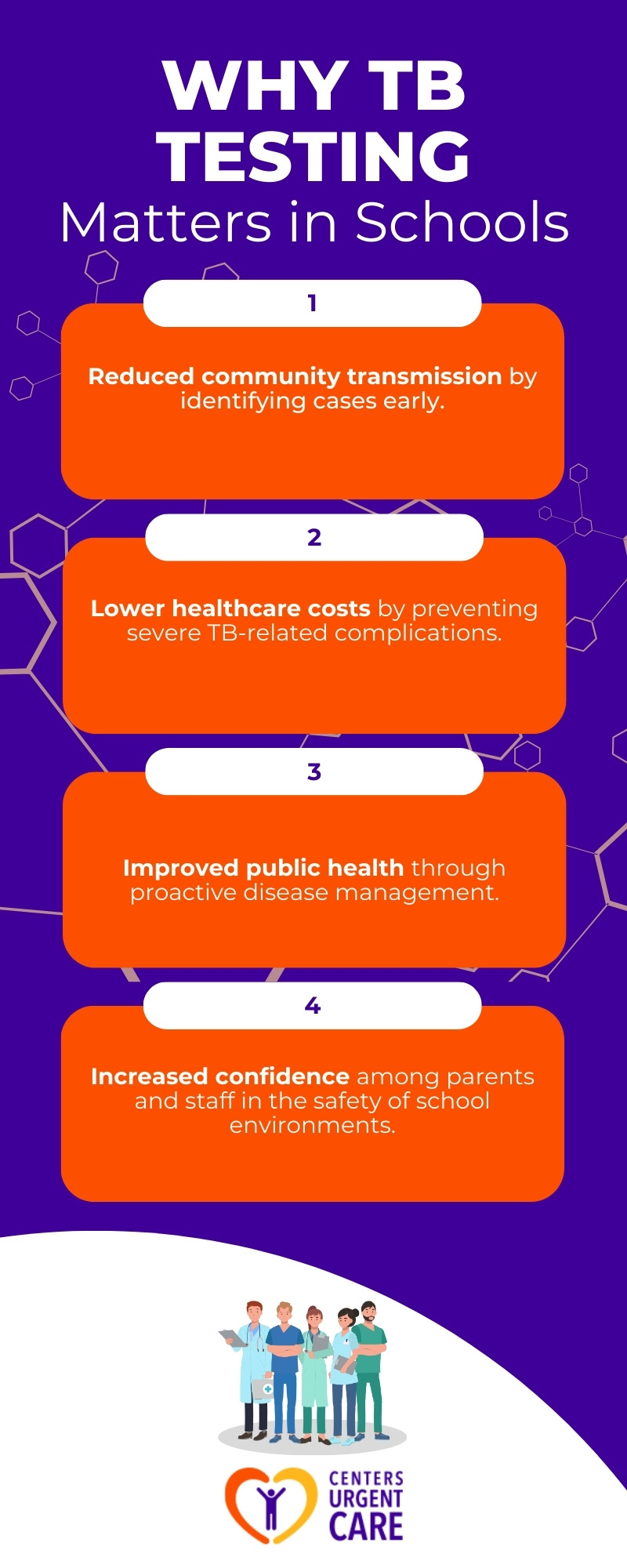
Consistent TB screening in educational and childcare settings provides multiple long-term benefits: