
























Luteal phase hormonal changes refer to the natural rise and fall of key reproductive hormones—primarily progesterone and estrogen—during the second half of the menstrual cycle, after ovulation. These changes help prepare the body for a potential pregnancy and influence both physical and emotional symptoms. Hormonal imbalance in this phase can affect fertility, mood, and overall menstrual health.
If you’re experiencing symptoms that suggest a hormonal imbalance, it’s a good idea to consider getting a full STD panel to rule out other factors that could be affecting your reproductive health.
Why Does The Luteal Phase Matter?
The luteal phase starts after ovulation and typically lasts 12–14 days. It ends when menstruation begins. While often overlooked, this phase is critical. The body begins producing more progesterone, which thickens the uterine lining in anticipation of a fertilized egg. If implantation doesn’t occur, hormone levels drop, leading to menstruation.
An estimated 20% in women experiences luteal phase defects (LPDs) that affect fertility, according to research from the American Society for Reproductive Medicine. These defects typically involve insufficient progesterone production or a shortened luteal phase, impairing implantation.
What Hormones are Active In The Luteal Phase?
The egg is expelled from the ovary, the ruptured follicle transforms into a temporary gland that produces hormones, known as the corpus luteum. Here’s what it does:
- Progesterone: Rises sharply. This hormone maintains the uterine lining and supports early pregnancy if conception occurs.
- Estrogen: Slightly rises after ovulation, then tapers off unless pregnancy occurs.
- LH (Luteinizing Hormone): Drops after triggering ovulation.
- FSH (Follicle-Stimulating Hormone): Also decreases post-ovulation.
The hormone levels during this phase are sensitive. Even slight disruptions can cause notable symptoms or cycle irregularities.
How Do Hormonal Changes Affect Your Body In The Luteal Phase?
The shift in hormone levels can affect nearly every system in the body. Here’s how:
Emotional and Cognitive Changes
During the luteal phase, some people experience mood swings or anxiety due to fluctuating progesterone and estrogen levels. Progesterone has a calming effect, but in excess, it may also contribute to fatigue and low mood.
Symptoms may include:
- Irritability
- Sadness
- Brain fog
- Anxiety or restlessness
Physical Symptoms
The body also responds physically to these hormonal changes. These are common:
- Bloating due to water retention
- Swollen or tender breasts
- Constipation or digestive changes
- Headaches or migraines
- Changes in libido
The intensity of these symptoms varies between individuals and even cycle to cycle.

What is A Luteal Phase Defect?
A luteal phase defect (LPD) is a condition in which the luteal phase—the time between ovulation and the start of menstruation—is too short, or hormone levels, particularly progesterone, are too low to support a healthy endometrial lining. This hormonal imbalance can interfere with the implantation of a fertilized egg and may result in early miscarriage or infertility.
Common signs of LPD include a luteal phase shorter than 10 days, spotting between ovulation and menstruation, difficulty conceiving, and low progesterone levels in blood tests. If you’re tracking your cycle and notice consistent irregularities after ovulation, it’s important to discuss your observations with a healthcare provider—and to better understand potential causes of mid-cycle spotting, read How to Tell If It’s Implantation Bleeding or Just Your Period.
What are Common Menstrual Cycle Disruptions Linked To Luteal Hormones?
A luteal phase that is out of sync often leads to broader menstrual issues that may range from mild discomfort to signs of a deeper hormonal imbalance. Disruptions to watch for include irregular cycles—particularly those shorter than 24 days or longer than 35 days—PMS symptoms that interfere with daily life, unexplained spotting between periods, and difficulty conceiving despite regular ovulation. In these cases, it’s important to go beyond simply managing symptoms; a thorough hormonal evaluation can help determine whether luteal phase dysfunction is contributing to the problem.
When Should You Seek Medical Attention
Persistent or severe symptoms like prolonged bloating, fatigue, anxiety, or abnormal bleeding can suggest an underlying hormonal issue. While occasional discomfort is normal, ongoing or intense symptoms aren’t something to ignore.
Some women discover luteal phase hormonal changes are behind issues like:
- Polycystic ovary syndrome (PCOS)
- Thyroid dysfunction
- Perimenopause
Any recurring concern related to your menstrual cycle should be reviewed by a healthcare provider who can evaluate hormone levels through testing.
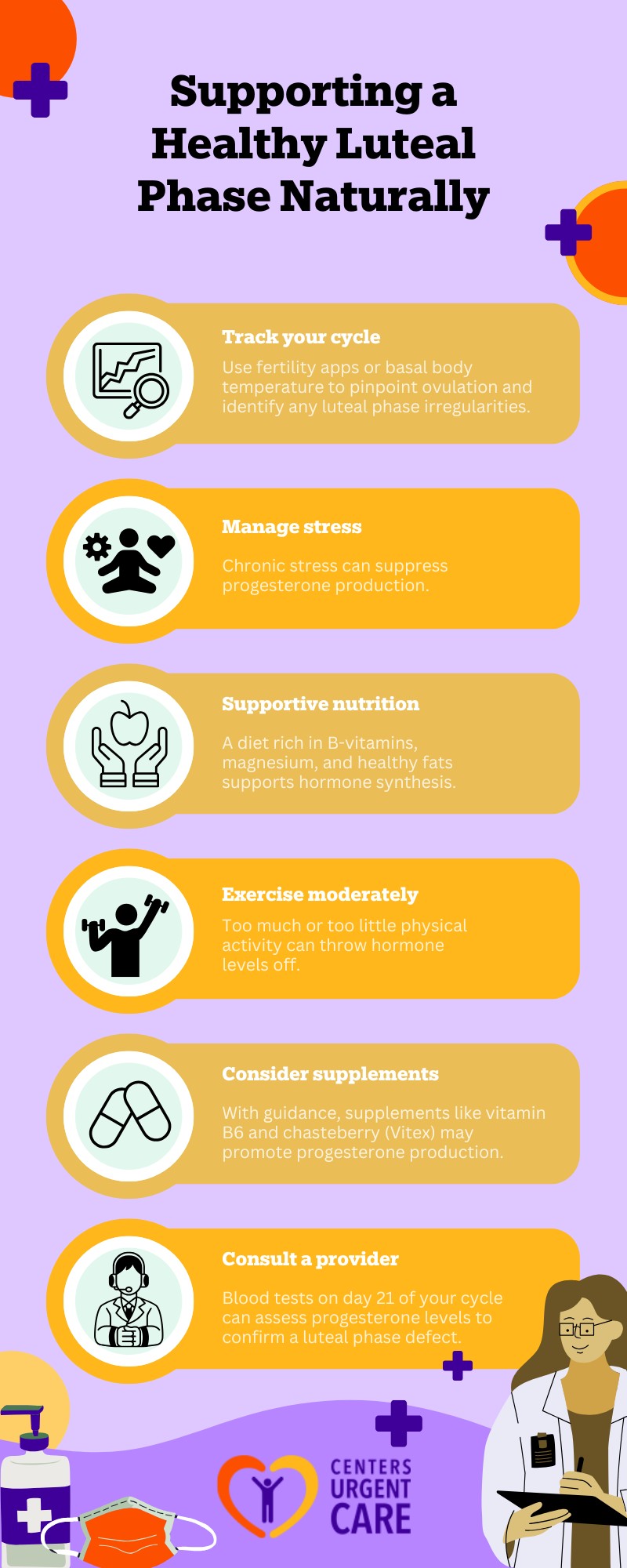
Can You Support Healthy Luteal Phase Hormone Levels?
Yes. Lifestyle changes, stress reduction, and targeted medical treatments can support luteal phase health.
Ways to support luteal phase hormone balance:
Get Reliable Help for Hormonal Health
If you’re experiencing cycle irregularities, severe PMS, or signs of luteal phase hormonal changes that interfere with your life, don’t wait it out. At Centers Urgent Care, we provide fast, high-quality urgent care in NY, services for children and adults, including hormonal evaluations, symptom management, and lab testing.
Whether you’re navigating symptoms of a short luteal phase, unexplained fatigue, or spotting, our trained providers are ready to help. Conveniently located, Centers Urgent Care offers accessible, efficient care that addresses your concerns the same day.
Visit us today — your health deserves timely attention.