



















What Causes Eczema in Children?
Eczema in children is caused by a combination of genetic predisposition, immune system dysfunction, and environmental triggers. Children with a family history of eczema, asthma, or allergies are more likely to develop it. Their skin barrier is weaker, making it prone to moisture loss and irritant penetration, which leads to inflammation and itching.
8 Common Triggers of Eczema in Children
Eczema flare-ups often occur when the skin reacts to specific irritants or allergens. Below are the most common triggers:
1. Genetics and Immune System Dysfunction
Children with eczema often inherit a genetic mutation in the filaggrin gene, which affects the skin barrier’s ability to retain moisture. This makes their skin dry and vulnerable to allergens and bacteria, leading to chronic inflammation.
- A child with one parent having eczema has a 50% chance of developing it.
- If both parents have it, the risk increases to 80%.
- Their immune system overreacts to common substances, worsening symptoms.
2. Environmental Allergens
Everyday allergens can trigger eczema by causing an overactive immune response. These include:
- Dust mites – Found in bedding, carpets, and soft toys.
- Pollen – Seasonal allergies often worsen eczema.
- Pet dander – Proteins in animal skin flakes can irritate the skin.
- Mold – Damp environments increase the risk of flare-ups.
3. Irritants in Soaps and Detergents
Many children with eczema react negatively to chemicals in personal care and cleaning products. Harsh ingredients strip the skin of its natural oils, making it dry and itchy.
- Fragrances and dyes in soaps, shampoos, and detergents.
- Sulfates and alcohol found in body washes.
- Fabric softeners that leave irritating residues on clothes.

4. Climate and Weather Conditions
Extreme temperatures and humidity levels can worsen symptoms:
- Cold weather dries out the skin, leading to cracks and flare-ups.
- Hot and humid conditions trigger excessive sweating, causing irritation.
- Sudden temperature changes (going from a warm house to cold air) can also exacerbate eczema.
5. Food Allergies and Sensitivities
Certain foods may trigger eczema flare-ups in some children, especially those with existing food allergies.
- Common triggers: Dairy, eggs, nuts, soy, wheat, and seafood.
- Food allergy vs. food sensitivity: Some children may not have a full allergy but still experience worsening eczema after consuming certain foods.
- Elimination diets under medical supervision help identify problem foods.
6. Stress and Emotional Factors
Eczema is linked to the body’s stress response. Increased stress levels can cause immune system reactions that worsen inflammation.
- School-related anxiety, social stress, and lack of sleep contribute to flare-ups.
- Teaching relaxation techniques and ensuring a supportive environment can help manage symptoms.
7. Skin Infections and Bacteria
Children with eczema are more prone to bacterial infections, particularly Staphylococcus aureus, which can further irritate and inflame the skin.
- Scratching can introduce bacteria into open skin, leading to infections.
- Frequent handwashing and moisturizing help prevent bacterial growth.
8. Clothing and Fabrics
Certain fabrics can either soothe or aggravate eczema-prone skin.
- Avoid: Wool, synthetic fabrics, and rough materials.
- Choose: Soft, breathable cotton and hypoallergenic materials.
- Washing tip: Use fragrance-free, mild detergents to prevent irritation.
How to Manage Eczema and Reduce Flare-Ups
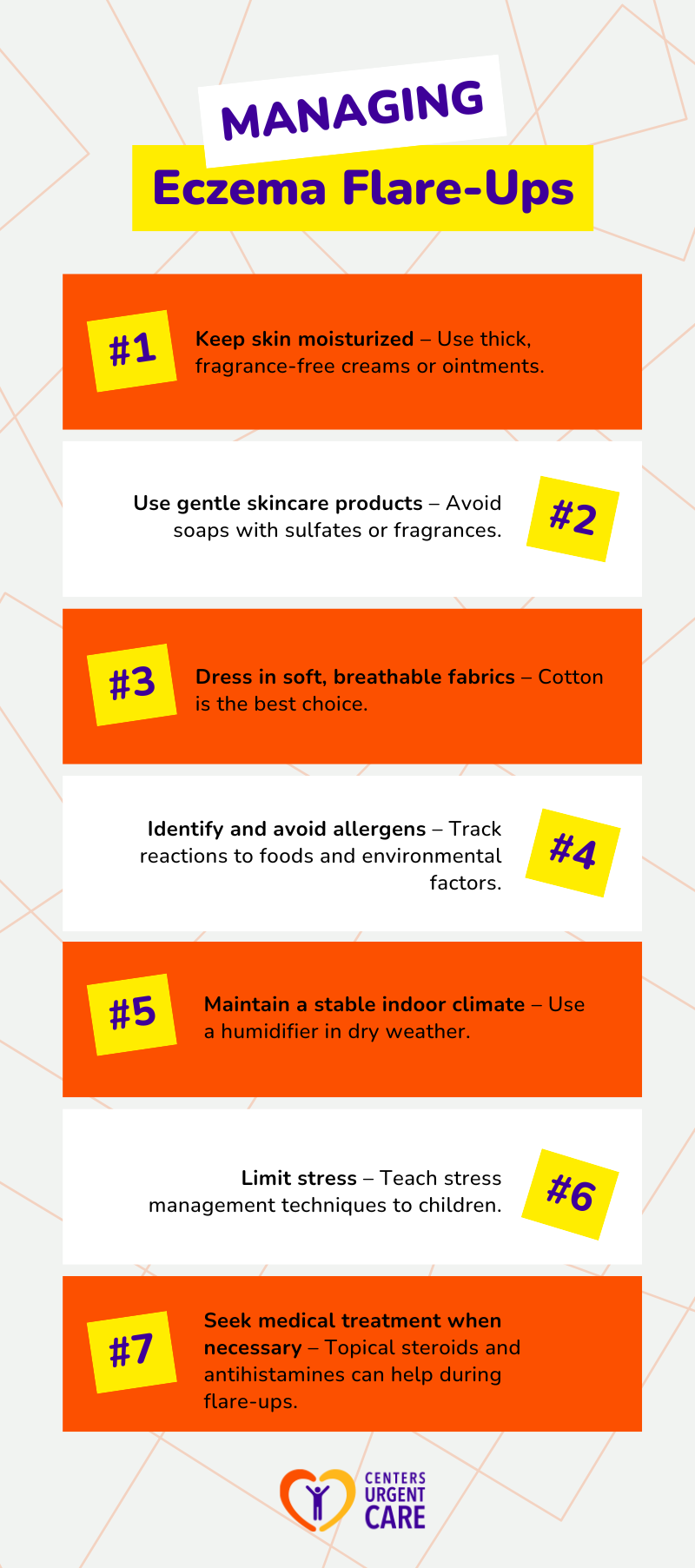
Once the triggers are identified, managing eczema becomes easier. Here are some effective strategies: