






















According to the American Cancer Society, breast cancer is the most common cancer among women worldwide, with about 1 in 8 women developing the disease during their lifetime. Yet, early detection through mammography can reduce breast cancer deaths. This fact alone underscores the critical value of routine breast screening—and at the heart of that process is the use of types of x-rays designed specifically for detailed breast imaging.
How Does X-ray in Mammography Save Lives?
X-ray in mammography saves lives by enabling the early detection of breast cancer, which improves treatment outcomes and significantly lowers mortality rates. By identifying tumors that are too small to be felt, mammograms allow doctors to begin treatment when cancer is still in its most treatable stages.
X-ray technology captures high-resolution images of breast tissue, revealing suspicious changes long before they cause symptoms. Detecting cancer early often means simpler treatments and better long-term health outcomes.
What is X-ray in Mammography?
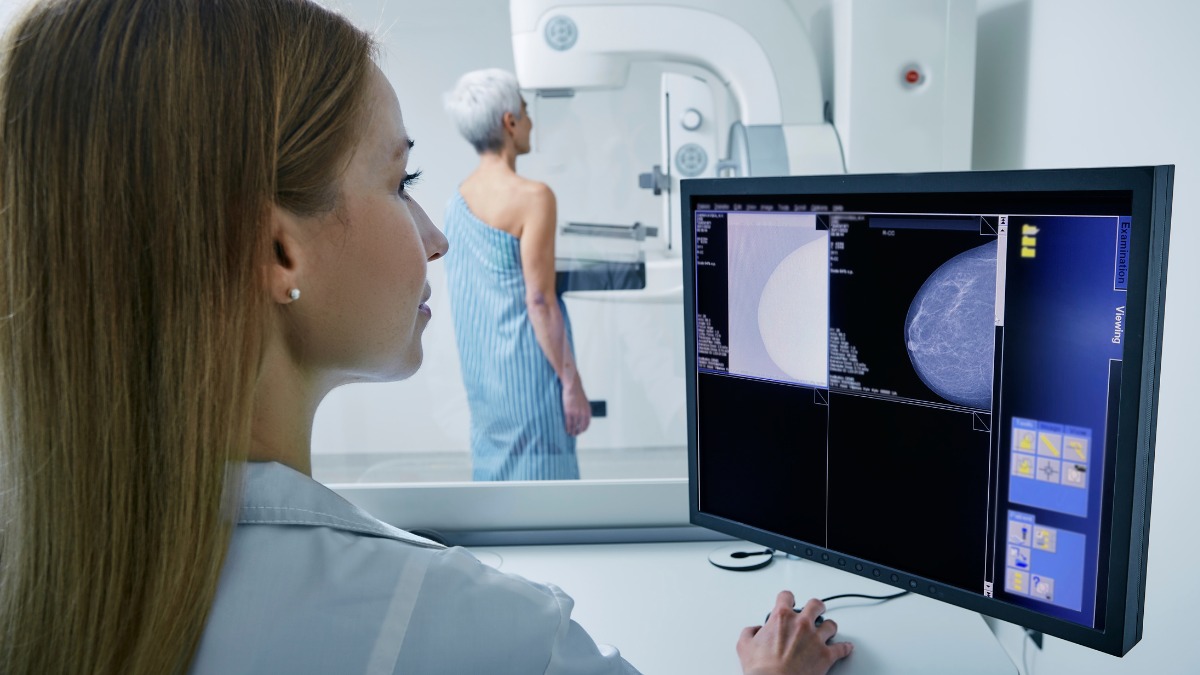
Mammography is a diagnostic imaging technique that uses low-dose x-rays to create detailed images of the breast. These images, called mammograms, help radiologists identify any abnormalities or unusual changes in breast tissue.
There are two main types of mammography:
- Screening mammograms: Used as a routine check-up in people with no signs of breast cancer.
- Diagnostic mammograms: Used when symptoms such as a lump, pain, or nipple discharge are present.
Both rely on the same core principle: x-rays penetrating the tissue to produce images that can uncover calcifications, cysts, masses, and other signs that may suggest cancer.
Why Early Detection of Breast Cancer Matters So Much
Catching breast cancer early dramatically alters its course. Here’s how x-ray mammography plays a pivotal role in this process:
When breast cancer is detected at stage 1:
- Survival rate exceeds 90%
- Treatment may be less aggressive
- Lymph nodes may not yet be affected
When breast cancer is detected at stage 3 or 4:
- Survival drops significantly
- Treatment becomes more invasive
- Spreads beyond the breast, requiring systemic therapies
In short, the sooner cancer is found, the better the chances of survival and recovery.
What Can Mammography Detect with X-ray?
X-ray mammograms are powerful diagnostic tools that help detect a wide range of breast changes—not just cancer. Among the most common findings are microcalcifications, which are tiny calcium deposits that can sometimes be an early indicator of cancer. Mammograms can also reveal cysts, which are typically benign fluid-filled sacs, and fibroadenomas, which are non-cancerous tumors that may still need to be monitored. Additionally, masses or lumps may be identified; while many are benign, some could be malignant and require further testing.
Mammograms can also detect warning signs that may raise red flags for physicians. These include asymmetrical breast tissue, densely packed tissue patterns, and irregular-shaped masses with spiculated (spiked) borders. Other concerning signs include skin thickening and nipple retraction. Each of these findings provides valuable information that enables healthcare providers to take timely and appropriate action, potentially improving outcomes through early detection.
The Potential Risks of X-ray Mammography: What to Know
Every diagnostic test comes with some level of risk. While the x-ray dose used in mammography is extremely low, there are a few things to consider:
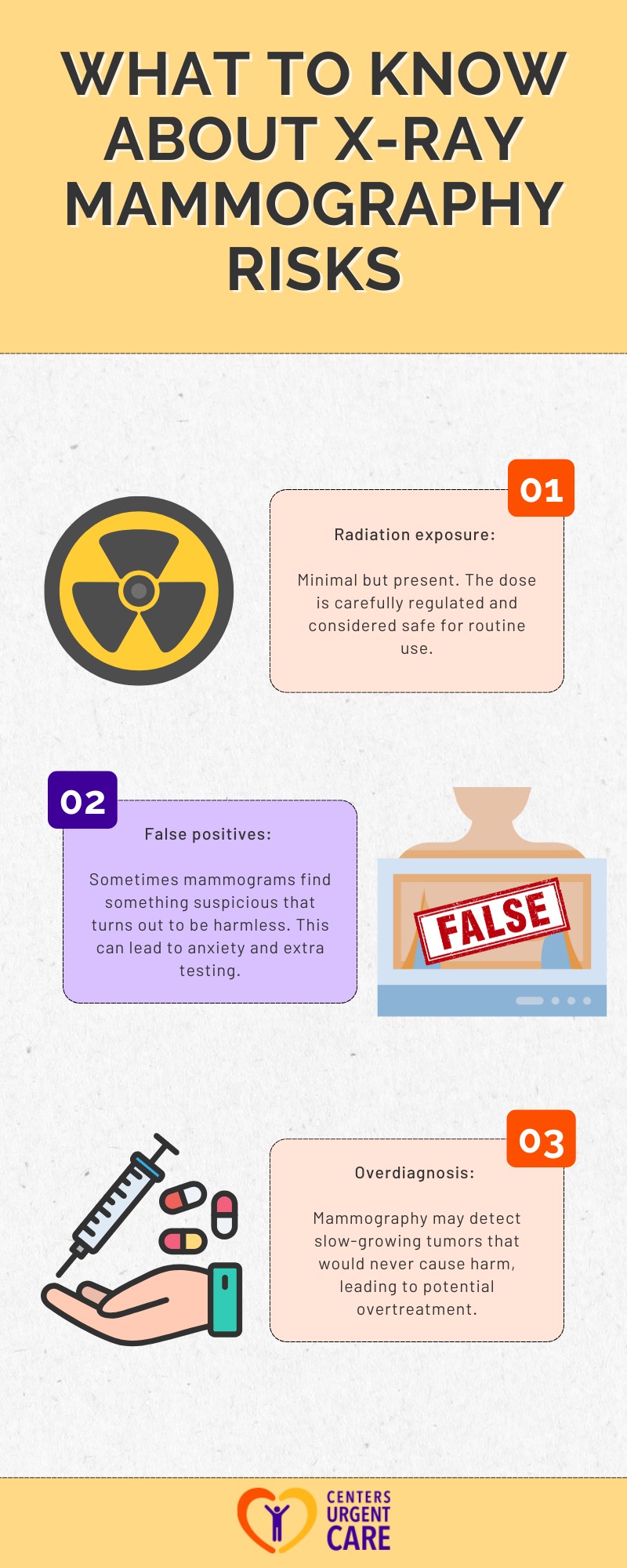
However, these risks are generally outweighed by the lifesaving benefits of detecting breast cancer early. While early detection of breast cancer is crucial, it’s important to be aware of other factors that can lead to false positive results in medical tests. For instance, if you’re concerned about drug tests, understanding what increases the chances of a false positive is key. Check out our article, “What Increases the Chances of a False Positive Drug Test?” for valuable insights.
Who Should Get a Mammogram and How Often?
Guidelines vary depending on age, risk level, and family history, but general recommendations include:
- Women aged 40-44: Optional annual screening.
- Women aged 45-54: Annual mammograms recommended.
- Women 55 and older: Can continue yearly or switch to every two years.
Special Cases:
- If you have a family history of breast cancer
- If you carry the BRCA1 or BRCA2 gene
- If you’ve had radiation therapy to the chest
In these scenarios, your healthcare provider may recommend earlier or more frequent screenings.
Digital vs. Traditional X-ray Mammograms
Recent advancements have significantly improved the clarity and usefulness of x-ray mammography, especially with the shift from traditional film-based methods to digital mammograms. Digital mammography offers several key benefits, including better image storage and sharing, fewer repeat images, and improved visibility in dense breast tissue. It has also proven to be more accurate in detecting abnormalities in younger women, making it a valuable tool in early cancer detection.
One of the most notable innovations is Digital Breast Tomosynthesis (DBT), commonly known as 3D mammography. This technique captures multiple x-ray images of the breast from different angles, which radiologists can then examine layer by layer. By providing a clearer and more detailed view, DBT helps reduce false positives and significantly improves the chances of detecting cancer early, ultimately enhancing patient outcomes.
What Happens After an Abnormal Mammogram?
If your x-ray mammogram finds something unusual, don’t panic. Most abnormal findings are not cancer. Here’s what typically happens next:
- Additional imaging: This might include spot compression views or breast ultrasound.
- MRI: Sometimes recommended for better visualization.
- Biopsy: A tissue sample may be taken to check for cancer cells.
- Monitoring: If the finding isn’t clearly cancerous, a short-term follow-up may be scheduled.
These follow-ups are necessary to confirm whether any changes in the breast are harmless or need intervention.
Mammography Isn’t Just for Women
Although rare, men can get breast cancer too. X-ray mammography plays a role in diagnosing breast cancer in men who present with symptoms like lumps or nipple changes.
Men at higher risk—due to genetics or hormone exposure—may also benefit from regular screening.
Making Screening More Accessible and Comfortable
For many, the idea of getting a mammogram can cause anxiety. However, there are several ways to make the process smoother and more comfortable. It’s best to schedule your appointment at the right time of the month—avoiding the week before your period when your breasts may be more tender. Wearing a two-piece outfit can also help, as you’ll only need to remove your top during the exam. To ensure accurate imaging, skip deodorants or lotions on the day of your appointment, as they can interfere with the results.
Don’t hesitate to ask questions—knowing what to expect can greatly reduce fear and uncertainty. Most importantly, choose a trusted urgent care or diagnostic center that has experienced radiologists and updated equipment for the most reliable care.
For a deeper dive into how modern technology is transforming medical imaging, check out our article, “Digital X-Ray vs Analog Tech: What’s the Difference?” It’s a great resource to understand how digital X-rays provide quicker, clearer results, ensuring you get the best care possible.

The Lifesaving Value of Mammograms
Mammography remains one of the most powerful tools in fighting breast cancer. The ability to see inside the body with low-dose x-rays offers a non-invasive, fast, and accurate method for catching cancer early. Despite some risks, the benefits are significant—lower mortality, less aggressive treatment, and peace of mind.
Need Fast and Reliable Screening?
At Centers Urgent Care, we understand the urgency of early diagnosis. Whether you’re due for a screening or following up on symptoms, our team provides fast, high-quality urgent care centers in NYC, services for both children and adults. With up-to-date imaging capabilities, including digital x-ray in mammography, we help guide your next steps with confidence and clarity.
Don’t wait to protect your health—contact us today!